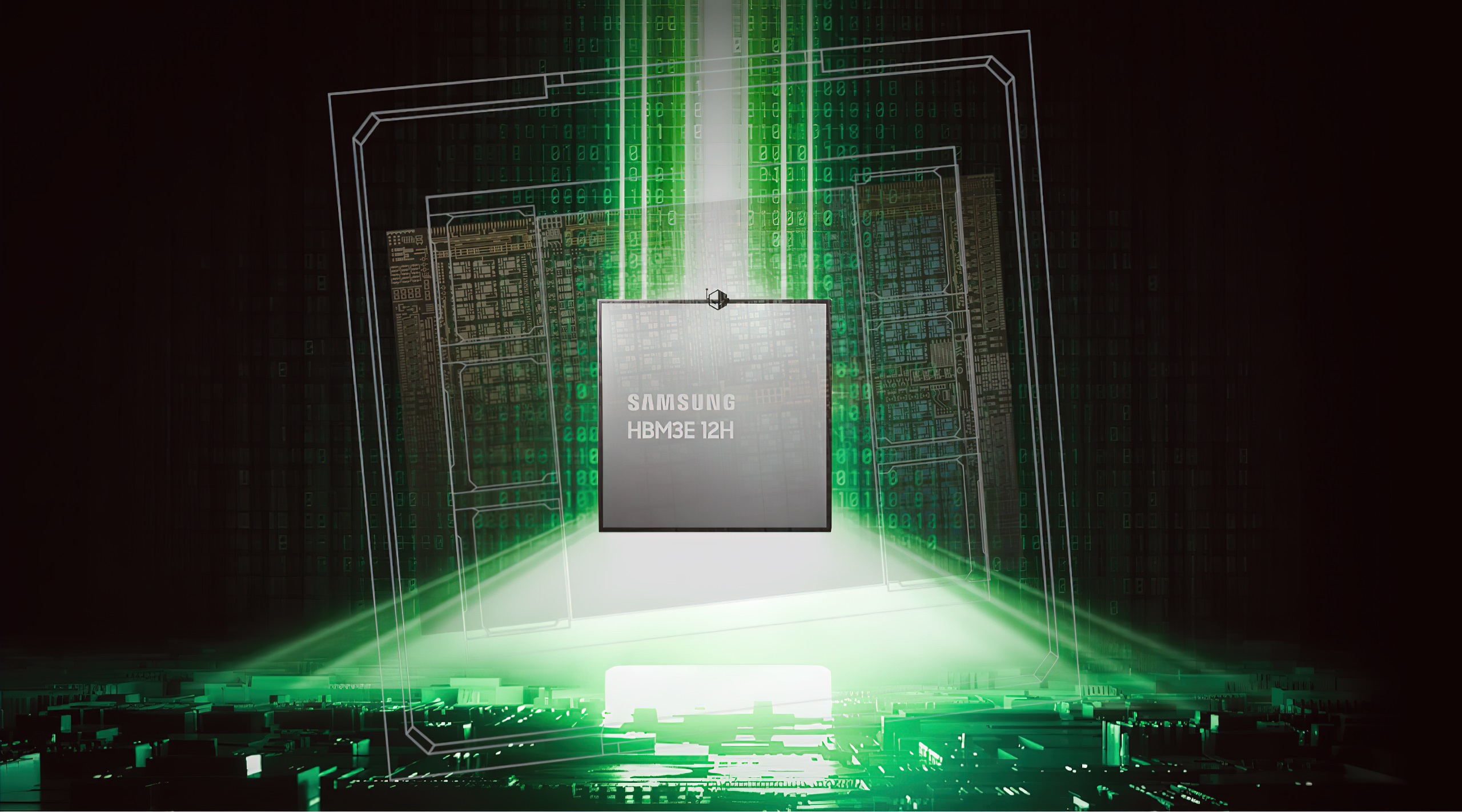
Samsung just cleared a major hurdle in the AI memory race: NVIDIA has qualified the company’s 12‑Hi HBM3E, putting the Korean giant back into the high-bandwidth memory supply chain alongside SK hynix and Micron.
This marks a dramatic turnaround after months of scrutiny. Earlier HBM3 and even 8‑layer HBM3E attempts reportedly struggled with performance and thermal issues tied to older 1a DRAM designs. In response, the company reworked its DRAM architecture, poured fresh investment into its HBM program, and treated the NVIDIA win as much a matter of technological pride as future revenue. That persistence has now paid off.
Don’t expect a flood of immediate orders, though. NVIDIA already has substantial commitments with existing suppliers, so initial HBM3E volumes from the new entrant are expected to be limited. The real prize is what comes next: HBM4.
On that front, the company is signaling aggressive momentum. It is claiming to be first to hit 11 Gbps with HBM4, supported by 1c DRAM and a 4 nm logic die from its own foundry. If that pace holds, HBM4 could broaden the customer base beyond NVIDIA to include players like AMD, Broadcom, and Google—critical names in AI accelerators, networking, and hyperscale data centers.
Why it matters:
– Qualification with NVIDIA validates the firm’s latest HBM3E design after prior setbacks.
– Reentry into the HBM supply chain increases competition with SK hynix and Micron, potentially improving innovation and availability for AI chips.
– A strong HBM4 showing at 11 Gbps positions the company for next‑generation GPU and accelerator platforms where memory bandwidth and efficiency are king.
The takeaway is simple: after a rocky start, the company has reestablished credibility in HBM3E and is lining up for a bigger swing with HBM4. In a market powered by AI training and inference, this renewed momentum sets the stage for a far more competitive memory landscape.