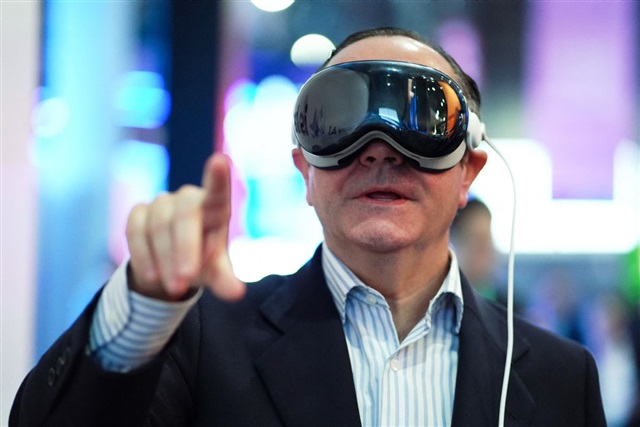
Samsung is gearing up to enter the extended reality space in a big way. The company is preparing to introduce its first XR headset, reportedly called Moohan, at an event on October 22, 2025. Beyond the hardware itself, what stands out is the collaboration behind it: Samsung has been working with Google and Qualcomm on an AI-driven Android XR platform designed to power immersive experiences.
This joint effort signals a serious push to bring spatial computing to a broader audience. An AI-based Android XR foundation suggests a headset that can understand context, respond to natural input methods, and seamlessly blend digital content with the real world. Paired with Qualcomm’s expertise in high-performance, power-efficient chipsets and Google’s software know-how, Moohan could mark a meaningful step forward for wearable computing.
While official specifications have yet to be revealed, the focus on AI hints at features that could make XR more intuitive and useful day to day. Expect advances in areas like voice and gesture control, smart scene recognition, and more fluid multitasking in 3D spaces. The Android XR platform angle also points to deep integration with familiar services and apps, potentially easing the learning curve for anyone stepping into mixed reality for the first time.
If you’re following the evolution of XR, the timing and the partnership are noteworthy. A platform built from the ground up with AI in mind could help solve pain points that have held back earlier headsets, such as clunky interfaces or limited content. It also opens the door for developers to build richer, more responsive applications that take advantage of spatial awareness and real-time processing.
Here’s what to watch for when Moohan is officially unveiled:
– How the AI-based Android XR platform enhances navigation, input, and multitasking in immersive environments
– The level of synergy between Samsung hardware, Qualcomm processing, and Google’s software stack
– Early demonstrations of productivity tools, entertainment experiences, or fitness and wellness features tailored for XR
– Details on comfort, battery life, controllers or hand-tracking, and how the headset handles pass-through for mixed reality
The name Moohan has already sparked curiosity, and the October 22 date sets the stage for a comprehensive reveal. As with any first-generation device, the real test will be how well the hardware and software come together to deliver everyday value, not just tech demos. Still, the strategic partnership and the emphasis on an AI-powered Android XR platform suggest Samsung is aiming for a polished, mainstream-ready approach rather than a niche experiment.
For consumers, the takeaway is straightforward: a major new player is about to enter the XR arena with a headset built on a familiar ecosystem, potentially bringing a wave of fresh apps and experiences. For developers, it’s an opportunity to build on Android foundations with tools tuned for spatial computing and AI-assisted interaction.
More details—including performance, display technology, pricing, and availability—are expected at the October 22 event. Until then, Moohan remains one of the most anticipated XR announcements of the year, combining Samsung’s hardware expertise with Google and Qualcomm’s platform and silicon strengths to push extended reality forward.


