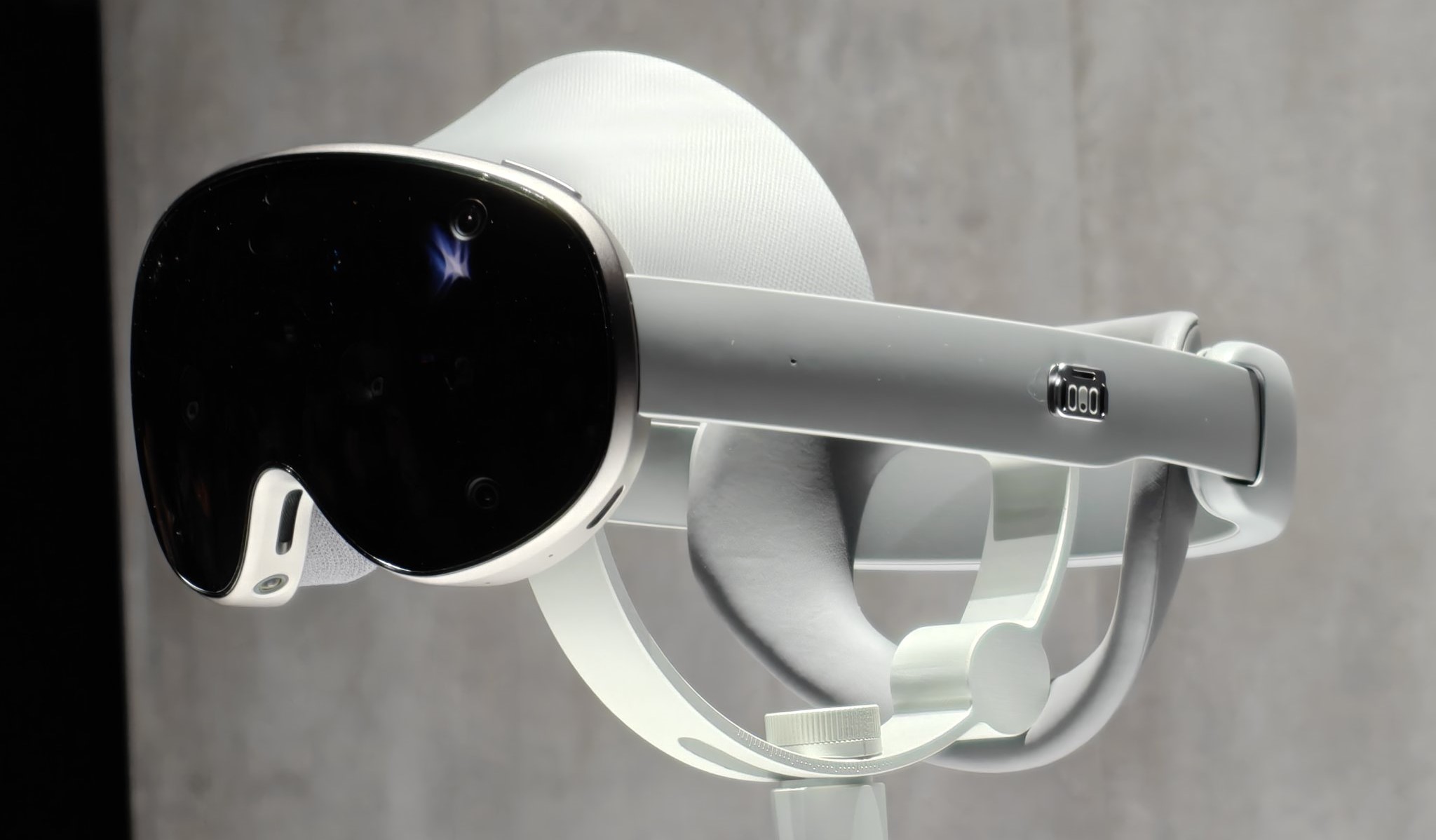
Samsung’s once-secret Project Moohan is finally coming into focus—and if the latest leak is on the money, the Galaxy XR headset is shaping up to be a serious mixed-reality contender. Expect a sleek, lightweight design, ultra‑sharp dual 4K micro‑OLED displays, a flagship-class Snapdragon XR2+ Gen 2 platform, and AI woven throughout the interface. In short, it’s Samsung’s most ambitious leap into spatial computing yet.
Design that prioritizes comfort
The Galaxy XR reportedly pairs a curved front visor with a matte metallic frame and soft interior padding, delivering a refined, futuristic look. At around 545 grams, it’s lighter than some premium rivals and features a rear dial to fine-tune fit. Ventilation slots and detachable light shields underline Samsung’s focus on long-session comfort by managing heat and blocking ambient glare when you want full immersion.
4K micro‑OLED visuals and powerful internals
Visual fidelity is front and center. The headset is said to use dual 4K micro‑OLED panels totaling roughly 29 million pixels with a pixel density around 4,032 PPI, promising razor-sharp text and richly detailed environments. Under the hood, Qualcomm’s Snapdragon XR2+ Gen 2 targets smooth, low-latency performance with support for high-resolution rendering at up to 90 fps per eye—key for convincing mixed reality.
A six-camera array handles passthrough, mapping, and inside-out tracking. AI-powered eye, hand, and voice tracking aims to make navigation feel natural, while Wi‑Fi 7 and Bluetooth 5.3 deliver modern connectivity. Battery life is estimated at about two hours of active use or up to 2.5 hours of video playback per charge.
One UI XR brings Android to spatial computing
Samsung’s new One UI XR blends the familiarity of Android with a 3D interface built for spatial interaction. Apps like Camera, Gallery, Browser, YouTube, Netflix, Maps, and Google Photos can float in your space and be arranged to taste. A persistent system bar reportedly provides quick access to Google Gemini, search, and core controls, pushing the Galaxy XR toward a true standalone computing experience rather than just a media viewer.
Natural input and bundled controllers
You’ll be able to reach out and interact with content using hand gestures, eye tracking, and voice. For games and precision tasks, Samsung is said to include two 6‑DoF controllers with analog sticks, triggers, and tactile haptics. Detachable light shields help eliminate glare for deeper immersion, while built-in dual two-way speakers promise spatial audio to match the visuals.
Price, release window, and who it’s for
The Galaxy XR is rumored to debut around October 21–22, with pre‑registrations opening in mid‑October. Pricing is said to land in the $1,800–$2,000 range—undercutting some premium competitors while still positioning the device as a high-end mixed-reality headset for enthusiasts, early adopters, developers, and productivity‑minded users who want a powerful standalone spatial computer.
Specifications highlights
– Displays: Dual 4K micro‑OLED panels, ~29 million pixels combined, ~4,032 PPI
– Processor: Qualcomm Snapdragon XR2+ Gen 2
– Software: One UI XR with spatial, Android‑based interface and integrated AI
– Audio: Dual two‑way speakers with spatial sound
– Sensors and tracking: Six front cameras; AI‑based hand, eye, and voice tracking
– Controllers: Two 6‑DoF controllers with analog sticks, triggers, and haptics
– Connectivity: Wi‑Fi 7, Bluetooth 5.3
– Battery life: ~2 hours general use; ~2.5 hours video playback
– Weight: ~545 grams
– Hardware extras: Volume and top function buttons, LED indicator, power connector, air vents, detachable light shields
Bottom line
If these details hold, Samsung’s Galaxy XR could finally deliver a compelling Android-powered alternative in the mixed-reality space. With cutting-edge displays, strong performance, and a thoughtfully designed interface, it looks well-equipped for productivity, entertainment, and immersive experiences—at a price that makes premium spatial computing more attainable. The only question left is how well the software ecosystem and apps will capitalize on the hardware from day one.