Samsung is gearing up to launch its new Galaxy Book 6 lineup, but early pricing details are already turning heads—and not in a good way. While upgraded hardware is expected to cost more, the jump Samsung appears to be making with these new models is far larger than many buyers will consider reasonable, especially when comparable upgrades in past generations didn’t come with anything close to this kind of increase.
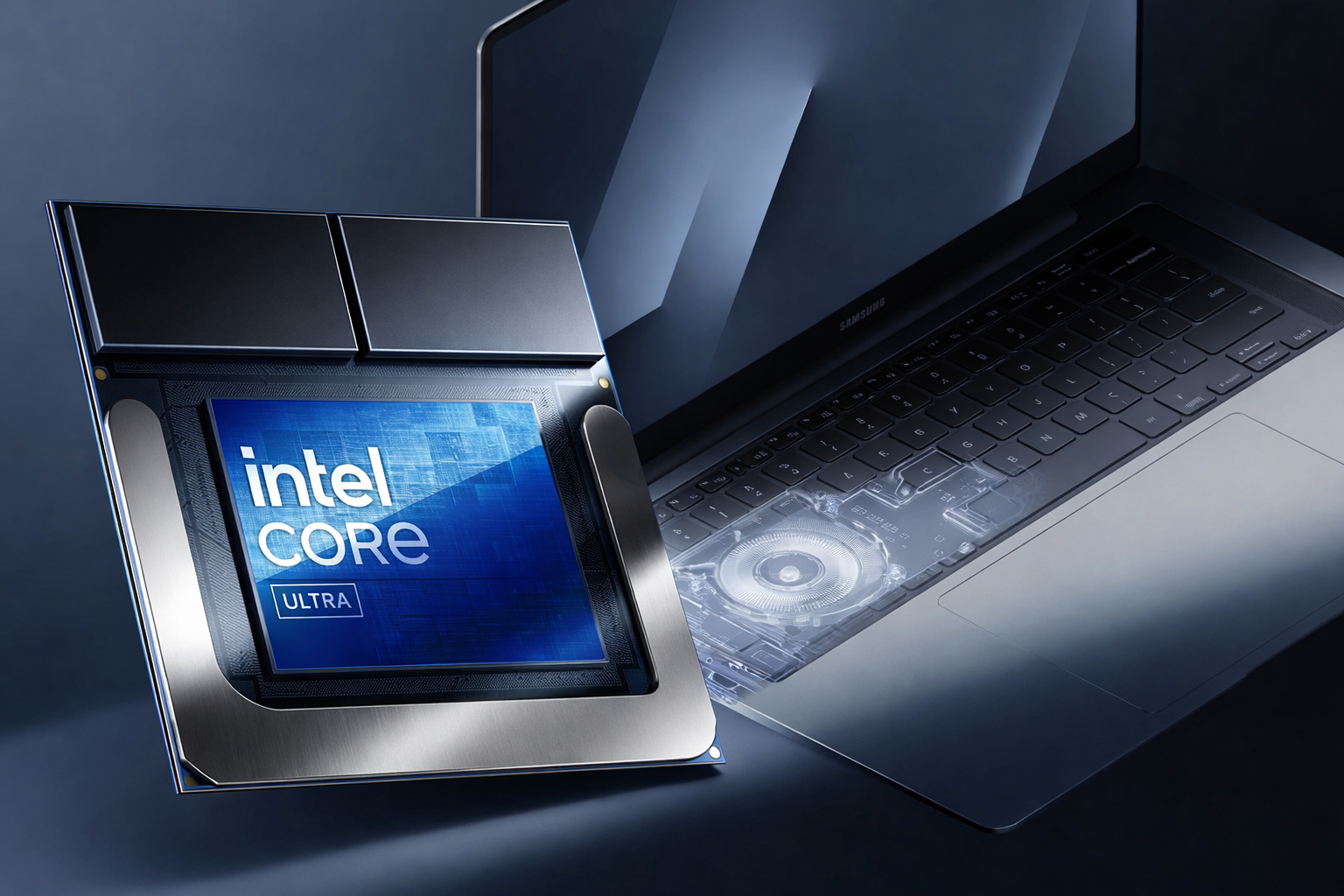
The upcoming Galaxy Book 6 series is set to include six different models across the Pro and Ultra families. These laptops will be powered by Intel’s latest Panther Lake processors, also known as Core Ultra Series 3, bringing newer architecture and higher core counts to Samsung’s premium Windows laptop range. Two of the models will also feature NVIDIA’s RTX 50-series laptop GPUs, including options listed with the RTX 5070 and RTX 5060. The remaining four models sit under the Galaxy Book 6 Pro banner and rely on Intel Arc graphics based on the Xe3 architecture built into the Panther Lake chips.
Samsung’s own product comparison between a previous-gen Galaxy Book 5 Pro and a new Galaxy Book 6 Pro makes the pricing change especially easy to spot. One of the newly listed models, identified as NT960XJG-KD72G, is positioned as the direct successor to the Galaxy Book 5 Pro model NT960XHA-KD72G, which used an Intel Lunar Lake Core Ultra 7 Series 2 processor. A newer chip with more CPU cores can naturally raise the cost—moving from an 8-core CPU to a 16-core design isn’t a trivial upgrade. But the rest of the configuration doesn’t suggest a massive leap forward.
In fact, key specs look largely unchanged. The new Galaxy Book 6 Pro model is still listed with 32GB of LPDDR5X memory and 1TB of storage, mirroring the configuration buyers could get previously. That’s what makes the pricing jump feel so dramatic.
According to the listed prices, the Galaxy Book 5 Pro launched at 2,808,000 won (about $1,904). The new Galaxy Book 6 Pro version is priced at 3,510,000 won (around $2,381). That’s roughly a $477 increase for a laptop that, on paper, doesn’t appear to justify a near-$500 jump based on the processor upgrade alone.
The situation becomes even more interesting considering Samsung’s position in the component supply chain. Samsung is one of the world’s largest memory manufacturers and also produces NAND flash storage, yet the company still seems to be raising prices sharply—likely reflecting broader increases in DRAM and NAND costs, while also protecting (or expanding) profit margins.
What adds to the sticker shock is how different this is from the previous transition. Pricing between the Galaxy Book 4 Pro and Galaxy Book 5 Pro reportedly saw only minimal changes, making the Galaxy Book 6 Pro increase stand out even more. And if you’re looking at models with discrete NVIDIA graphics, the expected pricing climbs into an even more premium bracket, with figures ranging roughly from $3,141 to $3,344—numbers that will likely place these laptops far outside the comfort zone of many shoppers, even in the high-end segment.
With the Galaxy Book 6 series launch approaching, the big question isn’t whether the new Intel chips and RTX 50-series options are exciting—they are—but whether Samsung’s aggressive pricing strategy will land well with consumers who expect premium performance without such a steep year-over-year cost spike.