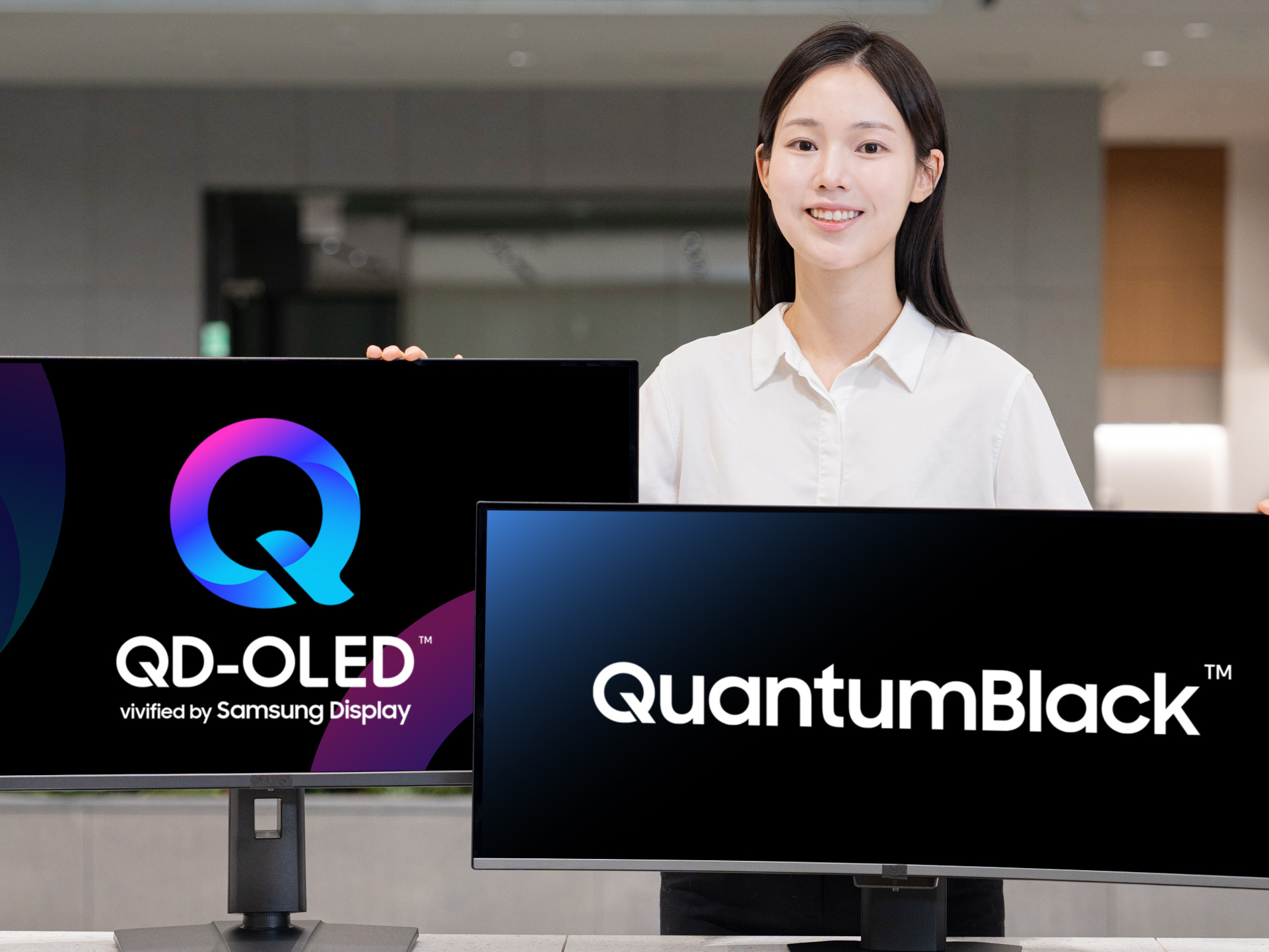
Samsung Display is rolling out a new screen technology aimed at one of the biggest real-world annoyances for QD-OLED monitors: glare. The company has introduced a low-reflection film called QuantumBlack, designed to make QD-OLED displays look better in everyday lighting conditions by cutting down on distracting reflections and helping deep blacks stay looking truly black.
According to Samsung Display, QuantumBlack reduces light reflectivity by 20 percent compared to the previous generation of its low-reflection film. That’s important because while QD-OLED panels can deliver “true black” by completely switching off individual pixels, ambient light bouncing off the screen can wash out the image. The result is lower perceived contrast—especially in brighter rooms—undermining one of the main reasons people choose QD-OLED over conventional LCD monitors. By reducing reflections at the surface, QuantumBlack helps preserve that high-contrast look and the dark-level performance QD-OLED is known for.
QuantumBlack isn’t only about visual clarity, either. Samsung Display also says the new film improves durability, raising surface hardness from 2H to 3H on the standard pencil hardness scale. In practical terms, that means the screen surface should be more resistant to scratches from typical day-to-day handling, including moving the monitor, routine cleaning, and minor contact that can happen on a desk setup. Samsung Display’s internal evaluations claim the upgraded 3H hardness can even help resist scratching from something as simple as a fingernail.
The company says it has applied QuantumBlack across all new QD-OLED monitor panels launching this year, and it has completed trademark registration for the QuantumBlack name. That signals a broader push to make low-reflection performance a key selling point for next-generation QD-OLED monitors, not just a niche feature on select models.
On the product side, the film is already shipping in 2026 QD-OLED monitor releases from major brands. ASUS, Gigabyte, and MSI have launched new displays that incorporate the technology, each branding the anti-reflection approach with their own names: ASUS calls it Black Shield, Gigabyte uses Obsidian Shield, and MSI markets it as Dark Armor.
For shoppers comparing the best gaming monitors, creator displays, or high-end all-around panels, the move toward stronger anti-reflection coatings on QD-OLED could be a meaningful upgrade—especially for anyone who plays or works in rooms with windows, overhead lighting, or bright environments where glare can quickly ruin contrast and black levels. With QuantumBlack, Samsung Display is betting that less reflection and improved scratch resistance will make QD-OLED monitors more practical and appealing for everyday setups, not just ideal conditions in a dim room.


