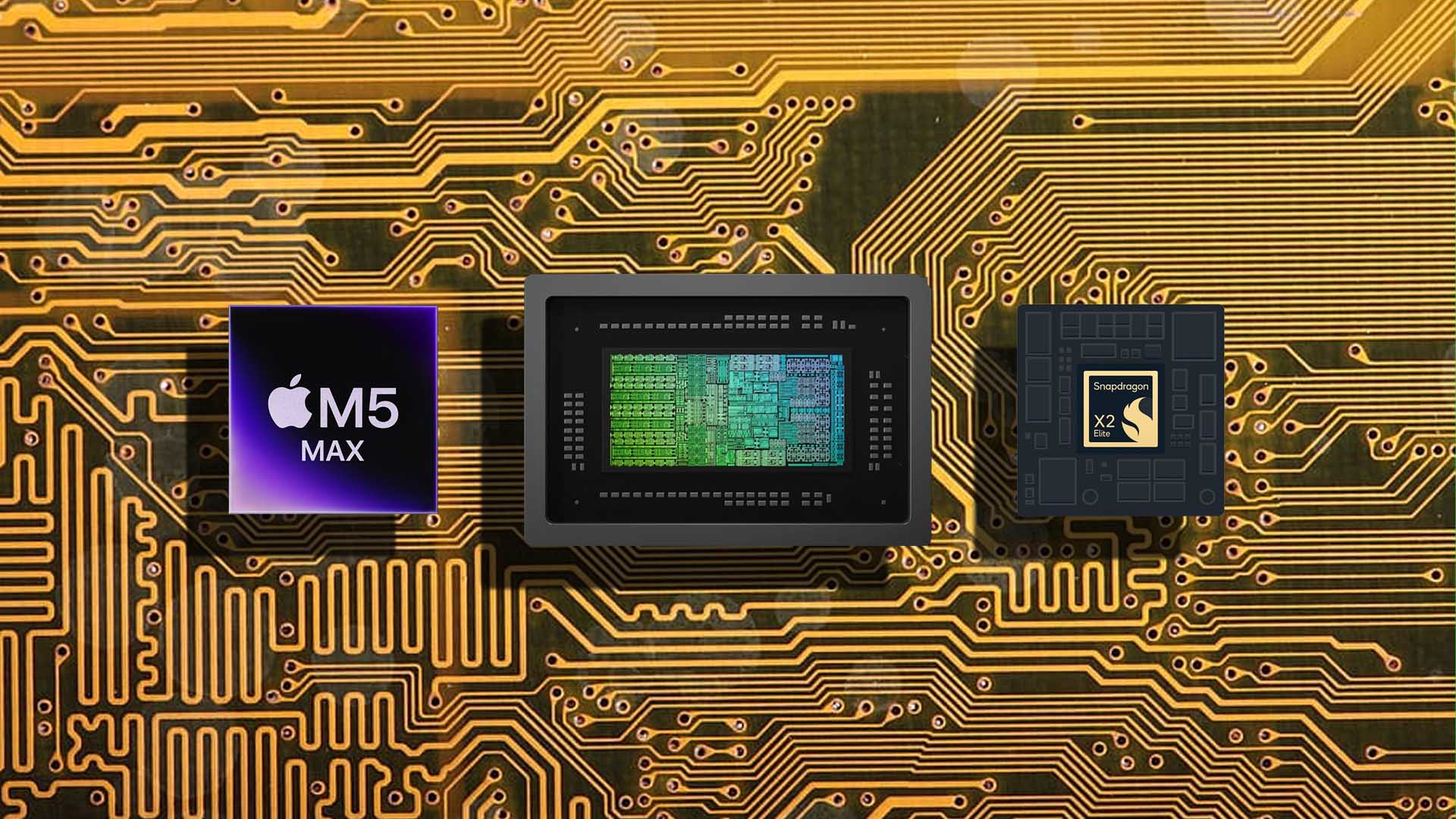
NVIDIA RTX Spark Laptops Could Put Pressure on Apple Silicon and Snapdragon in One Key Area
The Arm-based laptop market is getting a serious new challenger. NVIDIA’s RTX Spark platform is expected to arrive in laptops this fall, and its debut could make both Apple and Qualcomm pay close attention. While Apple Silicon and Snapdragon chips have made major progress in efficiency, battery life, and AI-focused computing, one major weakness still remains: high-end gaming.
For years, Apple and Qualcomm have had time to improve gaming performance on their notebook processors. Yet even today, users often need to spend heavily on top-tier Apple hardware to get a respectable gaming experience, while Snapdragon-powered laptops still struggle with consistency in demanding AAA titles. RTX Spark could change that conversation quickly.
One of the biggest advantages of RTX Spark is its memory configuration. Until now, desktop and laptop GPUs often ran into memory limits when handling large AI models locally. NVIDIA’s new platform can offer up to 128GB of LPDDR5X memory, matching the highest-end configuration available with Apple’s M5 Max. That kind of unified memory setup is a major advantage for AI workloads, content creation, and gaming scenarios where memory pressure can become a bottleneck.
But memory is only part of the story. The real weapon is NVIDIA’s Blackwell GPU architecture. NVIDIA has claimed that RTX Spark can reach around 100FPS at 1440p in modern AAA games. Real-world testing will be needed before those numbers can be fully trusted, but early demonstrations featuring games such as PRAGMATA and Alan Wake 2 suggest that the platform may be far more capable than typical Arm-based laptop graphics.
Of course, much of this performance will likely depend on DLSS and Frame Generation. Some gamers may criticize upscaling and generated frames, but the reality is that AI-assisted rendering is becoming a major part of modern gaming. Whether players like it or not, technologies such as DLSS, frame interpolation, and advanced upscaling are now central to delivering smoother gameplay at higher resolutions.
This is where NVIDIA has a massive advantage. DLSS and Frame Generation are mature, widely supported, and deeply integrated into many PC games. With Blackwell supporting up to 6x Multi-Frame Generation, RTX Spark could deliver a gaming experience that Apple and Qualcomm currently cannot match. Apple has MetalFX, and Qualcomm has made progress with its Adreno graphics, but neither ecosystem offers the same level of game support, optimization, or developer momentum as NVIDIA’s RTX platform.
Cyberpunk 2077 is a strong example of the current gap. A three-year-old laptop RTX 4090 can still outperform the latest premium Apple and Qualcomm laptop chips in demanding gameplay scenarios. In one comparison, a laptop RTX 4090 running Cyberpunk 2077 at 2560 x 1600 with maximum custom settings, high textures, DLSS Balanced, Frame Generation enabled, and path tracing turned on averaged around 88.5FPS.
By comparison, an M5 Max with an 18-core CPU and 40-core GPU running at 1920 x 1080 with maximum custom settings, high textures, MetalFX Quality, FSR 3.1 Frame Generation, and path tracing enabled averaged around 79.2FPS. That is a respectable result, but it comes from a very expensive machine.
The pricing makes the comparison even more striking. A 14-inch MacBook Pro with the M5 Max, 18-core CPU, and 40-core GPU can cost around $4,099. Seeing that system lose to an older laptop GPU in a demanding title is not a great look for Apple’s gaming ambitions.
Qualcomm’s Snapdragon X2 Elite Extreme looks more attractive from a value standpoint, with some laptops using the chip priced around $1,999. However, gaming remains inconsistent. In Cyberpunk 2077 at 1920 x 1080 using medium settings, medium textures, no upscaling, no frame generation, and no path tracing, performance reportedly lands in the 30FPS to 40FPS range. That is playable for some users, but it is not the kind of experience that will excite serious gamers.
This raises an important question: could RTX Spark laptops become the most compelling Arm-based choice for users who want both productivity and gaming?
Compute performance may be the weakest part of RTX Spark, at least in its first generation. NVIDIA is using customized Cortex-X925 CPU cores, which are not the newest designs available. When compared directly with Apple’s M5 Max or Qualcomm’s Snapdragon X2 Elite Extreme, RTX Spark may not dominate in CPU-heavy benchmarks.
However, that may not matter much in daily use. Most demanding modern workloads, including 3D rendering, video exporting, AI model processing, image editing, and creative production, can lean heavily on the GPU. Since RTX Spark supports NVIDIA’s broader software ecosystem, the Blackwell GPU can handle much of the heavy lifting.
Even when CPU performance is needed, a 20-core configuration should be more than enough for everyday multitasking, productivity, and many professional workflows. In practical terms, many users may never notice the CPU gap unless they are running specific CPU-bound tasks or benchmarking the system directly.
This is why RTX Spark is interesting. It is not just another Arm-based laptop chip trying to compete on battery life or thin-and-light design. It brings NVIDIA’s strongest advantages into a category where Apple and Qualcomm have not fully solved the gaming problem.
RTX Spark laptops are unlikely to be cheap. Systems with large amounts of unified memory, a Blackwell GPU, and premium laptop designs will likely target creators, developers, AI users, and enthusiasts. Still, if these machines can deliver strong AI performance, high-end gaming, and efficient Arm-based computing in one package, they could attract a customer base that Apple and Qualcomm have left underserved.
The unified memory design is especially important. Traditional gaming laptops can hit VRAM limits when running modern games at high settings, particularly with ray tracing enabled. RTX Spark’s large memory pool could reduce that issue significantly, giving users more flexibility in demanding games and AI workloads. The main limitation would then become raw GPU processing power rather than memory capacity.
For gamers, NVIDIA’s ecosystem remains the biggest selling point. DLSS, Frame Generation, ray tracing support, strong driver updates, and broad developer adoption create a gaming foundation that Apple and Qualcomm still lack. Apple has made some efforts to bring more major games to macOS, but the catalog remains limited. Qualcomm’s Windows on Arm platform is improving, but compatibility and performance can still vary widely depending on the game.
That is why Apple and Qualcomm may not have much time to respond. RTX Spark does not appear to be a one-time experiment. NVIDIA has already signaled that future successors are planned, including platforms based on Vera Rubin Spark architectures. If the first RTX Spark laptops are already competitive despite using older Arm CPU core designs, future versions could close the CPU performance gap while keeping NVIDIA’s clear advantage in graphics and AI acceleration.
For Apple, the challenge is clear: Apple Silicon is powerful and efficient, but gaming needs deeper developer support, stronger compatibility, and better performance per dollar. For Qualcomm, the issue is even more urgent. Snapdragon laptops need to prove they can deliver more than battery life and productivity performance if they want to compete in the premium AI PC market.
RTX Spark could become a turning point for Arm-based laptops. If NVIDIA delivers strong real-world gaming performance, reliable AI acceleration, and enough battery efficiency to compete with Apple and Qualcomm, it may create a new category of machines that appeal to gamers, creators, developers, and AI enthusiasts alike.
Apple and Qualcomm still have time to respond, but the window is narrowing. Gaming has remained the missing piece in their laptop strategies for too long. With RTX Spark entering the market, NVIDIA may finally be ready to take advantage of that weakness.