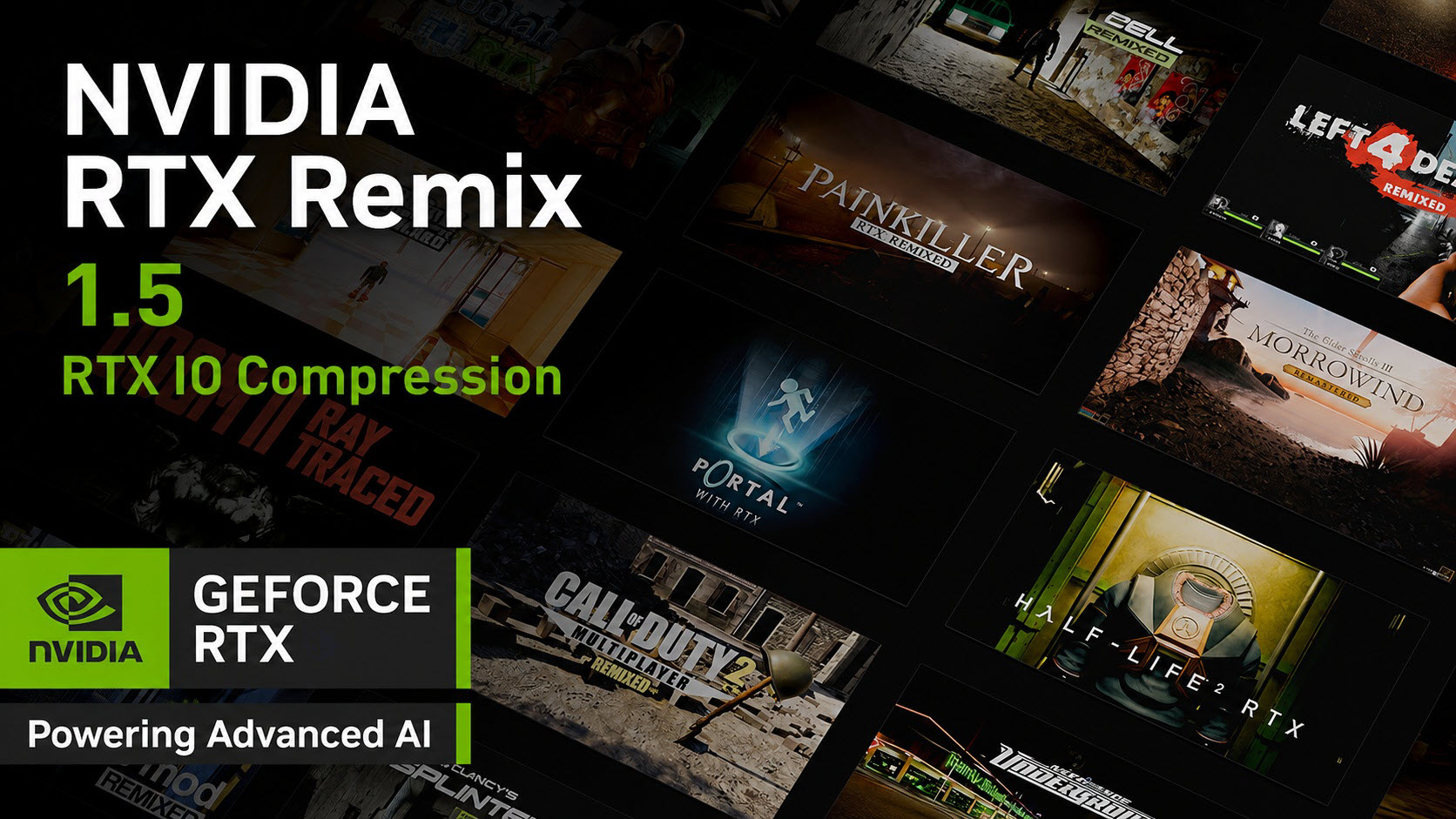
NVIDIA RTX Remix 1.5 Launches With RTX IO Compression, Smaller Game Sizes, and Better Modding Tools
NVIDIA is rolling out RTX Remix 1.5 today, bringing a fresh set of upgrades designed to make classic PC game remastering faster, easier, and more storage-friendly. The latest version of the modding platform introduces a new packaging workflow, improved lighting controls, AI-assisted development tools, and RTX IO compression support that can dramatically reduce game file sizes.
RTX Remix has become one of NVIDIA’s most important tools for modernizing older PC games with path tracing, enhanced materials, improved lighting, and updated assets. With version 1.5, the platform is getting several features aimed directly at modders who want to create more polished remasters with less friction.
One of the biggest additions in RTX Remix 1.5 is support for RTX IO compression inside the packaging workflow. RTX IO is NVIDIA’s high-performance storage technology built to improve loading times, reduce CPU overhead, and help prevent stuttering caused by storage bottlenecks. With the new compression options, modders can choose split-size presets ranging from 1GB to 16GB, making large projects easier to package and distribute.
The impact on game size is significant. NVIDIA says the latest RTX IO model has already been integrated into Portal with RTX, Portal: Prelude RTX, and the Half-Life 2 RTX demo. As a result, file sizes have been reduced sharply. Portal with RTX has dropped from 25GB to 17GB, while the Half-Life 2 RTX demo has been reduced from 80GB to 50GB.
That is a major improvement for both players and creators. Gamers benefit from smaller downloads and reduced storage requirements, while modders gain more room to include higher-quality assets, more detailed textures, expanded updates, and additional enhancements without making project sizes overwhelming.
RTX Remix 1.5 also introduces Smooth Normals, a highly requested community feature. This tool automatically generates smooth normals for captured legacy geometry, helping older game assets look cleaner and less blocky when displayed under modern path-traced lighting. For remasters of older titles, this can make a noticeable visual difference without requiring every asset to be manually rebuilt.
Another useful upgrade is the improved Viewport Light Controls system. RTX Remix 1.5 now includes a unified viewport lights menu, making it easier to manage existing light manipulators. Modders can use persistent toggles for manipulator visibility and adjust light intensity more conveniently, helping streamline the lighting workflow during development.
NVIDIA is also expanding support for AI-assisted modding through RTX Remix Skills. These are text-based instruction files designed to give AI coding agents more specific context when helping with Remix projects. The files can guide agents through tasks such as creating feature branches, running unit tests, preparing merge requests, and other development steps.
The goal is to make AI assistants more useful for modders, especially when managing complex remastering projects. By giving AI tools clearer instructions, creators can speed up repetitive technical tasks and focus more on improving visuals, gameplay presentation, and overall polish.
Altogether, RTX Remix 1.5 is a meaningful update for the game modding community. The addition of RTX IO compression alone makes the platform more practical for large-scale remastering projects, while Smooth Normals, better lighting controls, and RTX Remix Skills help improve the creative workflow.
For players, this means future RTX Remix projects could arrive with smaller file sizes, better performance characteristics, and more refined visuals. For modders, it means more flexibility, less storage pressure, and a more efficient path toward transforming classic PC games with modern rendering technology.


