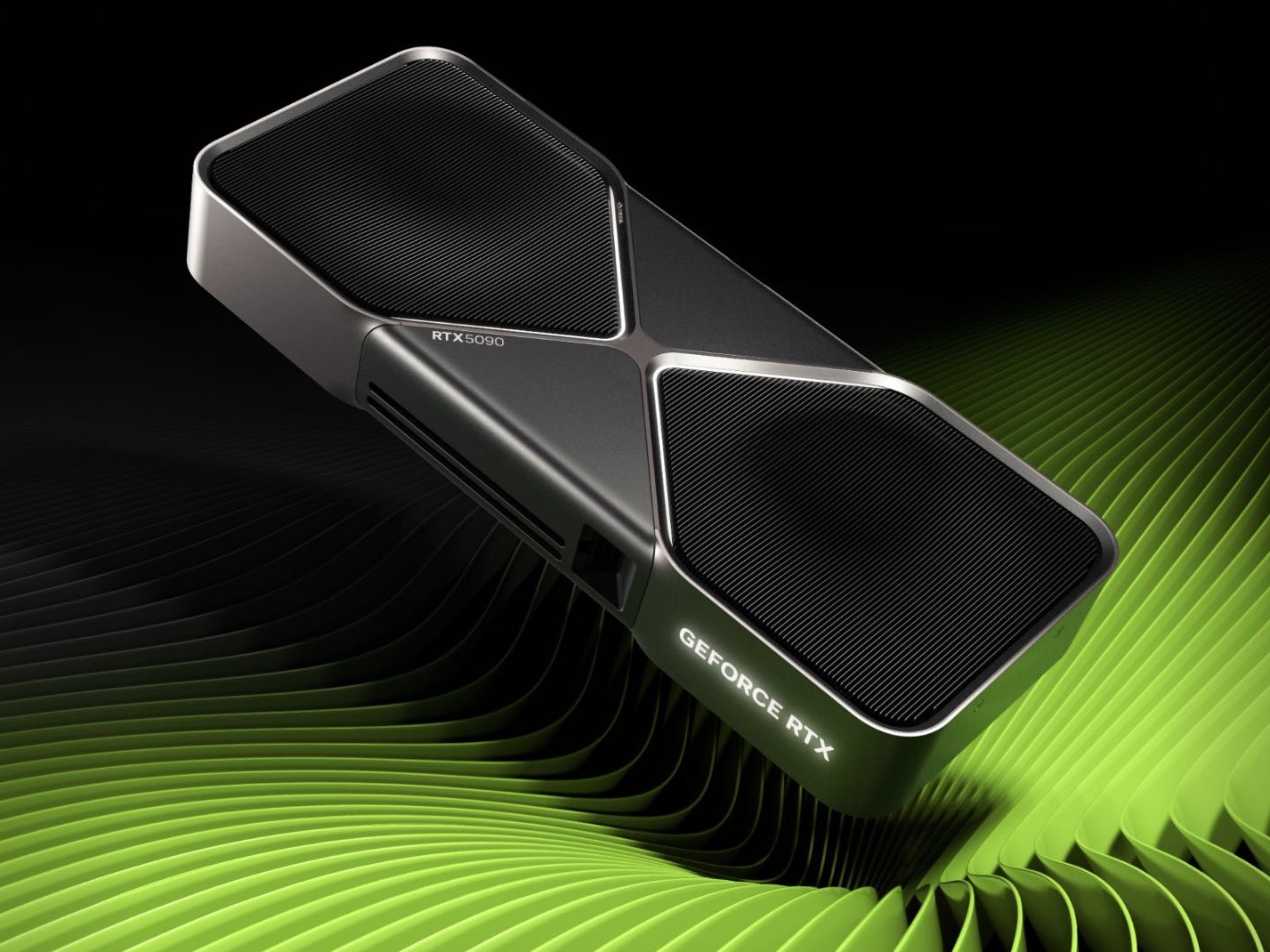
The reviews are in, and Nvidia’s RTX 5090 is turning heads for those prioritizing ultimate performance, even at the expense of power consumption. This powerhouse graphics card sets a new standard in 4K gaming, boasting remarkable prowess in both rasterization and ray tracing. With the added capability of DLSS 4, it conquers 4K gaming, achieving over 200 FPS in titles that leverage Nvidia’s Multi-Frame Generation technology.
While the RTX 5090 delivers impressive results, its leap in performance doesn’t quite match the groundbreaking jump seen from the RTX 3090 to the RTX 4090. In practical terms, the RTX 5090 is approximately 27% faster than its predecessor, the RTX 4090. However, this performance boost comes with a noticeable increase in power demand, escalating to 575 watts compared to the RTX 4090’s 450 watts.
This raises an interesting question: How do these giants compare when their power consumption is equalized? Insights from recent tests suggest intriguing findings. When both GPUs are limited to 450 watts, the RTX 5090 outpaces the RTX 4090 by an average of 17% in rasterization tasks. It indicates that the RTX 5090’s performance is slightly curtailed by 8% when operating with 125 watts less power.
One might expect a more substantial performance difference considering the RTX 5090 is equipped with 33% more CUDA cores than the RTX 4090. However, the RTX 5090’s lower clock speed (113 MHz less) seems to impede the expected gains, hinting that its higher power consumption is somewhat of a lever for maintaining its edge.
Overall, Nvidia seems to be leveraging sheer power to elevate the RTX 5090’s dominance over the RTX 4090. This approach, however, underscores a trade-off in efficiency, as the RTX 5090’s performance scales nearly in tandem with its power usage — 27% more performance for 28% more energy. In stark contrast, the RTX 4090 offers a more efficient performance bump, delivering a significant lead over the RTX 3090 with just a 29% increase in TDP.
In conclusion, while the RTX 5090 stands out as a formidable contender in the realm of high-end gaming GPUs, questions about its efficiency may influence discerning tech enthusiasts to weigh the benefits against power consumption costs.