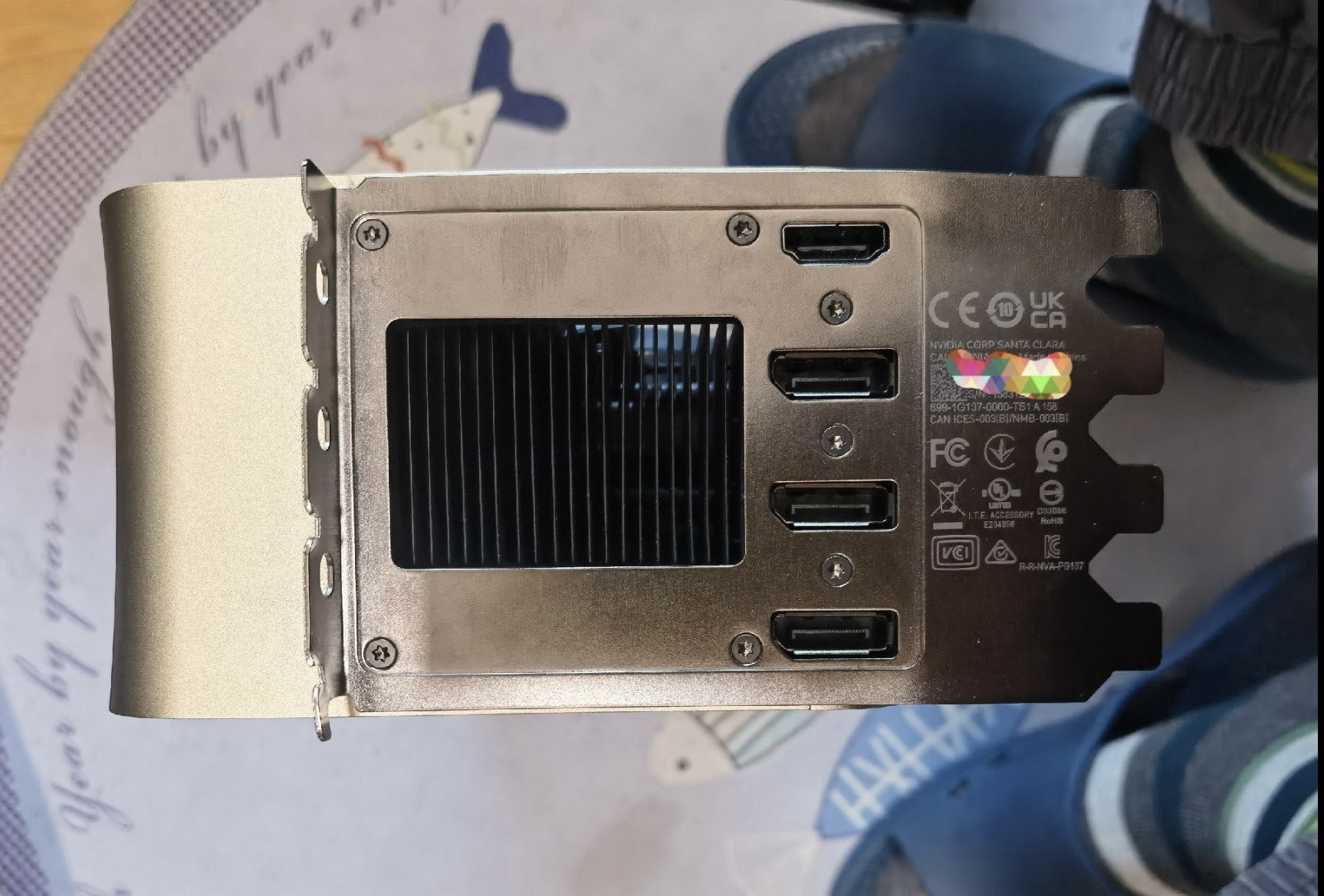
Fresh rumors are swirling around Nvidia’s next ultra-high-end graphics card, a potential RTX 5090 Ti that’s also being referred to as the “Blackwell Titan.” After conflicting chatter about whether a late-2026 flagship would happen at all, a new wave of information suggests this mystery GPU has been quietly in the works for a while, with reports claiming it has been in testing since mid-2025.
If the latest details are accurate, the Blackwell Titan won’t be a massive architectural leap over the current RTX 5090, but it will come with a small bump in raw silicon. The card is said to feature about 5% more CUDA cores than an RTX 5090, landing at roughly 22,848 CUDA cores. That number also hints that Nvidia may not be using a fully enabled top die, since a “full fat” configuration would typically imply even more cores than what’s being discussed here. In other words, it’s an upgrade, but not the kind that completely reshapes the top end of the GPU stack.
Where things get extreme is power. Prototype versions are reportedly pulling staggering amounts of electricity, with some unlocked test samples going beyond 1,000 watts. Even if the retail version ends up operating in a more “reasonable” (relatively speaking) 700 to 750 watt range, that still places it far outside normal gaming GPU territory. That kind of draw demands oversized cooling, serious airflow, and a physically hefty card—one that’s described as substantial enough that you’d want to support it with both hands.
All that power doesn’t automatically translate into a huge leap in real-world speed, though. Current claims point to about a 10% performance gain over the RTX 5090, with the possibility of reaching 20% in ideal scenarios. That positions the RTX 5090 Ti/Blackwell Titan as a niche product aimed at the most performance-obsessed enthusiasts—people who want the fastest GPU available regardless of efficiency, practicality, or cost—rather than something built for the average PC gamer.
Another major question is VRAM, and so far there’s no solid confirmation on the memory configuration. For gaming, anything beyond 32GB is already more than most players can fully take advantage of today. But for AI workloads, content creation, and heavy compute tasks, higher memory capacities can matter a lot. That’s why speculation is growing that Nvidia could market this GPU as a hybrid “prosumer” option—part halo gaming card, part AI-capable powerhouse—especially if it arrives with something like 48GB of VRAM.
Pricing expectations are just as intense as the power requirements. Given where the high-end GPU market sits right now, a price below the $2,500 to $3,000 range sounds unlikely, particularly if Nvidia positions it as a flagship “no compromises” product designed to dominate benchmark charts.
Still, it’s worth keeping expectations in check. A prototype in testing doesn’t automatically guarantee a public release, and history shows that not every ultra-premium concept makes it to store shelves. If it does launch, one theory is that Nvidia could use the RTX 5090 Ti/Blackwell Titan as a stopgap flagship—something to keep the company on top of the performance rankings until the next major generation, such as a future RTX 60 series, arrives later on.
For now, the rumored RTX 5090 Ti remains a card defined by extremes: extreme power draw, extreme cooling needs, an extreme likely price, and an upgrade that may be relatively modest unless you’re chasing every last frame, point, or compute result at the very top of the GPU ladder.