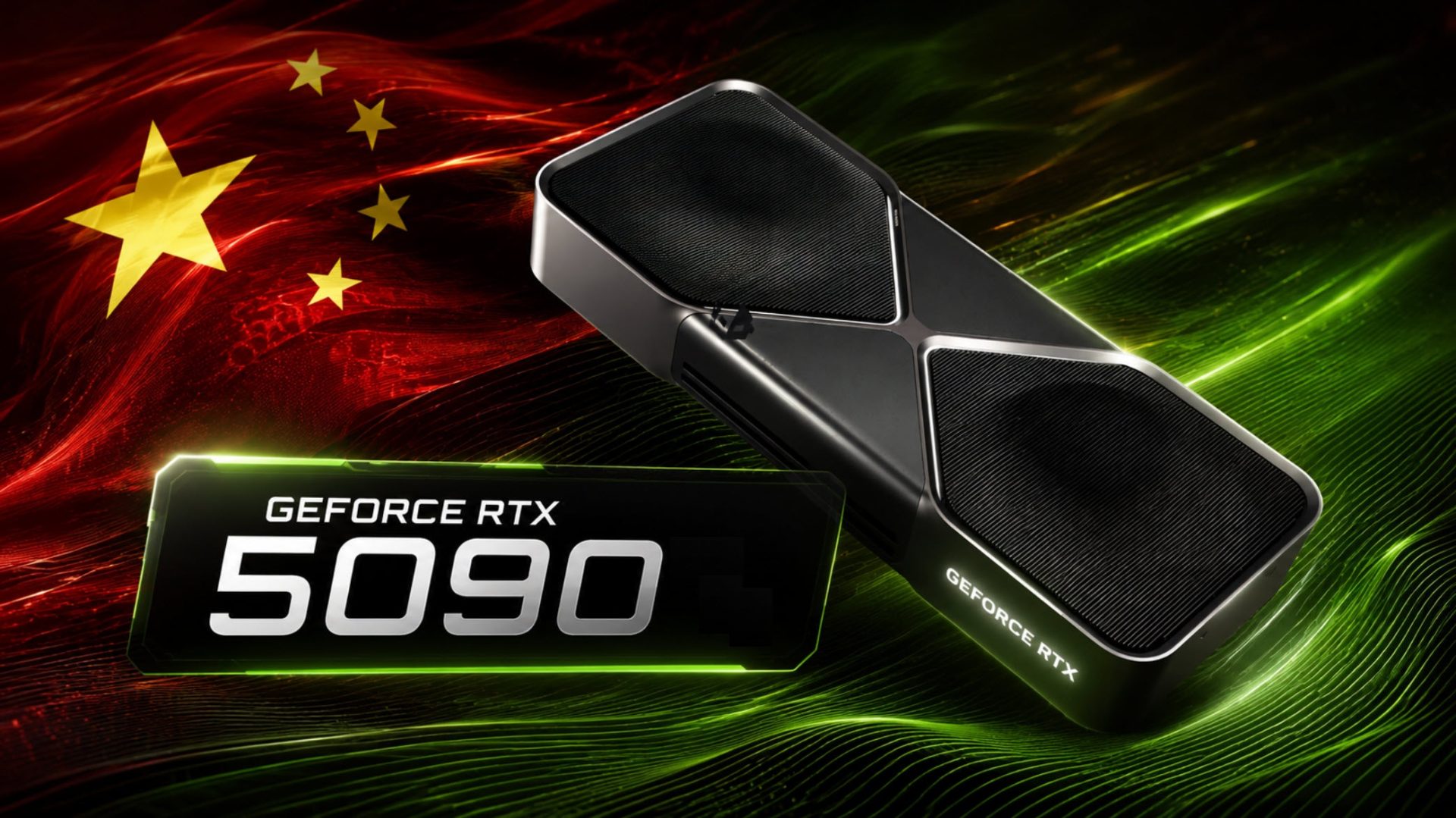
NVIDIA GeForce RTX 5090 Prices Surge Past $6,500 as AI Demand Tightens GPU Supply
The NVIDIA GeForce RTX 5090 has gone from a dream upgrade for PC gamers to one of the most expensive consumer graphics cards on the market. Originally launched with a $1,999 MSRP, NVIDIA’s flagship gaming GPU is now selling for more than $6,500 at major retailers, with some listings climbing far beyond $10,000.
What was already a difficult graphics card to buy at launch has become even harder to find at a reasonable price. Ongoing memory supply issues, limited availability, and heavy demand from the AI sector have pushed RTX 5090 pricing to levels few expected when the card first arrived.
RTX 5090 retail prices are now 3x to 4x higher than MSRP
The GeForce RTX 5090 was never going to be a budget-friendly GPU. As NVIDIA’s flagship Blackwell gaming graphics card, it launched at a premium $1,999 price point. Even then, early buyers struggled to find cards at MSRP during the first wave of availability.
Since then, prices have continued rising. The first major increase pushed retail pricing above $3,000. After that, RTX 5090 models began crossing $4,000 and $5,000. Now, base models are listed above $6,500, while premium versions are reaching extreme price tags.
At Newegg, one of the cheapest RTX 5090 listings is an MSI Ventus 3X OC model priced at around $6,549. Other models are listed above $9,000, and a few have climbed past $11,000. That means buyers are being asked to pay more than three to four times the official launch price.
Amazon pricing is not much better. Only a small number of RTX 5090 cards appear near the $6,000 mark, while most models are listed above $6,200. Some premium variants are priced at over $12,000, including special-edition models listed close to that range.
Best Buy appears even more expensive in some cases, with RTX 5090 graphics cards showing up at prices above $7,400. Some prebuilt gaming PCs with an RTX 5090 are available in the $6,000 to $6,500 range, but inventory is extremely limited, and these systems are not always practical for buyers who only want the GPU.
AI demand is making the RTX 5090 harder for gamers to buy
The biggest issue is not just normal gamer demand. The RTX 5090 is also highly attractive to AI companies because of its powerful GPU architecture, large memory capacity, and strong compute performance.
While the RTX 5090 is marketed as a gaming graphics card, its raw performance makes it useful for AI workloads, model training, inference, and server-focused tasks. Dedicated AI accelerators are often much more expensive and harder to source, which makes high-end consumer GPUs a tempting alternative.
This has created a frustrating situation for gamers. A card designed for high-end gaming PCs is being purchased in large quantities for AI use, reducing the amount of stock available through regular retail channels.
Reports from the Asian supply chain suggest that large numbers of GeForce RTX 50-series cards, especially RTX 5090 units, are being acquired by AI-related firms in China and nearby regions. These cards are reportedly collected in bulk, modified, and repurposed for data center or server-style deployments.
RTX 5090 cards are reportedly being stripped and rebuilt for servers
One of the more unusual signs of this trend is the appearance of RTX 5090 coolers and shrouds being sold separately. These leftover parts suggest that some graphics cards are being dismantled, with the valuable GPU and memory components removed for use in custom AI hardware.
In these operations, the gaming cooler and retail board design may be replaced with custom PCBs, blower-style cooling, or server-compatible thermal solutions. The result is a product that no longer looks like a gaming graphics card but can still deliver the compute performance that AI companies want.
This explains why empty RTX 5090 coolers can appear on resale platforms. The most valuable part of the graphics card, the silicon itself, has already been removed and reused elsewhere.
For PC gamers, it is a painful symbol of the current GPU market. The card that should have powered a premium gaming rig may instead be running AI workloads in a server rack.
Memory shortages are adding more pressure
AI demand is not the only factor behind the RTX 5090 price surge. NVIDIA and its board partners have also pointed to shortages in memory and component supply.
High-end GPUs depend on advanced memory, complex PCBs, premium power delivery systems, and advanced cooling designs. When any part of that supply chain tightens, production volume suffers. With AI companies competing for similar hardware resources, consumer graphics cards are caught in the middle.
The result is a classic supply-and-demand problem. There are not enough RTX 5090 cards available, and multiple buyer groups are competing for the same product. Gamers, PC builders, resellers, AI firms, and workstation users are all chasing limited stock.
That competition has pushed prices far beyond what most consumers would consider reasonable.
The RTX 5090 has become a luxury GPU
The GeForce RTX 5090 was always intended to be an ultra-premium graphics card, but its current pricing has moved it into luxury territory. At $6,500 to $12,000, the card is no longer a typical enthusiast gaming upgrade.
For many PC gamers, the RTX 5090 now costs more than an entire high-end gaming setup. In some cases, buying a full prebuilt PC with an RTX 5090 may be cheaper than purchasing the graphics card alone, though those systems are also hard to find.
This has changed the conversation around NVIDIA’s flagship GPU. Instead of being judged purely by gaming performance, ray tracing, DLSS capabilities, or 4K frame rates, the RTX 5090 is now being discussed as a scarce compute asset.
For AI companies, the RTX 5090 can still look like a bargain compared to professional AI accelerators. For gamers, however, it has become one of the most difficult and expensive upgrades in recent memory.
What this means for gamers
Anyone hoping to buy an RTX 5090 at or near MSRP is likely to be disappointed in the current market. Prices remain heavily inflated, stock is limited, and demand from AI buyers shows no sign of slowing down.
Gamers may have a few options:
Wait for supply to improve and pricing to cool down
Consider a lower-tier RTX 50-series GPU
Look for a reasonably priced prebuilt system
Delay upgrading until the market stabilizes
Compare performance-per-dollar against older high-end GPUs
The problem is that no one can say exactly when prices will return to normal. If memory shortages continue and AI firms keep buying consumer GPUs in bulk, the RTX 5090 could remain expensive for a long time.
A gaming GPU caught in the AI boom
The NVIDIA GeForce RTX 5090 is now at the center of one of the most extreme GPU pricing situations in recent years. A graphics card that launched at $1,999 is selling for more than $6,500 at retail, with some listings going above $10,000.
The reason is a mix of limited supply, memory shortages, reseller activity, and enormous AI demand. While gamers are struggling to find cards at sane prices, thousands of GPUs are reportedly being redirected into AI-focused operations, modified for server use, and removed from the gaming market entirely.
For now, the RTX 5090 is no longer just a flagship gaming card. It has become a high-value AI compute product, a scarce retail item, and a symbol of how dramatically artificial intelligence demand is reshaping the PC hardware market.