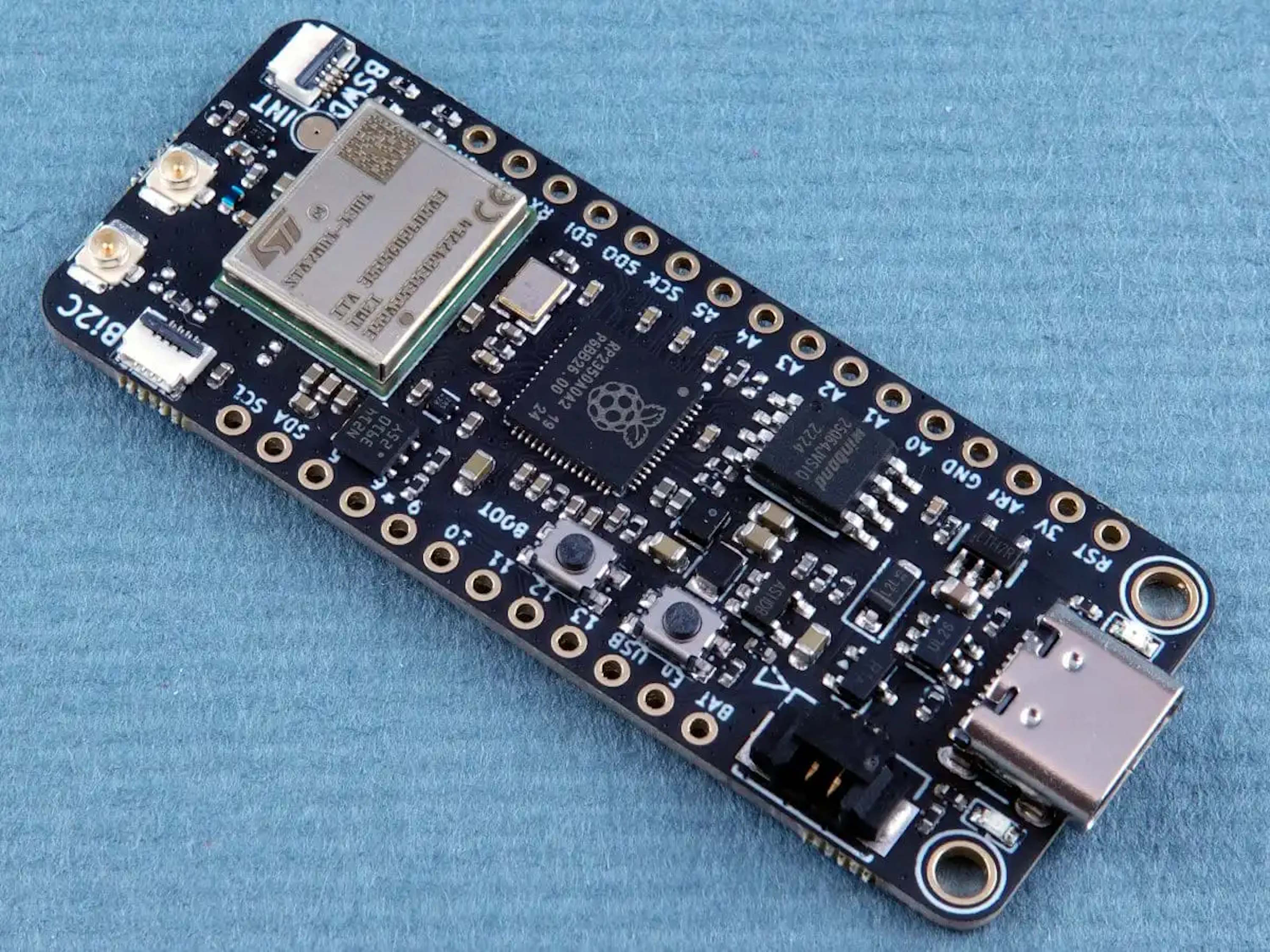
A new compact developer board is turning heads among makers who need reliable connectivity in remote or mobile projects. Built around the RP2350 microcontroller, the Challenger+ RP2350 NB-IoT is designed specifically for Internet of Things applications rather than high-performance computing tasks. In other words, it’s made for smart sensing, tracking, monitoring, and automation—not for running heavyweight operating systems.
What makes this RP2350-based board stand out is how much functionality is packed into such a small footprint. It includes cellular connectivity suited to NB-IoT use cases, giving projects a way to send data even when WiFi isn’t available. That’s especially useful for outdoor deployments, moving assets, or installations far from typical networks. In addition to cellular, WiFi is also available, offering flexibility depending on where and how your device will operate.
Another highlight is the built-in GNSS capability. The onboard satellite positioning module supports GPS and Galileo, enabling location-aware IoT projects such as asset tracking, field equipment monitoring, or mobile environmental logging. With GNSS onboard, developers can record coordinates directly and combine them with sensor data for richer insights.
Power options also support real-world deployments. The board can be powered via USB Type-C during development, but it can also run from a battery, making it better suited for independent installations where a wall outlet isn’t an option.
For storage, there’s 8MB of onboard flash memory, which helps with firmware, logging, and device functionality depending on your application. On the software side, the board remains approachable for a wide range of developers: it can be programmed using the Arduino IDE and also supports MicroPython and CircuitPython. That combination makes it appealing both to beginners prototyping quickly and to experienced builders who prefer Python-based workflows.
Like other developer boards aimed at embedded projects, it includes pin headers for connecting external sensors and actuators. That means it can easily be used for tasks such as measuring environmental conditions, tracking equipment status, or controlling devices in response to sensor input. Collected data can be transmitted over WiFi or, for broader coverage, sent over cellular networks using a compatible plan. The manufacturer also offers a SIM option intended to work across multiple countries, which could simplify setup for users planning international deployments.
Pricing is listed at around $60, positioning it as a feature-rich IoT development board for projects that benefit from combining cellular connectivity, GNSS positioning, and flexible programming options in one compact device.