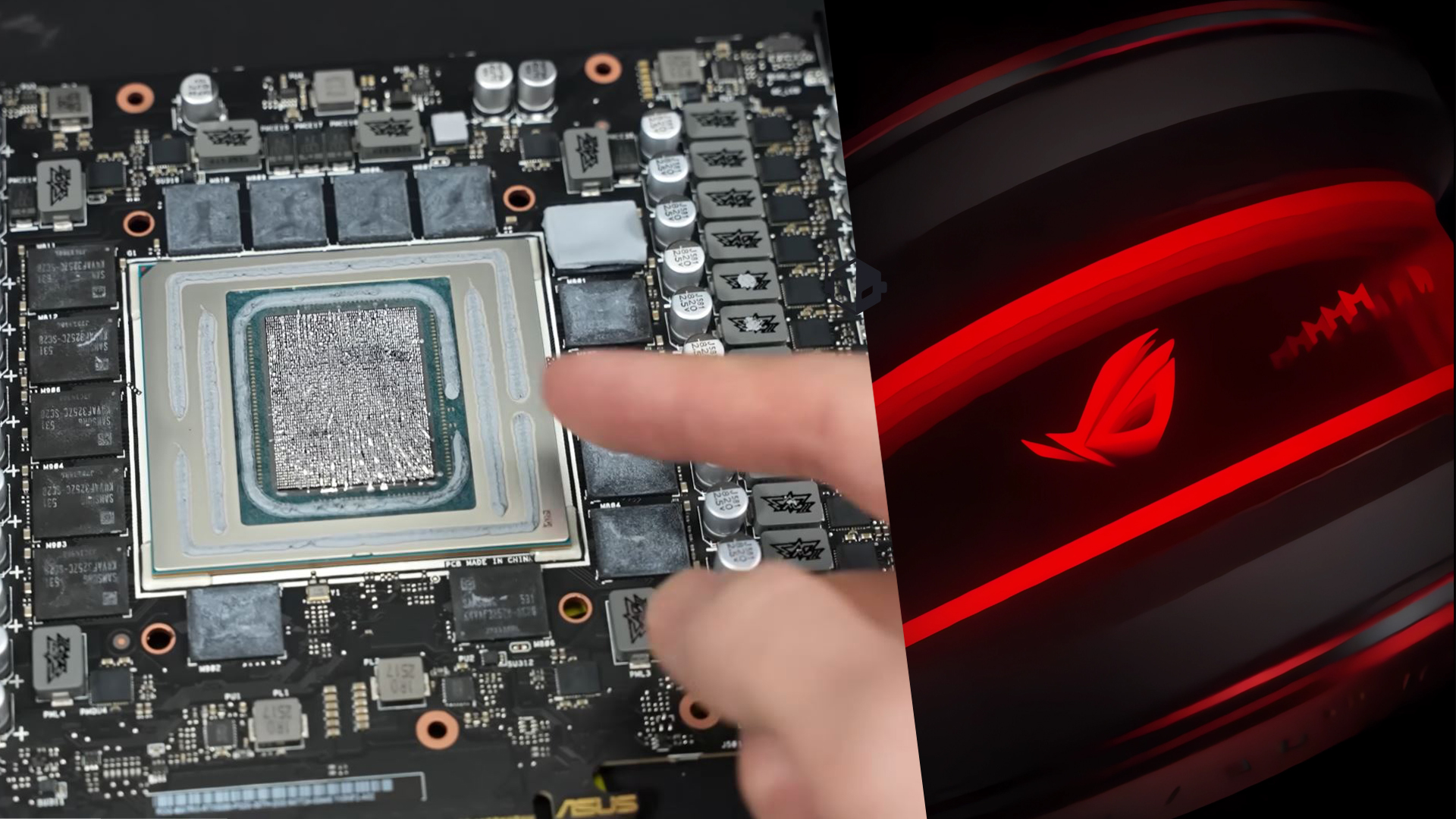
A fresh rumor about ASUS’s ROG Matrix RTX 5090 Limited Edition suggests the brief market pullback may have been tied less to a traditional “quality” defect and more to a behind-the-scenes change in how the card’s liquid metal and thermal paste were applied.
Not long ago, reports claimed ASUS had paused or pulled back a batch of these high-end GPUs over an unspecified issue. ASUS denied the idea of a recall at the time, but a recent investigation from well-known overclocker Der8auer points to a plausible explanation: the original thermal compound layout may not have been ideal, and ASUS appears to have adjusted the application method to improve cooling consistency.
What changed with the liquid metal and thermal paste
Based on Der8auer’s teardown, a newly purchased ROG Matrix RTX 5090 looked noticeably different from an earlier review sample. The earlier unit used liquid metal on the GPU area, with thermal paste applied around it, but the liquid metal appeared able to spread beyond where it should have stayed. In other words, the “old” method looked more prone to liquid metal scattering outside the intended zone, which can reduce efficiency and create uneven contact or thermal transfer.
On the newer card, the liquid metal is more tightly controlled. It’s concentrated where it’s supposed to be, and it’s now bordered by a deliberate layer of thermal paste designed to help block seepage away from the GPU interface area. The layout also includes small openings and carefully placed vertical lines of thermal paste that leave space on both sides—an approach Der8auer described as more professional and more intentional. The overall effect is a cleaner containment strategy that should help keep the liquid metal in place over time.
Why this matters for RTX 5090 thermals
For a flagship GPU that can draw extreme power, the smallest improvements in cooler contact and thermal compound application can make a real difference. If liquid metal migrates or spreads unevenly, heat transfer from the GPU to the heatsink can become less efficient. By keeping the liquid metal where it belongs, the new application method should improve heat dissipation consistency, especially during sustained high-load gaming, benchmarking, or content creation sessions.
It’s still not confirmed whether every ROG Matrix RTX 5090 was produced with the revised pattern, but if earlier reports about a wide pullback were accurate, this kind of change would fit the idea of quietly reworking units to ensure better thermal performance.
Stress testing results: power draw, connector load, and temperatures
In FurMark testing, the newer card reportedly pulled close to 800W. Power delivery was also spread across the connections: both the 12V-2×6 and ASUS HPWR connectors were shown pulling roughly in the 350W to 450W range each. That kind of load sharing can help reduce connector heat compared to pushing too much through a single pathway.
Thermally, the GPU reached around 70–72°C under full load in this test. While that isn’t a perfect apples-to-apples comparison to the earlier sample—since different tests and power levels were involved—it still suggests a slight improvement in overall cooling behavior. The previous sample was measured using a different benchmark scenario at around 700W, landing in the 67–69°C range. Taken together, the newer unit appears to be at least marginally better optimized, especially considering the higher power draw in the newer stress test.
The takeaway
If the investigation reflects a real production change, it points to ASUS refining an already premium design by improving liquid metal control and thermal paste placement. For buyers of an ultra-high-end RTX 5090 variant, that kind of adjustment could translate into steadier temperatures under heavy workloads, potentially better long-term consistency, and more confidence in extreme-power operation—even if the “recall” talk never becomes officially confirmed.