AMD has officially unveiled its RDNA 4 GPUs, introducing the Radeon RX 9070 and RX 9060 series, which showcase advanced features like machine learning-boosted FSR 4 support. This new lineup marks a shift in AMD’s strategy, as they focus on competing with mainstream offerings from NVIDIA and Intel instead of targeting the ultra-enthusiast segment.
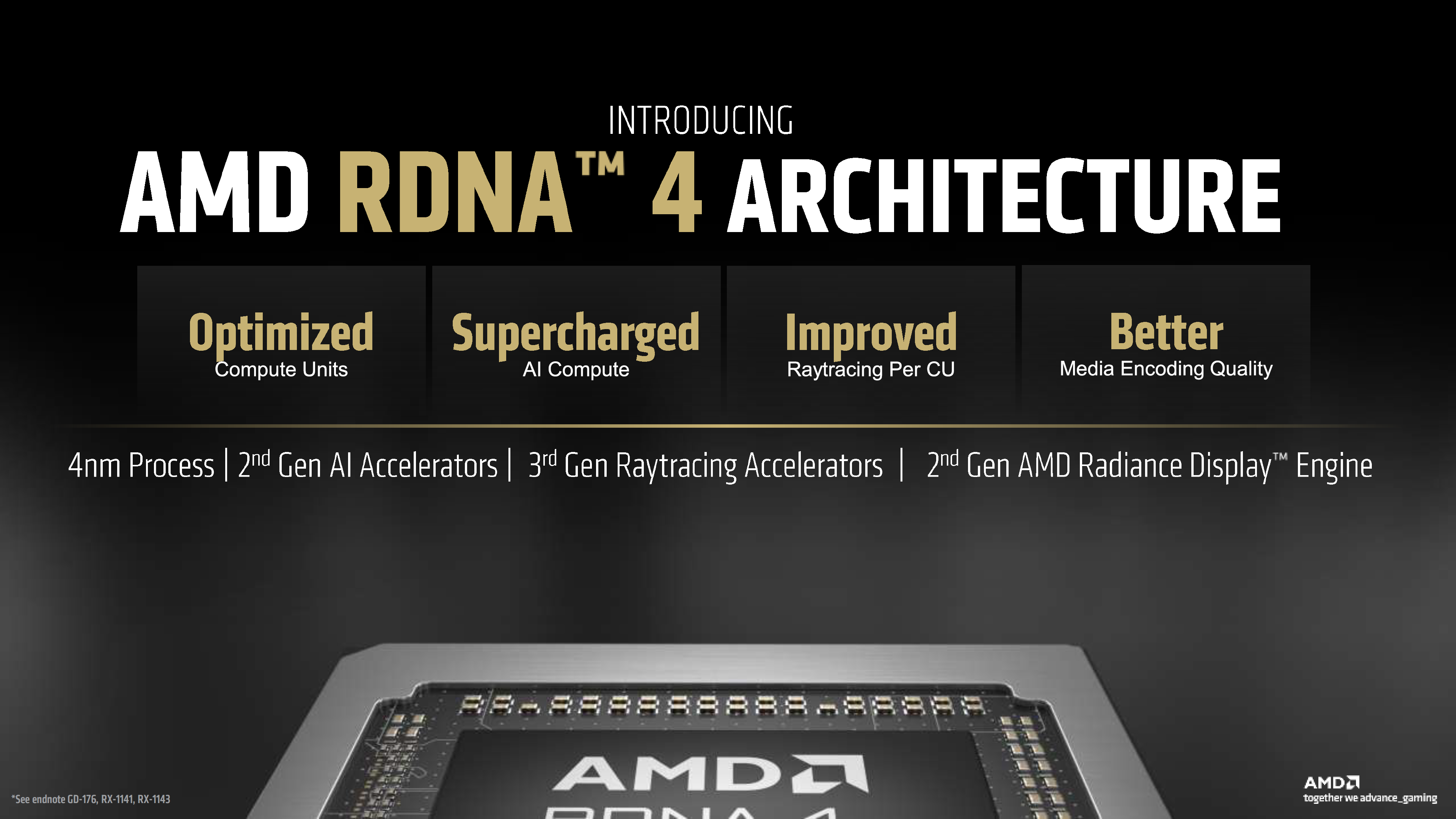
The RDNA 4 architecture boasts several significant improvements, including optimized compute units, enhanced AI capabilities, improved ray tracing per compute unit, and superior media encoding quality. These enhancements are powered by the 2nd Gen AI Accelerators, 3rd Gen Raytracing Accelerators, and a 2nd Gen AMD Radiance Display Engine. This lineup is built using a cutting-edge 4nm process, moving away from the previous 5nm/6nm nodes, and features a monolithic die instead of the multi-chip module (MCM) design of its predecessors.
AMD plans to release the Radeon RX 9070 XT and RX 9070 graphics cards in Q1 2025, both armed with up to 16 GB of video memory. These GPUs aim to rival the NVIDIA RTX 4070 Ti and RTX 4070, respectively, while the RX 9060 series will challenge the RTX 4060 series.
In an effort to streamline product naming, AMD has aligned its GPU model names with the Ryzen 9000 series CPUs. This strategic adjustment is intended to harmonize with competitors, with the 9070 models set against NVIDIA’s “70” class and the 9060 models matching the “60” class. The XT versions will continue to represent higher-end offerings, while non-XT models offer a more affordable alternative.
Both the Radeon RX 9070 XT and RX 9070 GPUs will be available in reference and custom models from top industry players such as ASUS, ASRock, Gigabyte, PowerColor, and more.
A notable feature of the RDNA 4 architecture is the introduction of FSR 4, an AI-based upscaling solution that promises parity with NVIDIA’s DLSS and Intel’s XeSS. FSR 4 supports high-quality 4K upscaling, with the added benefits of enhanced performance through FSR’s Frame-Gen and reduced latency via Anti-Lag 2. It is compatible with all games that currently support FSR 3.1, with Call of Duty: Black Ops 6 highlighted as a key title demonstrating the technology.
Additionally, AMD has launched the Adrenalin AI utility within its software suite. This toolset allows users to generate images, summarize local documents, and query AMD-related topics, similar to NVIDIA’s ChatRTX and Intel’s AI Playground. This development underscores AMD’s commitment to providing a tailored and localized AI experience for its users.
Stay tuned as AMD prepares to share further insights into its RDNA 4 offerings, marking a new chapter in the evolution of the RDNA architecture.