At the forefront of energy storage innovation, researchers at the University of California have unlocked the potential of a conductive polymer known as PEDOT. Traditionally celebrated for its ability to shield electronics from static bursts, this polymer has now been reimagined as a formidable electricity storage device, promising a leap forward in both capacity and longevity.
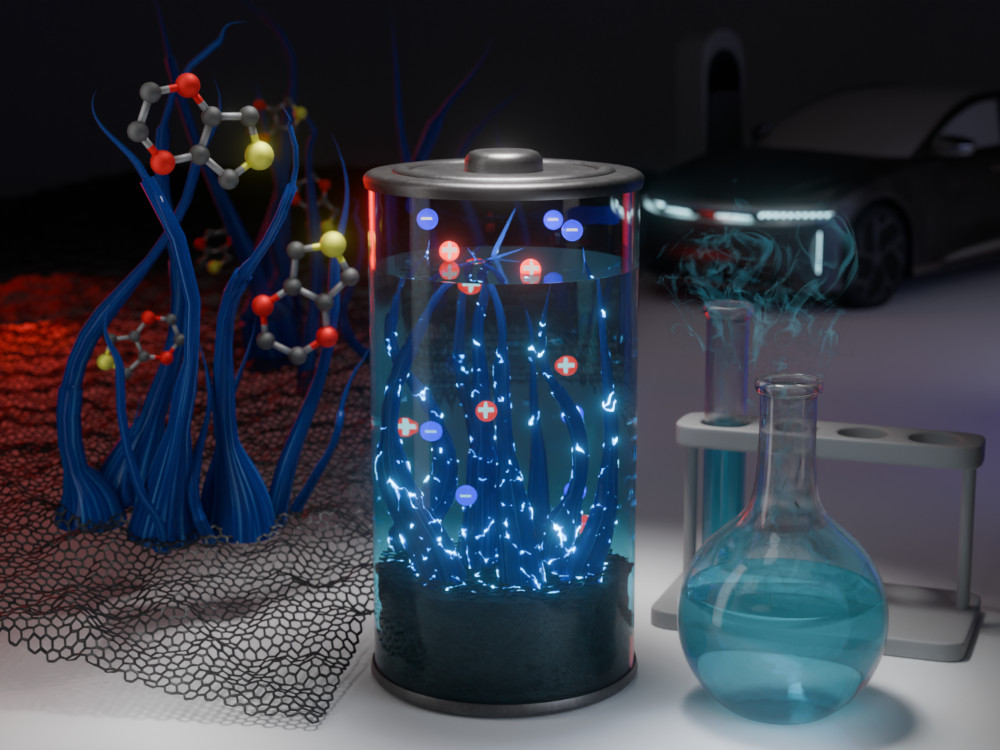
PEDOT, a polymer comprised of hydrocarbon rings, faced limitations due to its comparatively small surface area—a critical factor impacting the electrical capabilities of any capacitor. However, an exciting breakthrough has been made by transforming its structure into something akin to fur or a pelt. This ingenious design involves the use of carbon nanotubes and graphene, dramatically increasing the surface area and hence, the polymer’s capacity and effectiveness.
The results are nothing short of impressive, with the modified PEDOT boasting a storage capacity of 4,600 millifarads per square centimeter—tenfold that of its classic counterpart. Furthermore, its improved durability means that even after 70,000 charging cycles, it retains 70% of its original capacity, with a potential lifespan encompassing nearly 100,000 cycles.
A significant edge of this advanced material is its departure from conventional battery cells, which rely on chemical processes for storage. Instead, it offers high-speed charging and discharging capabilities. This means that on a larger scale, these supercapacitors could seamlessly integrate into power grids, effectively storing surplus energy and releasing it as needed with remarkable efficiency.
With its estimated service life extending close to a decade—even with hourly discharges—this technology is perfectly poised for a range of applications. Solar cells, for example, are already teaming up with these supercapacitors to better manage production fluctuations, highlighting the technology’s potential to revolutionize energy systems and sustain our growing energy needs.
As PEDOT continues to evolve, its impact across various fields showcases an electrifying future where efficiency meets sustainability. This innovation stands as a testament to the transformative power of modern materials in reshaping how we capture and utilize energy.