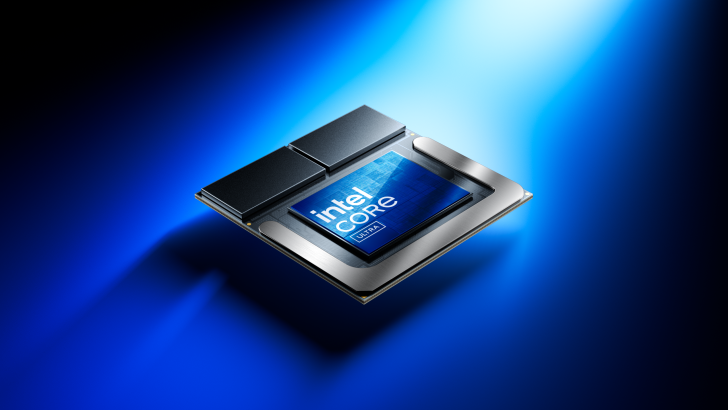
Intel’s Lunar Lake CPU is turning heads in the tech world, thanks to an impressive demonstration by Geekerwan, showcasing its exceptional 15W gaming performance against current handheld competitors. Aimed at ultra-portable devices, the Lunar Lake “Core Ultra 200V” CPUs have been gaining acclaim for their excellent GPU capabilities and battery efficiency. Despite their compact 8-core, 8-thread design, these CPUs offer significant performance boosts, sparking enthusiasm among tech aficionados.
In Geekerwan’s rigorous testing, the Intel Core Ultra 7 258V went head-to-head with the Steam Deck and ASUS ROG Ally (Z1 Extreme) in a demanding 15W test mode, delivering outstanding results at 720P resolution. The power efficiency of the Lunar Lake chip is remarkable, standing at 12W due to its SoC and DRAM being integrated, yet still outperforming its competitors, who utilize an extra watt yet are capped at the same power limit.
Performance-wise, the Lunar Lake CPU is making waves. It delivers up to 67% better performance compared to the Ryzen AI 9 HX 370 within the same 15W constraints. In graphically demanding games like Cyberpunk 2077, the Lunar Lake SoC showcases a more than twofold increase in GPU performance over the Ryzen AI 9 HX 370 and nearly triples that of the ROG Ally’s Z1 Extreme with FSR enabled.
Geekerwan didn’t stop there. Additional tests in unconstrained power modes highlighted the Lunar Lake chip’s efficiency even further. While the Ryzen AI 9 HX 370 and Core Ultra 9 185H draw significantly more power, the Lunar Lake proves to be a tough competitor with its Xe2 iGPU matching or surpassing their performance at a fraction of the power consumption.
Moreover, when comparing battery endurance, the Intel Lunar Lake “Core Ultra 7 258V” featured in the Yoga Air 15 laptop stunned with a battery life nearing 11 hours, challenging even the robust MacBook Air’s M3 SoC. The chip also excelled in idle power consumption, using a mere 0.62W, outpacing Apple’s M3 and significantly undercutting the Meteor Lake and AMD Strix processors.
Performance evaluations of Lunar Lake’s IPC also hit impressive highs. Testing the Lion Cove P-Core against other x86 cores, it surfaced as a leading performer in integer calculations. Meanwhile, the Skymont LP-E core demonstrated substantial gains over its Meteor Lake predecessor.
With such promising results, Intel’s Lunar Lake CPUs could redefine expectations for miniature computing and handheld gaming. Enthusiasts should stay alert for upcoming performance enhancements in CPU, graphics, and memory, which could bolster these chips’ already impressive capabilities. As compact solutions continue to grow in popularity, the Lunar Lake series positions itself as a formidable player in the market.