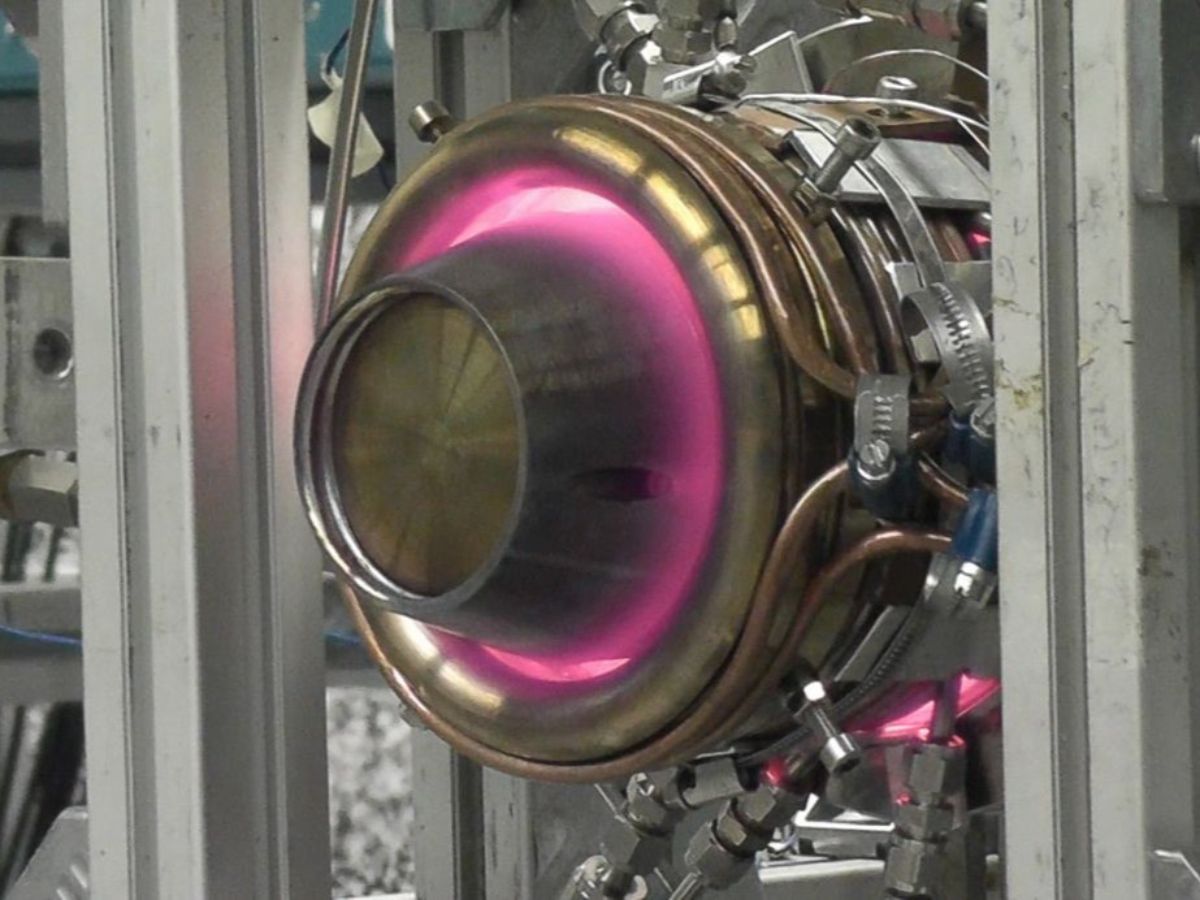
Researchers at the Karlsruhe Institute of Technology (KIT) have taken a big step toward cleaner, more efficient power generation with a breakthrough hydrogen gas turbine that runs without a compressor. In a major demonstration of real-world potential, the team operated the turbine continuously for 303 seconds, beating the previous runtime record of 250 seconds. Pushing the system beyond the five-minute mark is an important proof point that this emerging turbine design can move from lab concept to practical energy technology.
What makes this compressorless turbine so notable is the way it avoids one of the biggest inefficiencies in conventional gas turbines. In traditional designs used in power plants and jet engines, a large portion of the turbine’s output is spent compressing incoming air before combustion. That compression process can consume roughly half the power the system produces, limiting overall efficiency and driving up operating costs.
KIT’s approach replaces that mechanical compression with a technique known as pressure-gain combustion. Rather than depending on heavy, power-hungry moving parts, the turbine generates the required high pressure inside the combustion chamber itself. It does this by leveraging natural swirling airflow patterns and internal shockwaves that rapidly build pressure during combustion. The result is a design that can potentially be lighter, simpler, and more energy-efficient than standard gas turbine systems.
The team also cleared another barrier that has held the field back: converting an extremely intense, fast, shockwave-driven combustion process into steady rotational energy that can reliably turn a turbine and generate electricity. Managing that energy transfer has long been considered one of the toughest challenges in making pressure-gain combustion useful outside experimental setups. Demonstrating stable electricity generation alongside record runtime adds weight to the idea that compressorless turbine systems could work at scale.
Although this technology can run on different fuels, the researchers highlight hydrogen as an especially strong match. Hydrogen’s fast reaction speed helps produce the quick, stable pressure rise this type of combustion needs, making it well-suited for a compressorless pressure-gain setup. That synergy strengthens the case for hydrogen turbines as a pathway to carbon-free electricity generation, particularly as hydrogen production and storage infrastructure continues to grow.
If development continues successfully, this compressorless hydrogen turbine concept could lead to cheaper and more efficient power plants, with potential long-term benefits for energy grids aiming to cut emissions without sacrificing performance. The researchers also see future opportunities in aviation, where reducing weight while boosting efficiency is crucial.
The prototype is scheduled to be presented to the public at the Hannover Messe industrial exhibition in April 2026, offering a closer look at a turbine concept that could reshape how hydrogen is used for high-efficiency, carbon-free power generation.