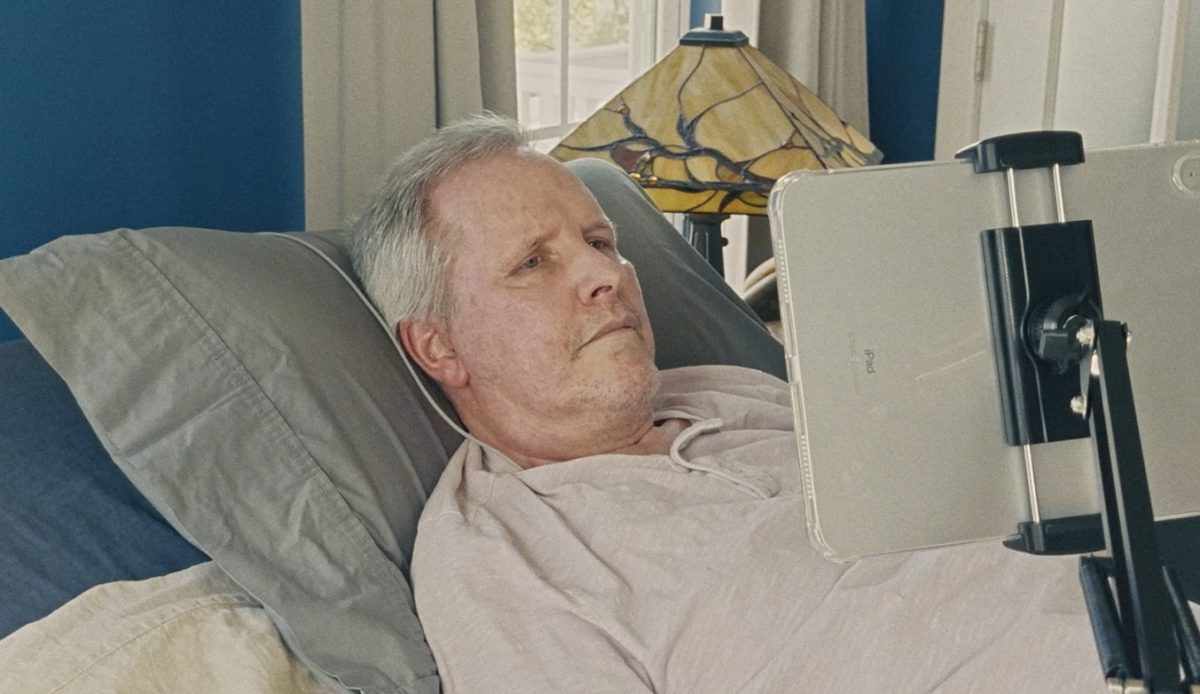
An extraordinary leap in technology and accessibility has taken place, as a man named Mark, who has ALS, has managed to control an iPad using just his brain signals. This groundbreaking achievement involved no physical touch, voice commands, or eye tracking—just pure thought. Utilizing Apple’s new brain-computer interface and the innovative Synchron Stentrode implant, Mark is now able to communicate with the iPad using the power of his mind.
This remarkable development opens up hands-free, thought-driven control for individuals with severe mobility challenges. Before now, simple tasks like sending a text or browsing the internet required significant assistance. However, thanks to the revolutionary brain implant and Apple’s sophisticated interface technology, Mark can effortlessly open apps, navigate menus, and type messages merely by thinking about them. The Synchron Stentrode, a tiny implant placed in a blood vessel near the brain’s motor cortex, captures movement signals and wirelessly transmits them to a small decoder outside the body. Apple’s brain-computer interface in iOS 26 then converts these neural signals into real-time actions on the iPad.
What makes this approach truly compelling is its minimally invasive nature. The Stentrode is inserted through a neck vein, similar to a stent procedure, avoiding the need for open-brain surgery. This not only reduces risk but also makes the technology more accessible globally. Dr. Tom Oxley, co-founder of Synchron, sees this as “a glimpse into the future of human-computer interaction.”
For the first time, the world is witnessing native, thought-driven control of an Apple device. Mark’s achievement is a technical marvel and a peek into a future where cognitive inputs could become a mainstream method of interaction.
Apple’s brain-computer interface is seamlessly integrated into iOS 26 and iPadOS 26 as part of its accessibility features. The company plans to release developer tools soon, paving the way for thought-controlled applications across various domains. While it may not yet match the speed of touch or voice commands, the potential it holds for individuals with conditions like ALS or spinal cord injuries is immense. This breakthrough moves us closer to a future where controlling devices with thought becomes an everyday reality.