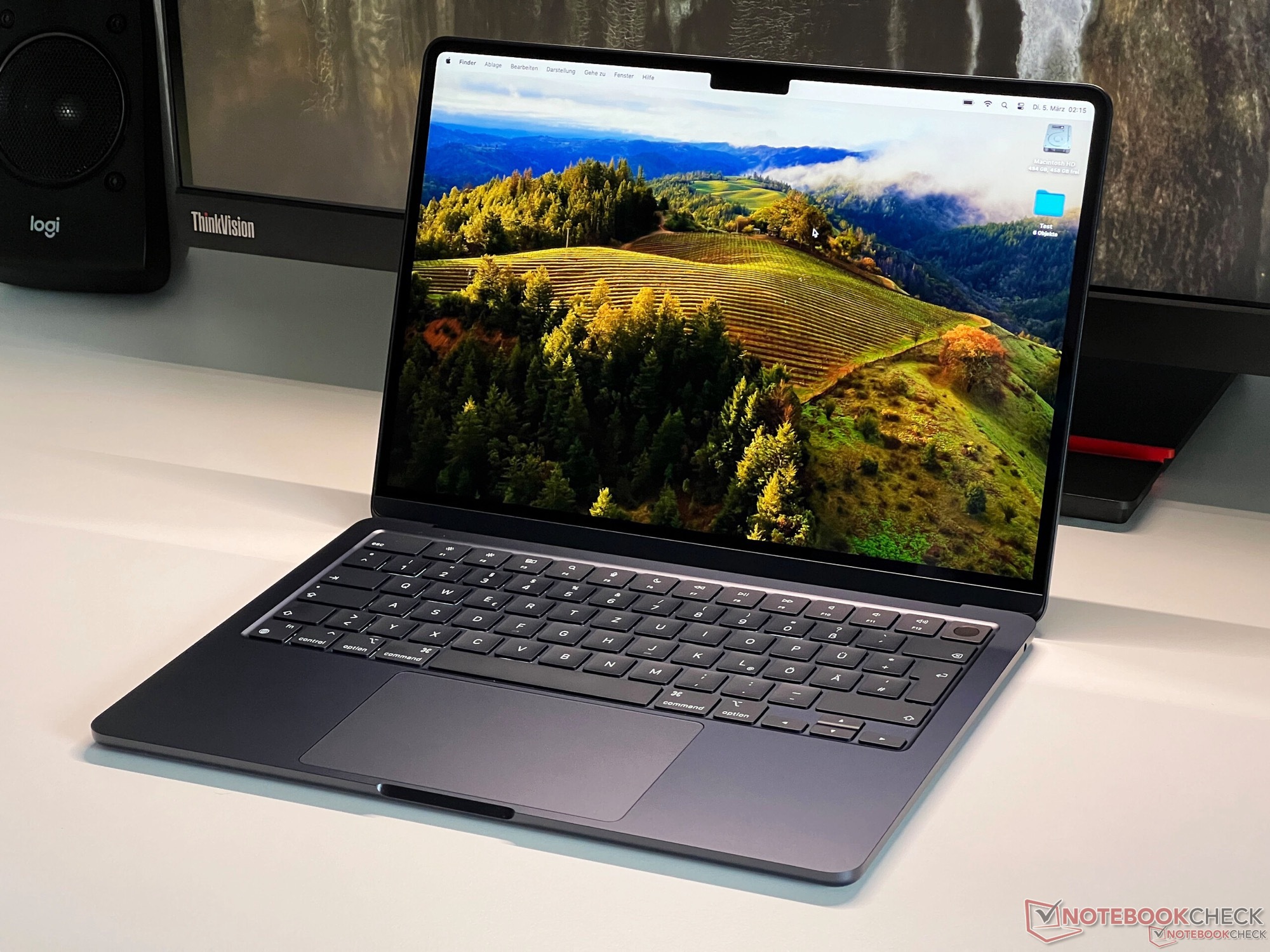
The MacBook Air line has always been synonymous with sleek design and portability, but with its latest iteration featuring the Apple M3 chip, it has also received a notable upgrade in its storage department. The MacBook Air’s base model now enjoys a significant improvement in its solid-state drive (SSD) capabilities—attributable to a new configuration within its hardware.
The new MacBook Air has moved away from the single 256 GB NAND memory chip found in its predecessors. Instead, it boasts a dual-chip setup consisting of two 128 GB chips. This configuration shift not only incurs a slight increase in production costs but also substantially boosts data transfer rates.
This SSD enhancement has effectively addressed one of the most critical drawbacks observed in the preceding model. However, when juxtaposed with rival laptops on the market, the MacBook Air’s performance boost is still relatively modest. For instance, while the MacBook Air’s SSD uses the PCIe 3.0 connection, competitors like the HP Omen Transcend 14, the Lenovo ThinkPad X1 Carbon G12, and the MSI Prestige 13 AI Evo are equipped with newer PCIe 4.0 SSDs. This advancement allows these competitors to reach impressive data transfer speeds of up to approximately 7 GB/s, outpacing the MacBook Air.
While the MacBook Air with Apple M3 chip has undeniable appeal, particularly for loyal fans of the brand, the tech-savvy user looking for top-tier SSD performance might find more suitable options with the latest offerings from other top-tier brands in the market.