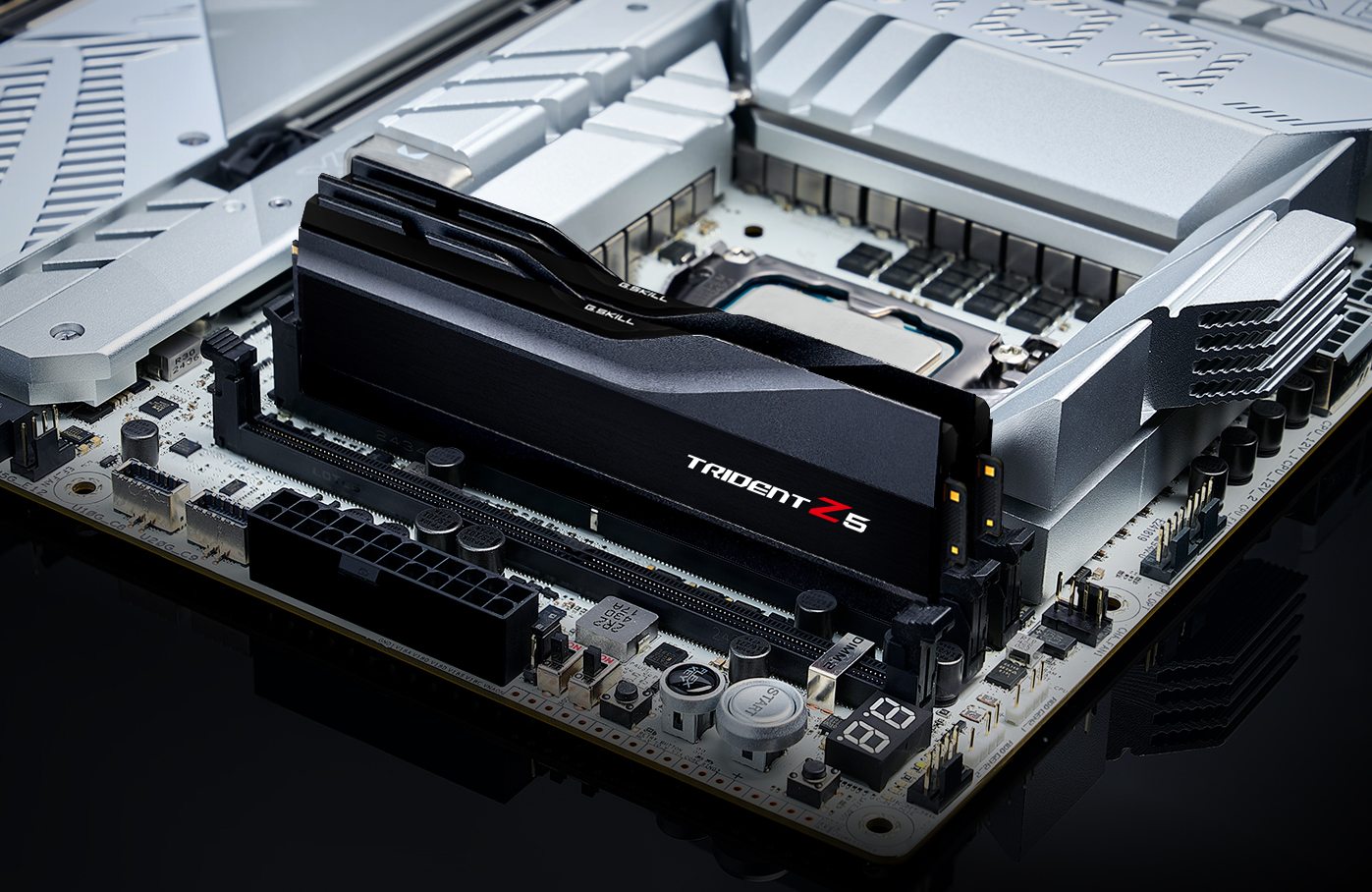
In the high-octane world of professional overclocking, Seby has just made headlines by achieving an astonishing 12772 MT/s with the G.Skill Trident Z5 memory on an ASUS ROG Maximus Z890 Apex motherboard. This remarkable feat has dethroned the previous record held by Hicookie, who had reached an impressive 12762 MT/s using XPG Lancer RGB DDR5 memory, a record that stood unbeaten for only two weeks.
Seby, no stranger to the world of overclocking, expertly pushed the G.Skill Trident Z5 memory to its limits, cementing his place at the top with optimal timings. This milestone is not only a testament to Seby’s skill but also highlights G.Skill’s relentless commitment to memory performance, their partnership with industry giants like Intel and ASUS, and their knack for breaking barriers.
The victorious setup featured a single 24 GB memory module paired with the Intel Core Ultra 9 285K processor. The results have been documented and verified on platforms such as HWBot and CPU-Z. Despite the high frequency, the final memory timings were CL68-127-127-127-2, which are understandably higher due to the incredible speed achieved. It’s important to note, however, that ramping up memory speeds to over 12000 MT/s often comes at the cost of increased latency, which may not translate to noticeable performance boosts in practical scenarios.
Overclocking often fascinates enthusiasts, serving both as a hobby and a testament to the potential of cutting-edge hardware. Companies like G.Skill offer a range of high-speed modules including the Trident Z5 Neo, Trident Z5 Royal, and the Ripjaws series, frequently pushing the envelope in-house before these feats are made public.
In Seby’s record-breaking quest, liquid nitrogen cooling was employed on both the CPU and memory—a standard practice among serious overclockers. Achieving such blazing fast speeds also hinges on having top-tier components; in this instance, a high-end Z890 motherboard was crucial to surpassing the 10,000 MT/s threshold.
With records continually being broken and reestablished, the world of overclocking remains as thrilling and competitive as ever, promising more exciting breakthroughs in the future.


