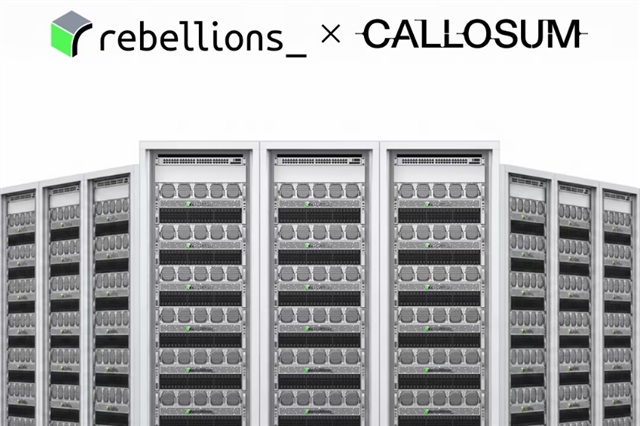
Rebellions targets UK AI infrastructure push with 100-plus NPU rack deployment
South Korean AI chipmaker Rebellions is aiming to expand its presence in Europe with a major infrastructure push in the United Kingdom. The company is working with British AI infrastructure startup Callosum on a plan to deploy more than 100 computing racks powered by neural processing units, or NPUs.
The move could give Rebellions an important foothold in one of Europe’s most closely watched AI markets, as governments and companies look for alternatives to traditional cloud-based artificial intelligence systems. With demand for AI computing capacity rising rapidly, the UK has been stepping up efforts to build more local and secure infrastructure for advanced AI workloads.
At the center of the plan is sovereign AI computing, a growing trend in which countries seek to process sensitive data and run AI models within their own borders. This approach is becoming increasingly important for sectors such as government, finance, healthcare, defense, research, and public services, where control over data, privacy, and infrastructure is critical.
Rebellions’ NPU-based racks are designed to support AI processing more efficiently than general-purpose hardware. NPUs are specialized processors built for machine learning and deep learning tasks, making them well suited for inference workloads, model deployment, and large-scale AI services. By focusing on NPU infrastructure, Rebellions is positioning itself as part of the next wave of AI hardware providers competing to deliver faster and more energy-efficient computing.
The partnership with Callosum could help accelerate adoption in the UK by combining Rebellions’ AI chip technology with local infrastructure expertise. For Rebellions, this would represent more than just a hardware deployment. It would also serve as a strategic entry point into Europe’s expanding AI ecosystem, where demand for secure and scalable compute capacity continues to grow.
The planned deployment of more than 100 racks signals ambition at a time when AI infrastructure has become a key part of national technology strategy. As AI models become larger and more complex, access to high-performance computing resources is becoming a competitive advantage. Countries that can provide reliable AI infrastructure locally may be better positioned to support startups, enterprises, and public-sector AI projects.
The UK has been working to strengthen its role in artificial intelligence, and partnerships like this highlight the importance of building a broader hardware and infrastructure base. While much of the AI industry has focused on GPUs, NPUs are gaining more attention as companies search for optimized processors that can reduce power consumption and improve efficiency for specific AI workloads.
For Rebellions, the UK project could improve global visibility and help the company compete beyond its home market. Europe’s demand for AI computing is expected to increase sharply as businesses adopt generative AI tools, automation systems, data analysis platforms, and custom AI models. A successful deployment in the UK could open the door to further partnerships across the region.
Callosum’s involvement also reflects the growing role of infrastructure startups in shaping the future of AI. Rather than relying solely on major global cloud providers, organizations are increasingly exploring specialized AI infrastructure options tailored to local requirements. This shift creates opportunities for chipmakers, data center operators, and AI service providers to form new alliances.
If the rollout proceeds as planned, the Rebellions and Callosum partnership could become an important example of how AI chip companies can support sovereign computing strategies. It also underscores a broader market shift: AI leadership is no longer only about building smarter models, but also about securing the computing power needed to run them.
As the race for AI infrastructure intensifies, Rebellions’ planned 100-plus NPU rack deployment in the UK may mark a significant step for the company’s European ambitions and for the region’s growing focus on independent, efficient, and secure AI computing capacity.


