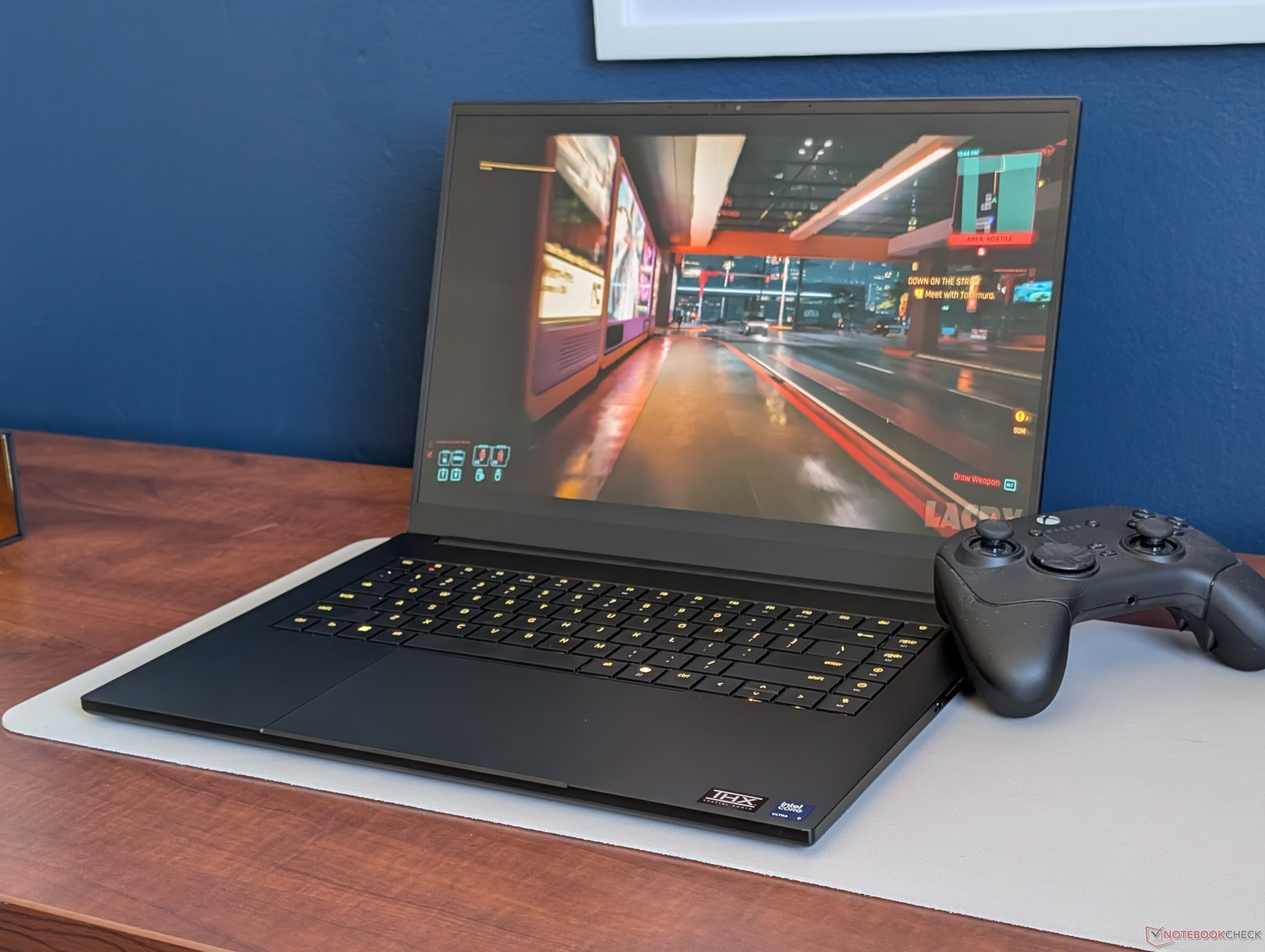
Razer has made a major display upgrade with the 2026 Blade 16, and it could be one of the most important improvements for anyone who cares about HDR gaming, streaming, and high-end visual performance.
The previous Blade 16 model already had plenty going for it. Its OLED display delivered a sharp, vibrant image with a fast 240 Hz refresh rate and support for G-Sync, making it a strong choice for gamers and creators who wanted smooth motion and deep contrast. However, one area where it felt limited was HDR brightness. The 2025 version topped out at DisplayHDR 500, which meant HDR content did not have the same level of impact seen on some competing premium laptops with brighter OLED screens.
For the 2026 Razer Blade 16, that changes in a big way. The refreshed model increases maximum HDR brightness to 1000 nits, effectively doubling the HDR capability compared to the previous generation. This moves the laptop from DisplayHDR 500 territory into DisplayHDR 1000, giving HDR games, movies, and creative content a noticeably stronger visual punch.
Testing confirms the upgrade is not just a spec-sheet improvement. With HDR enabled and brightness set to maximum, the 2025 Blade 16 reached around 431 nits in HDR brightness testing. Under the same conditions, the 2026 Blade 16 reached approximately 1020 nits. That is a substantial leap, especially for an OLED gaming laptop where brightness, contrast, and black levels all play a major role in image quality.
The difference matters because HDR is not only about deeper blacks or richer colors. A great HDR experience depends on the range between the darkest and brightest parts of an image. With the 2026 Blade 16 reaching much higher peak brightness, highlights such as sunlight, explosions, reflections, neon lights, and bright skies can appear far more realistic and dramatic. For gamers, this can make supported titles feel more immersive. For movie watching, it can bring scenes closer to what creators intended. For content creators, the brighter panel may also be more useful when previewing HDR footage.
Unfortunately, owners of the 2025 Blade 16 should not expect this improvement to arrive through a software update. Although the 2025 and 2026 models use similar Samsung OLED panels with the same native resolution and 240 Hz refresh rate, they are not identical displays. The panel identifiers are different, with the 2025 model using ATNA60DL04-0 and the 2026 version using ATNA60HU06-0. Because of that hardware difference, an HDR brightness upgrade for the older model is unlikely.
This makes the 2026 Razer Blade 16 a more meaningful refresh than it may first appear. While the design and core display specifications may seem familiar at a glance, the jump to 1000-nit HDR brightness gives the new model a clear advantage for users who want the best possible OLED viewing experience in a premium gaming laptop.
For buyers comparing high-end laptops in 2026, the brighter OLED panel could be a deciding factor. The Blade 16 already had speed, strong contrast, and smooth 240 Hz gaming performance. Now, with significantly improved HDR brightness, it becomes much more competitive for users who want both elite gaming performance and a richer multimedia experience.