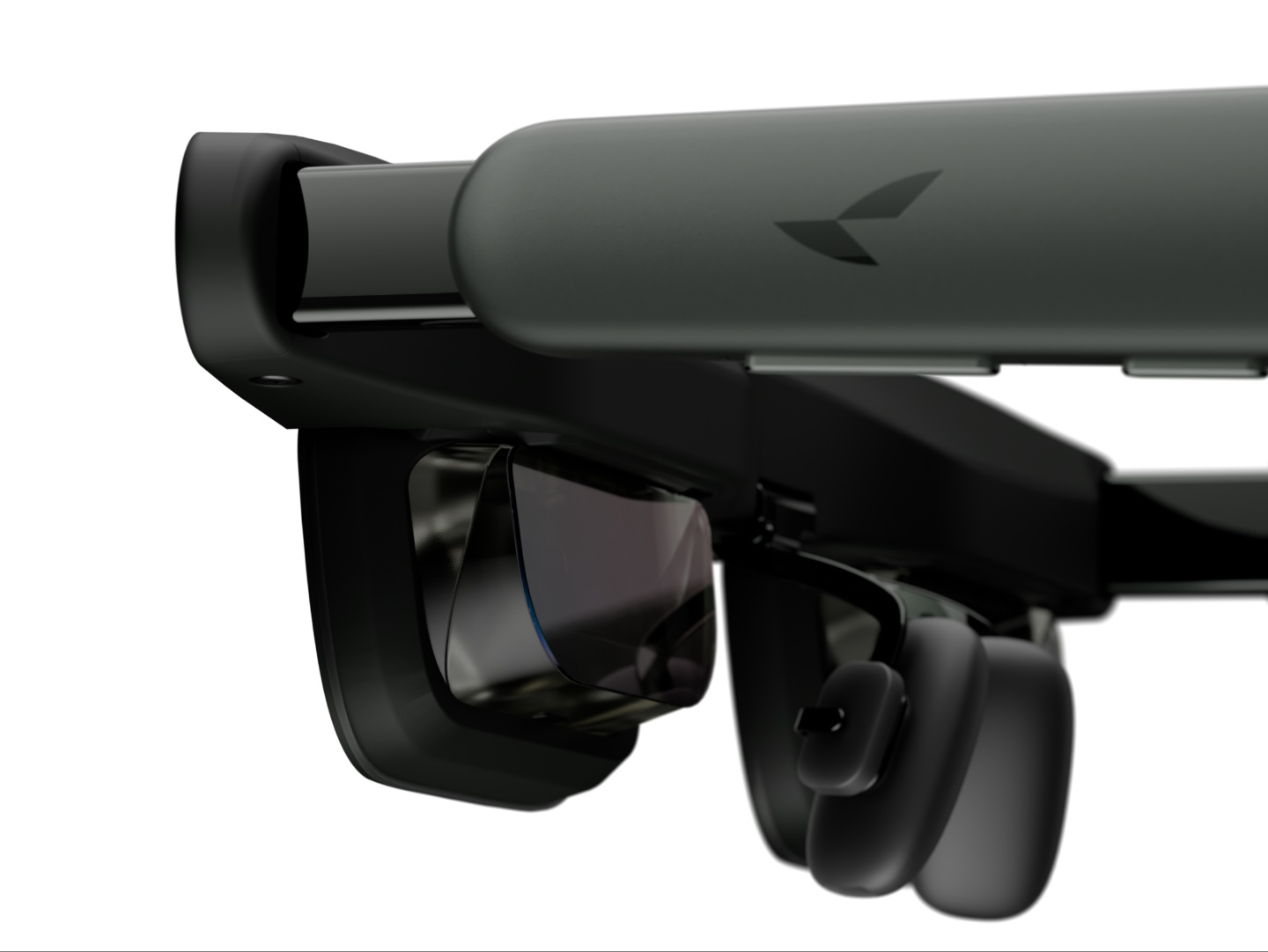
RayNeo has introduced two new wearable display products aimed at very different types of users: the lightweight RayNeo iO Smart Glasses for AI-assisted daily use and the RayNeo GT Series for immersive entertainment, gaming, and big-screen viewing.
The new lineup expands RayNeo’s smart glasses portfolio beyond its existing models, giving buyers more options depending on whether they want subtle AI features, a portable cinema experience, or a high-refresh-rate display for gaming.
RayNeo iO Smart Glasses focus on lightweight AI features without a camera
The RayNeo iO Smart Glasses are designed for people who want useful AI tools in a discreet, everyday wearable. One of the biggest highlights is the weight. At just 33 grams, the glasses are extremely light, making them suitable for long periods of use without feeling bulky or uncomfortable.
RayNeo uses an AZ91D magnesium-aluminum alloy frame combined with dual aerospace-grade titanium, giving the glasses a premium yet durable build. Despite the compact design, the iO includes a waveguide display powered by the company’s monochrome green Firefly Nano Engine. According to RayNeo, text shown on the display can reach up to 1,300 nits of peak brightness, which should help improve visibility in different lighting conditions.
Unlike many AI glasses, the RayNeo iO does not include a camera. Instead, it focuses on voice and text-based intelligence. With four built-in microphones and ambient AI integration, the glasses can help capture conversation context, provide live translation, support auto-teleprompter functions, and deliver other hands-free productivity features.
Users who want more advanced AI access can choose an optional multi-model AI tier through the companion app. This allows switching between popular AI models such as Gemini, ChatGPT, Claude, and DeepSeek, depending on the user’s preference and task.
For audio, RayNeo has skipped traditional speakers and uses bone conduction instead. This allows sound to be delivered privately while keeping the ears open to the surrounding environment. The glasses also include a rotary dial for adjusting on-screen settings, Bluetooth 5.4 connectivity, IP54-rated durability, and official Made for iPhone certification.
Battery life is another key selling point. The RayNeo iO Smart Glasses include a 240 mAh battery, and RayNeo claims they can last up to two days on a single charge, depending on usage.
RayNeo GT and GT Max bring a portable big-screen experience
While the iO Smart Glasses are built around AI and daily convenience, the RayNeo GT Series is designed for entertainment. The lineup includes the RayNeo GT and the higher-end RayNeo GT Max, both targeting users who want a large virtual screen for movies, gaming, and streaming.
The RayNeo GT weighs 68 grams, while the GT Max weighs 78 grams. The standard GT uses a Birdbath optical engine, while the GT Max features the Peacock Optical Engine 3.0 Max. Both models use Micro-OLED displays and offer 1,200 nits of perceived brightness, a 120 Hz refresh rate, and Dolby Vision support.
The display experience differs between the two models. The RayNeo GT offers a 46-degree field of view and can project the equivalent of a 231-inch screen. The RayNeo GT Max goes further with a 59-degree field of view and can create the impression of a massive 307-inch display.
For sound, both models include quad speakers tuned by Bang & Olufsen, giving users a more cinematic audio experience without needing separate headphones. A 3DoF chip is also included, helping support head-tracking features for a more immersive viewing experience.
The RayNeo GT Max also offers three interpupillary distance size options: small for under 64 mm, medium for 64 mm to 67 mm, and large for over 67 mm. This should help more users find a comfortable fit. Prescription lens inserts will also be available for users who need vision correction.
RayNeo iO Smart Glasses and GT Series availability
The RayNeo iO Smart Glasses will be available in two color options: Polar Night and Dune. RayNeo has not announced the official price yet.
Sales for the RayNeo iO Smart Glasses are scheduled to begin on September 4. Pricing details for the RayNeo GT and RayNeo GT Max will also be revealed on September 4 during IFA 2026 in Berlin.
With the iO Smart Glasses, RayNeo is targeting users who want practical AI features in a lightweight, camera-free design. With the GT Series, the company is going after entertainment fans who want a wearable display capable of creating a theater-like screen anywhere. Together, these new smart glasses show RayNeo’s growing push into both AI wearables and immersive visual technology.