Rare GTX 750 Ti with 8GB VRAM Tested in Modern Games, and It’s Surprisingly Real
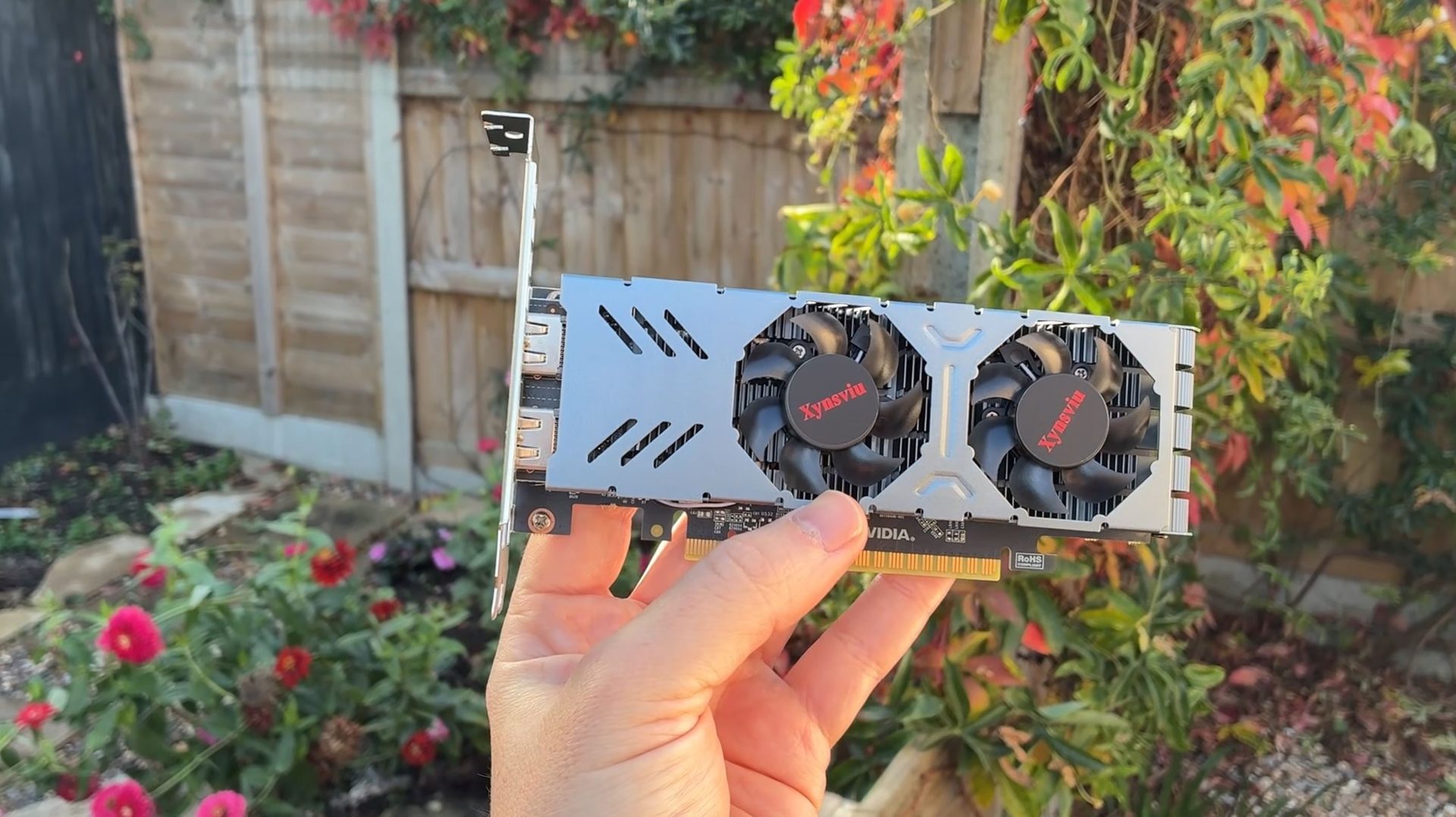
A heavily modified NVIDIA GeForce GTX 750 Ti has appeared with an unusual upgrade: 8GB of GDDR5 memory. The card, sold by Chinese GPU vendor Xynsviu, was recently purchased and tested by YouTuber RandomGaminginHD, confirming that this strange 12-year-old graphics card is not just a fake listing.
The GTX 750 Ti originally launched as a budget-friendly Maxwell-based GPU with 2GB of GDDR5 memory. It became popular for its low power draw, compact size, and ability to run without an external PCIe power connector. More than a decade later, Xynsviu has brought the card back in a custom version with four times the original VRAM.
The modified Xynsviu GTX 750 Ti was bought from Amazon for around £160, which is notably higher than what the card cost when it was new. That price alone makes it a curious product, especially considering the GPU’s age and limited gaming power by today’s standards.
Physically, the card uses a dual-fan cooler and appears to have a compact, low-profile-style design, though it still occupies two slots. It also includes four HDMI ports, which is unusual for a card of this class. Like the original GTX 750 Ti, it does not require a 6-pin power connector and runs entirely from the PCIe x16 slot, making it easy to install in older or low-power systems.
Once installed, GPU detection software confirmed that the card is indeed based on the GeForce GTX 750 Ti. It features the full GM107 chip with 640 CUDA cores, meaning it is not simply a weaker GTX 750 being sold under a different name. That is important because a previous 8GB model seen earlier reportedly used a cut-down configuration with only 512 CUDA cores.
However, the memory setup is where things get interesting. The original GTX 750 Ti typically shipped with 2GB of GDDR5 running at 1350 MHz, paired with a 128-bit memory bus. This custom Xynsviu model uses 8GB of GDDR5 running at 1253 MHz on the same 128-bit bus. As a result, its memory bandwidth is around 80.2 GB/s, which is slightly lower than the standard GTX 750 Ti’s 86.4 GB/s.
In simple terms, the card has far more VRAM, but not more raw GPU power. Xynsviu appears to have paired the genuine GTX 750 Ti graphics processor with eight 1GB GDDR5 memory modules, creating a rare 8GB version of a card that was never designed for that much memory.
The big question is whether 8GB of VRAM helps an old GTX 750 Ti handle modern games. The answer is: sometimes, but not as much as buyers might hope.
In demanding newer titles, the card still struggles due to its aging architecture and limited processing power. In Battlefield 6, tested at the lowest settings with a 50% resolution scale, the GPU managed to stay above 30 FPS on average. Interestingly, the game used more than 4GB of VRAM, proving that the extra memory can be recognized and used in modern workloads.
Cyberpunk 2077 also ran at over 30 FPS on the lowest settings with FSR 2.1 enabled. That is impressive for a GPU from 2014, but the experience is still far from what most PC gamers would consider smooth or visually appealing today.
The card performs better in lighter esports and competitive titles. Games such as Counter-Strike 2, Fortnite, Overwatch, and Arc Raiders were able to reach around 60 FPS or higher at 1080p using low-to-medium settings. For less demanding games, the GTX 750 Ti 8GB can still deliver playable results, especially if expectations are realistic.
Even so, the extra VRAM does not transform the GTX 750 Ti into a modern gaming GPU. In most tests, performance remains close to the original 2GB GTX 750 Ti because the core itself is the main limitation. The GPU lacks the shader performance, memory bandwidth, and modern feature support needed to compete with newer entry-level graphics cards.
The Xynsviu GTX 750 Ti 8GB is best viewed as a curiosity rather than a smart gaming upgrade. It is real, it works, and the 8GB memory configuration is functional, but its high price makes it difficult to recommend for most users. Anyone looking for the best gaming performance per dollar would likely be better served by a newer budget GPU or a used card from a more recent generation.
Still, this custom GTX 750 Ti is fascinating for PC hardware enthusiasts. It shows how older GPUs can be modified and revived in unexpected ways, even long after their original market life has ended. For collectors, experimenters, and fans of unusual graphics cards, the 8GB GTX 750 Ti is a rare piece of hardware history that actually runs modern games, even if only at low settings.