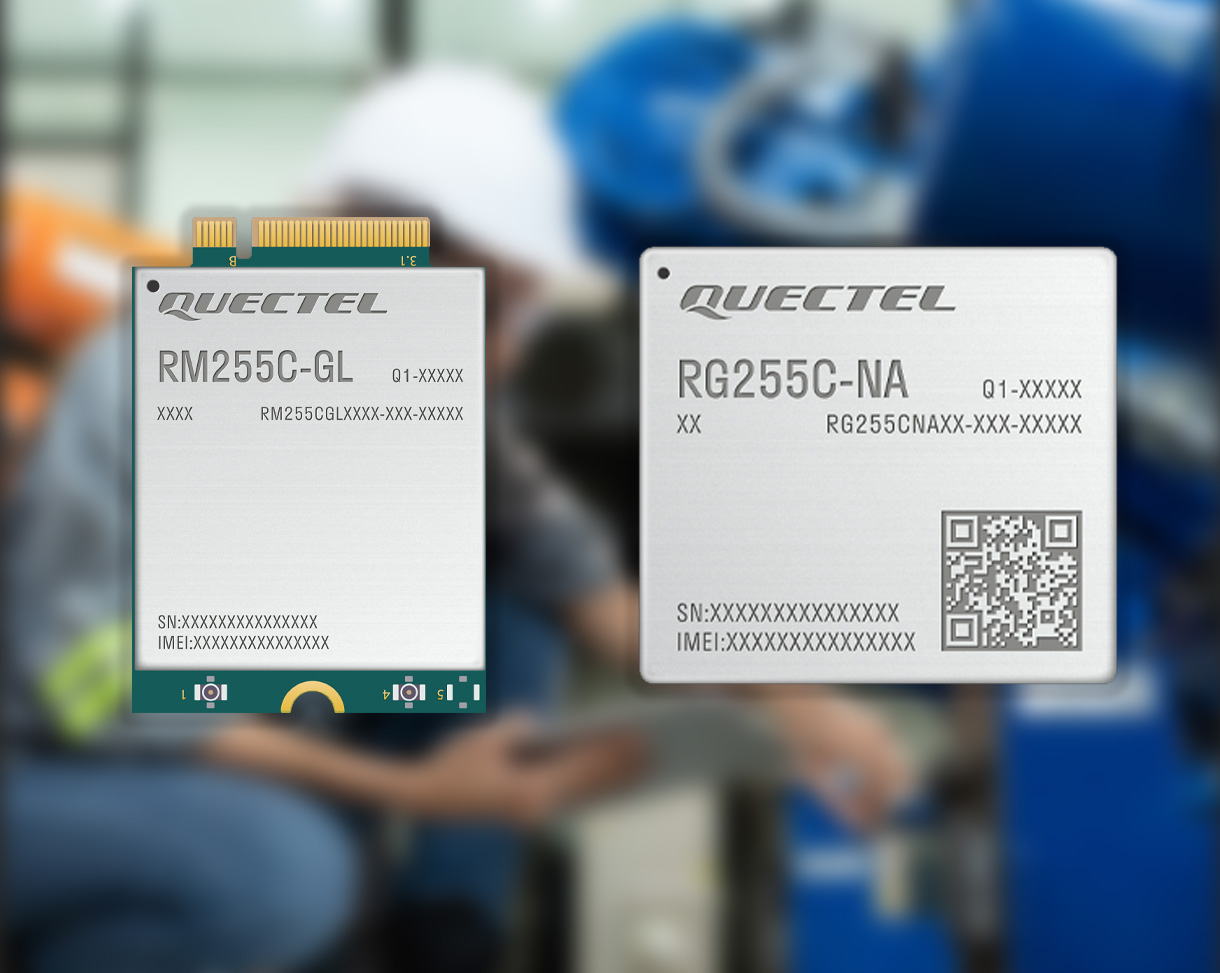
Quectel is growing its 5G Reduced Capability (5G RedCap) lineup with two new cellular modules aimed squarely at modern IoT deployments: the RM255C-GL for global projects and the RG255C-NA tailored for North America. Built on 3GPP Release 17 RedCap technology, both modules are positioned for mid-tier industrial and commercial devices that need efficient 5G connectivity without the cost and complexity of full-featured 5G broadband modules.
The RM255C-GL is designed for worldwide use and comes in an M.2 form factor, making it a practical choice for routers, gateways, industrial PCs, and embedded platforms that already support M.2 connectivity. It measures 30.0 x 42.0 x 2.3 mm and weighs about 6 grams. For North American deployments, Quectel offers the RG255C-NA in an LGA package, sized at 32.0 x 29.0 x 2.4 mm and weighing roughly 5.2 grams—an option that fits well in compact, space-sensitive device designs.
On the network side, both modules support 5G Sub-6 GHz in standalone (SA) mode and fall back to LTE Cat 4 when needed. They’re also backward compatible with Release 15 and Release 16 networks, which can help deployments stay flexible as carriers continue rolling out and upgrading 5G infrastructure. The RG255C-NA goes a step further with support for 5G LAN, URLLC, and network slicing—features that can matter for industrial automation and enterprise use cases where latency, segmentation, and reliability are critical.
Power efficiency is another major focus for RedCap, and Quectel highlights optimized consumption for these mid-range applications. The RM255C-GL is rated at approximately 2.83 mA in sleep mode and around 21.97 mA while idle. The RG255C-NA is listed at a typical 2.5 mA in sleep and about 27 mA in idle. For battery-powered or energy-conscious installations like sensors, trackers, smart city endpoints, and distributed monitoring equipment, those numbers can make a real difference over long operating lifecycles.
Certification coverage also reflects the intended markets. For global rollouts, the RM255C-GL includes approvals such as CE, RCM, FCC, IC, GCF, and PTCRB. The North America-focused RG255C-NA carries PTCRB, FCC, and IC approvals.
In terms of hardware integration, both modules support common interfaces like USB 2.0 and PCIe 2.0. The RG255C-NA adds additional connectivity options including PCM, UART, SGMII, and SPI, giving device makers more flexibility when connecting peripherals, networking components, or industrial controllers.
Upgrading existing products should be easier too. Quectel notes that the new modules are pin-to-pin compatible with its older 4G modules and partially compatible with the smaller 4G EG2x series. That’s good news for teams that want to refresh a proven 4G design to 5G RedCap with minimal board redesign and faster time to market.
A standout addition for both modules is the integrated GNSS/location engine based on Qualcomm’s IZat Gen 9VT technology. Instead of relying only on GPS, it supports multi-constellation GNSS—GPS, GLONASS, Galileo, BDS, QZSS, NavIC—helping deliver faster acquisition and more accurate positioning in real-world conditions. For asset tracking, fleet management, field equipment monitoring, and mobile industrial systems, the move to multi-constellation GNSS can significantly improve location reliability, especially in dense urban areas or challenging environments.
As for availability, the RM255C-GL global variant is currently listed through distribution at around $143.85 with a minimum order quantity of 150 units, suggesting it’s initially aimed at volume product builds rather than casual one-off development. The RG255C-NA was not listed as available at the time of writing.
With RedCap gaining momentum as a practical middle ground between LTE and full 5G, Quectel’s RM255C-GL and RG255C-NA modules land at a timely moment—bringing 5G SA Sub-6 performance, carefully tuned power profiles, flexible interfacing, and robust multi-constellation GNSS to the kind of IoT devices that need modern connectivity without enterprise 5G overhead.