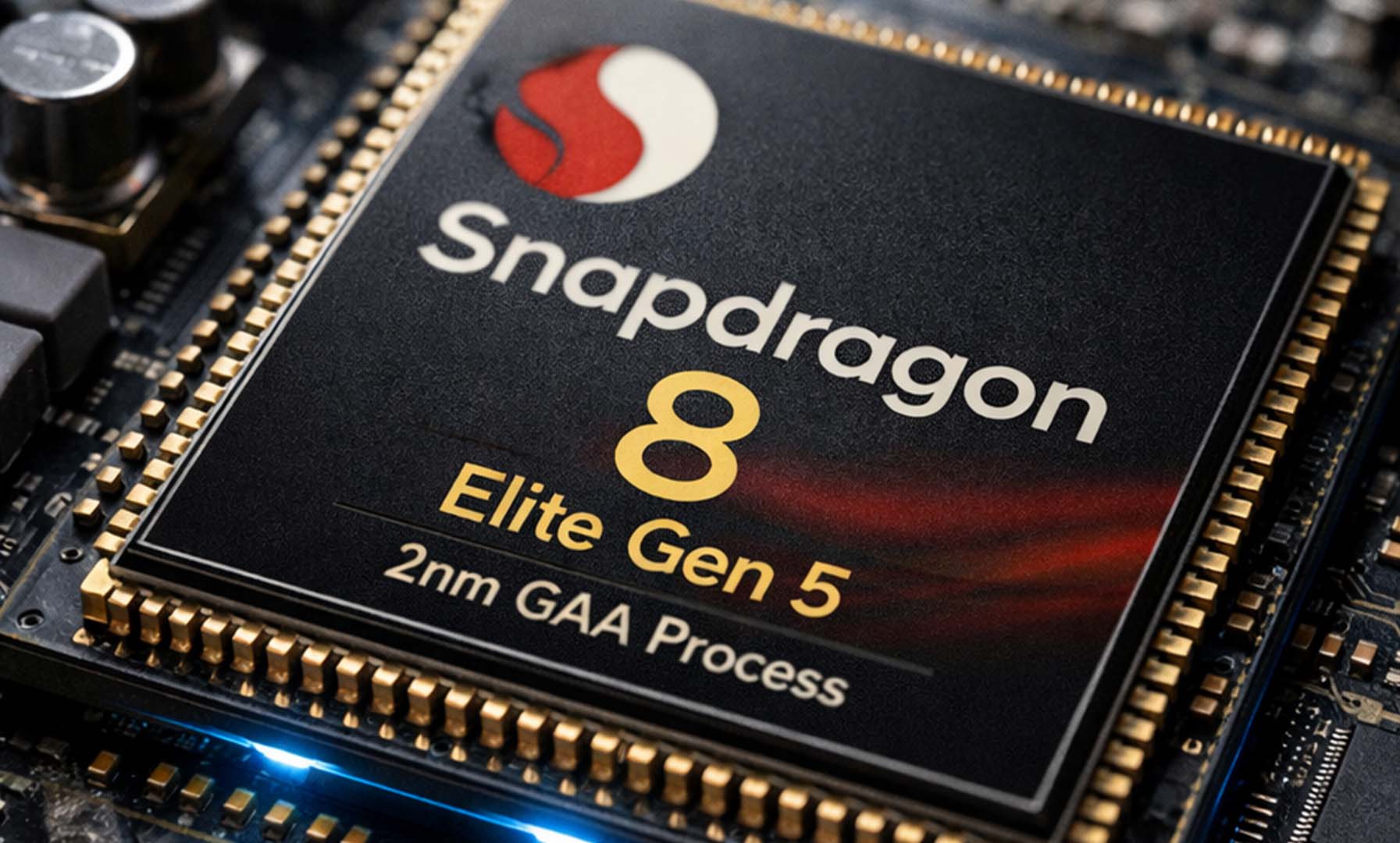
Qualcomm is reportedly in talks with Samsung about mass-producing its current flagship smartphone processor, the Snapdragon 8 Elite Gen 5. This comes only months after Samsung is said to have provided Qualcomm with foundry samples for evaluation. If the negotiations move forward, it could mark a major shift in how Qualcomm manufactures its top-end chips, and it could also give Samsung Foundry a much-needed high-profile customer—one that could generate significant long-term volume.
The bigger story behind these discussions is cost. Flagship mobile chipsets have become increasingly expensive to build. The Snapdragon 8 Elite Gen 5 is estimated to cost around $280 per unit, and expectations are that a future Snapdragon 8 Elite Gen 6 Pro could push beyond $300. With next-generation designs moving to advanced process nodes like 2nm, the price pressure is likely to get worse—especially when relying on a single manufacturing partner.
That’s why Qualcomm is said to be exploring production at Samsung Foundry. A report cites three major reasons this partnership could happen: lowering costs compared to sticking to one supplier, diversifying manufacturing to reduce supply-chain risk, and gaining strategic leverage in negotiations and product planning.
On the technology side, Qualcomm may be looking at Samsung’s 2nm GAA (Gate-All-Around) process, potentially including a refined second-generation version often referenced as SF2P. If Samsung can deliver on performance and efficiency targets, Qualcomm could use Samsung-made Snapdragon chips not only to expand manufacturing capacity, but also to increase Snapdragon’s share inside Samsung’s own Galaxy S lineup.
That last point could be especially important. If Qualcomm becomes a larger supplier for Galaxy S flagships, Samsung could end up shipping more of its premium phones with Snapdragon processors instead of its in-house Exynos chips. From Qualcomm’s perspective, that would be a significant win: more Snapdragon units, more influence, and a stronger position in premium Android devices.
For Samsung, it’s a mixed outcome. On one hand, landing Qualcomm would be a big victory for Samsung’s semiconductor business, bringing in major orders and strengthening its standing in the advanced-node race. Samsung has already secured large deals on its 2nm roadmap, but adding a top-tier mobile chipset customer would carry major prestige and could create more consistent demand.
On the other hand, it could create internal pressure for Samsung’s smartphone division. Using more Snapdragon chips tends to be more expensive than using Exynos, meaning Samsung’s Mobile Experience business could face higher component costs per device. In plain terms, Samsung Foundry could benefit while Samsung’s phone business might pay more to build its flagship models, potentially squeezing margins unless pricing, sales volume, or other savings offset the higher chipset expense.
There’s also a key obstacle Samsung must solve before any major commitment happens: manufacturing yield. The report points to Samsung’s 2nm GAA yields being around 50%, and suggests that Samsung would need to raise that figure to roughly 70% to be truly competitive and convincing for Qualcomm’s mass production needs. Yield matters because low yields raise costs, limit supply, and make large-scale launches riskier—exactly the problems Qualcomm is trying to avoid as flagship chip prices climb.
If Samsung can improve yields and prove the reliability of its 2nm process, the Qualcomm–Samsung partnership could reshape the flagship Android chipset landscape, influence what powers future Galaxy S phones, and accelerate the broader shift toward multi-foundry strategies in high-end mobile silicon.


