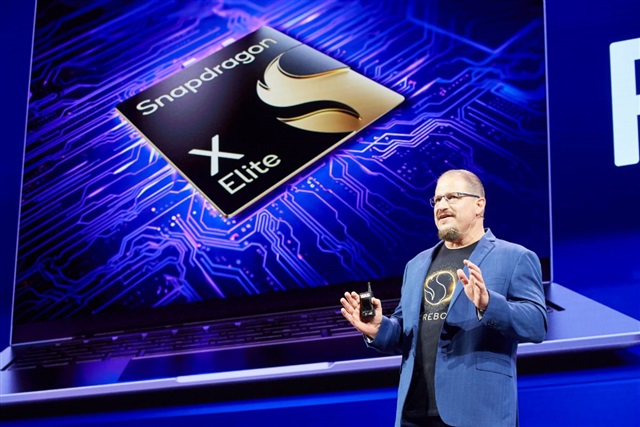
In the fast-evolving domain of artificial intelligence-powered personal computers (AI PCs), Qualcomm, a leader in the industry, has expressed confidence in its competitive edge. The company’s CEO, Cristiano Amon, underscores that a strategic combination of neural processing unit (NPU) capabilities, power efficiency, and computing power will be pivotal in Qualcomm’s journey towards success in this area.
**Understanding AI PC Competitiveness**
AI PCs are increasingly becoming a focal point for consumers and businesses alike, due to their ability to streamline tasks, enhance productivity, and offer new levels of user interaction. For manufacturers, standing out in this burgeoning sector hinges on a few critical aspects:
1. **Neural Processing Unit (NPU) Capabilities**: NPUs are specialized hardware designed to accelerate artificial intelligence workloads. Qualcomm’s focus on powerful, yet efficient NPUs signifies the company’s commitment to delivering superior AI-driven experiences.
2. **Power Consumption**: As devices integrate more advanced AI features, managing power consumption effectively is essential to maintain battery life and device performance. Qualcomm’s approach suggests an emphasis on optimizing energy use while running demanding AI tasks.
3. **Computational Capacity**: At the heart of AI PC prowess is the computer’s ability to process and analyze large amounts of data swiftly. Qualcomm’s endorsement of robust computational abilities indicates that their products are likely designed to handle complex AI operations seamlessly.
**How Qualcomm’s Strategy Impacts Users**
Qualcomm’s systematic focus on NPU capability, energy management, and computational power is likely to offer tangible benefits to users. These include longer battery life, quicker response times in AI applications, and a smoother and more intelligent overall computing experience.
**Recent Trends and Practical Implications**
The AI PC market is witnessing a surge in innovation with emphasis on machine learning, deep learning, and user-centric features. Companies are racing to develop AI solutions that can anticipate user needs, automate routine tasks, and offer predictive functionalities in real-time.
To stay ahead of these trends, PC users and enthusiasts should prioritize devices that boast efficient AI capabilities. When choosing an AI PC, consider factors such as battery life benchmarks, AI-specific hardware features, and software that leverages AI to improve everyday use cases.
**Applying AI PC Insights**
For those looking to harness the potential of AI PCs in professional environments, the focus should be on devices that can deliver enhanced productivity through automation and intelligent task management. In personal use scenarios, AI capabilities can transform entertainment, home automation, and personal assistance functionalities.
In conclusion, as AI PCs continue to develop, Qualcomm’s strategy offers a glimpse into the type of innovations that may set industry benchmarks. The company’s commitment to balancing NPU capabilities, power efficiency, and computational power is shaping up to be a keynote in the progress of AI computing, which users should carefully examine while making informed purchasing decisions.