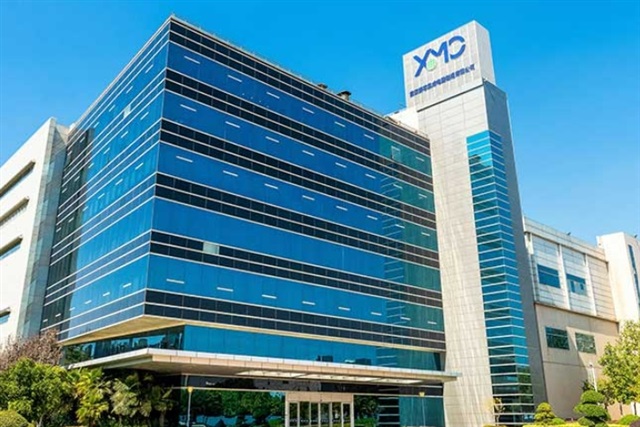
China’s chip ambitions are facing a fresh test as Wuhan Xinxin Semiconductor Manufacturing Co. sees its long-anticipated STAR Market debut run into headwinds. Local business media report that XMC, a key subsidiary of YMTC, has come under heightened regulatory scrutiny after a sharp earnings slide, surging depreciation expenses, and complicated related-party transactions cast doubt on the timing and prospects of its listing.
For investors who had viewed XMC’s IPO as a bellwether for China’s semiconductor self-sufficiency drive, the turn of events is striking. The company had positioned itself to tap public markets on Shanghai’s tech-focused board, aiming to fund capacity, accelerate product development, and cement its role within YMTC’s broader memory ecosystem. Instead, its listing journey has stretched into a drawn-out saga, as profitability faltered and auditors and regulators probed deeper into the company’s books and business ties.
At the center of the story is a steep profit decline. Earnings in the semiconductor industry are notoriously cyclical, but reports suggest XMC’s downturn was exacerbated by heavier-than-expected depreciation charges as new and upgraded production lines came online. For chipmakers, building or expanding fabs is capital intensive; the depreciation that follows can compress margins for years, especially if market demand softens or pricing remains under pressure. Layer that onto a challenging memory market and ongoing supply-chain constraints, and the financial strain becomes harder to ignore.
Regulators are also focusing on related-party dealings. XMC sits within the orbit of YMTC and affiliated entities, and such close-knit relationships, while common in complex manufacturing ecosystems, can invite rigorous questions. Authorities and investors typically want clear visibility into how revenue, costs, and assets are shared or transferred among affiliates, whether transactions are conducted at arm’s length, and how those structures affect reported profits. Any perception of opaque arrangements or overreliance on sister companies can slow approvals and undermine market confidence.
China’s STAR Market has raised its bar in recent years, with a sharper emphasis on transparent disclosures, sustainable earnings models, and cleaner corporate governance. For a capital-intensive chip player like XMC, that means more than just proving technological capability. It means demonstrating that cash flows can support aggressive depreciation schedules, that inventory and pricing risks are managed prudently, and that intercompany transactions don’t mask the true health of the business.
This setback arrives at a sensitive moment for the country’s semiconductor sector. Policymakers want to scale domestic production of advanced chips, and memory is a strategic pillar of that plan. Yet the path to scale is rarely linear. Global demand oscillates, pricing power shifts, and export controls complicate access to tools and materials. Companies respond by investing heavily, which improves long-term competitiveness but weighs on near-term earnings. As XMC’s experience shows, the gap between national ambition and market realities can be wide, and the STAR Market’s rigorous vetting can magnify that gap.
For prospective investors, the key questions are straightforward. Can XMC stabilize its profitability as new equipment and facilities move from depreciation drag to revenue drivers? Will the company simplify or better explain its related-party interactions to satisfy regulators and public shareholders? And how quickly can it align its disclosures with evolving listing standards to revive momentum for its IPO?
There are reasons to reserve judgment. Once capacity ramps are absorbed and utilization improves, depreciation becomes more manageable on a per-unit basis. Memory cycles turn, sometimes faster than expected, and firms that weather the troughs often emerge leaner and more competitive. If XMC can show consistent cash generation, tighter cost control, and textbook compliance on related-party governance, its case for a STAR Market listing could regain traction.
Still, the episode is a reminder that capital markets demand clarity, especially in sectors with heavy state support and complex corporate structures. Transparency around procurement, sales, technology licensing, and shared services within a group can make or break investor trust. In an environment where regulators are intent on strengthening market discipline, even strategically important chipmakers must meet a higher standard.
For now, XMC’s IPO remains a work in progress, emblematic of both the promise and the growing pains of China’s semiconductor rise. The company’s next disclosures and any refinements to its governance will be closely watched. If it can turn depreciation headwinds into operating leverage and untangle questions around related-party dealings, the path to the STAR Market could reopen—offering a clearer signal about the health and maturity of the country’s chip industry as a whole.