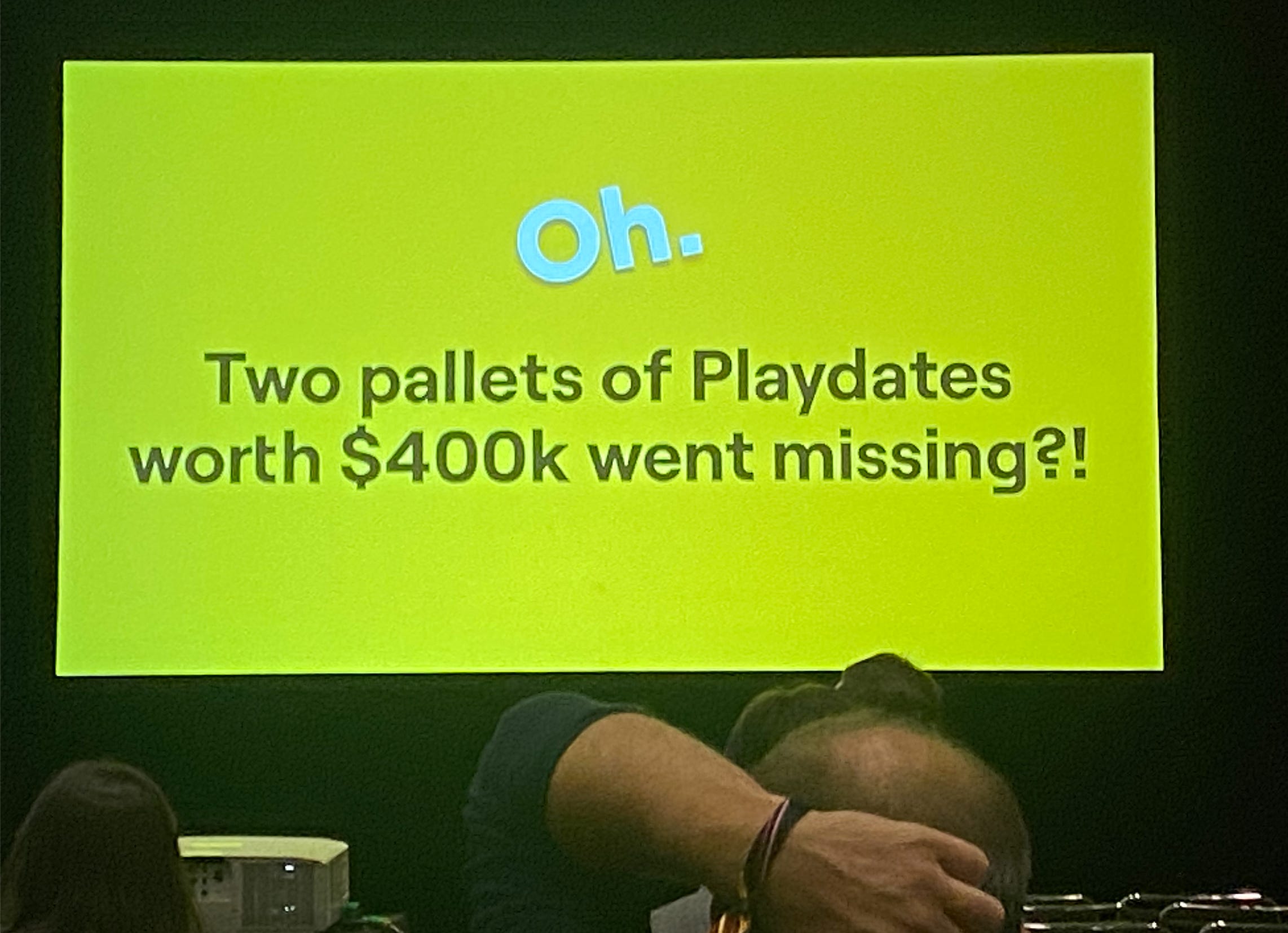
In a perplexing case straight out of a mystery novel, two pallets of Playdate game consoles, valued at a staggering $400,000, have vanished without a trace in Las Vegas, leaving the team at Panic—the creative minds behind the innovative gaming hardware—in a state of confusion and concern.
The small, distinctive handheld console, priced at $200 and recognizable by its monochrome screen, bright yellow buttons, and unique crank, faced initial public skepticism following its announcement in 2019. However, the Playdate quickly proved its appeal, selling out its pre-orders in just 17 minutes back in 2021. Despite overcoming early production challenges, such as a setback due to faulty batteries, the device has achieved impressive sales numbers, with 70,000 units sold and a variety of excellent games available for the platform.
The Playdate’s journey hasn’t been without its hurdles. The brand had to contend with being dropped by its original shipping company and later by its factory, which required swift responses and adaptions on Panic’s part. The company’s ability to persevere through logistical challenges speaks volumes about its dedication to delivering the unique gaming experience that is the Playdate.
The lost pallets remain an active mystery. Panic is working on tracking down the missing items, noting peculiar circumstances such as two other pallets being erroneously delivered to a nearby construction site. Panic co-founder Cabel Sasser informed that the individual who signed for the two recovered pallets on the construction site was the same who signed for the two still missing, adding another layer to the enigma.
Serial numbers of each unit have allowed the company to confirm that seven of the missing Playdates have been registered in the vicinity of North Las Vegas—providing a crucial yet puzzling clue. The company boldly faces the task of solving this true crime drama and vows to keep their community informed of any developments.
Despite the challenges, Sasser expressed a sense of fulfillment from the Playdate project, sharing heartwarming fan mail and success stories, including one from someone who credited the platform with helping them fulfill their dream of creating a video game. Sasser’s optimistic message was clear: despite the setbacks and occasional malicious individuals, the good in people and the industry is prevailing.
As for the financial aspect of the Playdate, the company is optimistic. Although not currently profitable, Sasser believes that the console makes respectable amounts of money and with strategic planning, could indeed become a profitable venture. He mentioned plans to reallocate personnel to different projects within the company, which is known for creating Mac apps and publishing celebrated games like Firewatch and Untitled Goose Game.
Among other updates, Sasser discussed the delayed stereo dock for the Playdate, indicating that the company has taken control of the software development process and aims to finalize and release the add-on.
In parallel with the incident of the missing Playdates, other voices within the gaming community were heard at the Game Developers Conference, with advocates using the platform to make bold statements about the industry and global issues. The narrative cooking game Venba was highlighted as an example, with its lead designer using an acceptance speech to call for political action.
Larian Studios’ Swen Vincke also participated in the discourse, sharing his aspirations for creating games in different genres but recognizing his strengths and the studio’s well-established reputation for iconic role-playing games.
In terms of immersive gaming experiences, statistics from “Star Wars Jedi: Survivor” indicate that the majority of players continued engaging with the game well beyond its main storyline, showcasing the appeal of in-depth world-building and character interaction.
These industry insights and events, along with the curious case of the disappearing Playdate consoles, paint a vivid picture of the multifaceted world of game development, highlighting both the passion and challenges that define this dynamic field.In the ever-evolving world of gaming, there are unique perspectives and challenges that both game developers and industry executives face. The translation of gaming concepts to different languages is one such challenge. For instance, the term ‘gameplay’ does not directly translate across all languages, and therefore, professionals try to find equivalent terms that capture the essence of playing games, emphasizing that it’s more than just a straightforward translation—it’s about conveying the experience.
Optimism runs high among industry professionals, even amidst concerns such as layoffs, the crunch of big budgets, and studio closures. There’s a belief that the influx of talent and the creation of amazing games will help the industry to bounce back.
In terms of development tools, there have been significant shifts. Following a controversial pricing plan by Unity, one of the leading game-making engines, the Godot gaming engine saw its user base soar, doubling in a month, a sharp increase from its previous annual growth rate. This showcases the fluidity of the market and the potential for open-source tools to become more prominent.
Game design decisions can profoundly impact player engagement. For example, Insomniac Games’ “Marvel’s Spider-Man 2” faced a developmental crossroads with its fast-travel system. Initially, its usage led to players missing out on the immersive experience of the game’s version of New York City. The studio addressed this by revising the exploration loop, improving in-world indicators for side missions, and keeping the feature available early on without it detracting from the overall gameplay.
Managing ongoing post-release content for games such as “Destiny 2” is another facet where thoughtful planning is critical. Bungie, the game’s developer, maintains an internal dokument that receives numerous hits daily for planning expansions, seasons, and fixes. Their triage meetings and release marshal system indicate a structured and strategic approach to post-release management, aiming to mitigate burnout among their workforce.
In examining industry trends, it seems that publishers are currently favoring sequels, licensed games, and remakes/remasters over new intellectual property. This risk-averse strategy may be indicative of the industry’s response to the subsidence of the post-pandemic-lockdown gaming boom. As a result, studios that traditionally take on contract work position themselves to navigate through this phase by focusing on what’s coming in the medium to long term.
On the studio side, Blind Squirrel Games is an example of a company that is broadening its portfolio by taking on varied projects like the “BioShock” collection and “Mass Effect Legendary Edition,” and new ventures like creature and environment development for Amazon’s “New World.”
Looking at hardware, there’s anticipation that future console generations will likely maintain backward compatibility, alleviating some of the burdens for studios during transitional periods.
As for gaming events, PAX East plans to shift its timing to May next year, moving away from the traditional spring window, which will help avoid clashes with other industry conferences.
Finally, the topic of in-game purchases and player response is worth noticing. Capcom’s decision to increase the availability of items sold for in-game currency in “Dragon’s Dogma 2” reflects the delicate balance between developers’ monetization strategies and players’ experience and expectations. The gaming community’s reaction, especially regarding expensive in-game items also sold for real money, underscores the sensitivity around microtransactions and their impact on gameplay.
For gamers and those working within the industry, these insights highlight the complex interplay between game development, market trends, and player engagement. As gaming continues to evolve, staying informed and adaptable will be key in navigating the dynamic landscape of this entertainment medium.