As the launch of Google’s Pixel 9 and Pixel 9 Pro draws closer, slotted for the second quarter of 2024, fans and tech enthusiasts are eager to uncover what these devices have in store. Among the speculated features is the introduction of Google Pixie, an advanced version of Google Assistant.
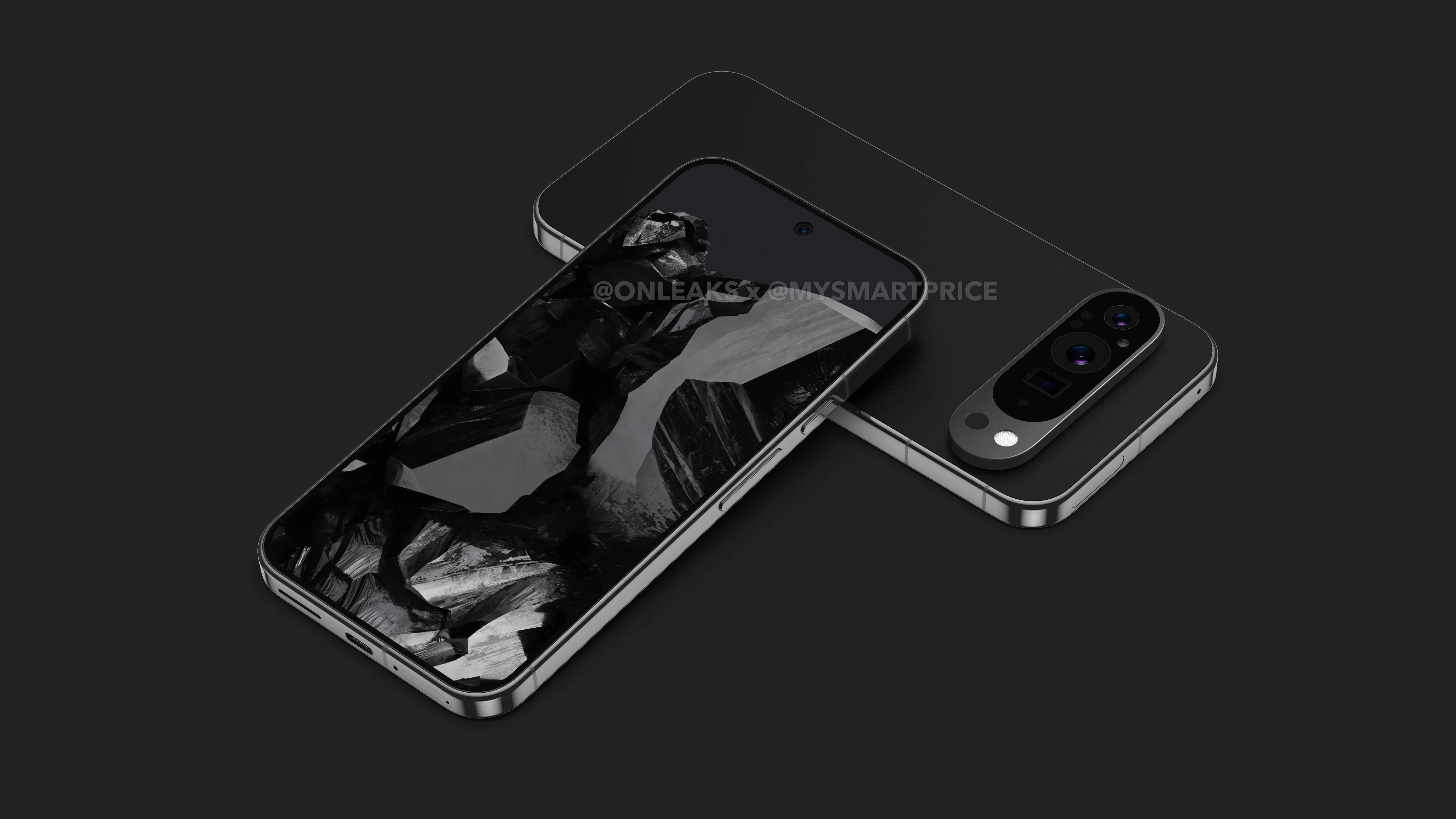
The Pixel 9 Pro’s design is making waves even before its official release, as recent collaborative efforts have resulted in Computer-Aided Design (CAD) renders depicting the device. These renders suggest a design influence from Apple, particularly in the camera arrangement which resembles the Dynamic Island design and echoes elements from its predecessor, the Pixel 8 Pro. Three camera sensors, including a telephoto lens, as well as a temperature sensor, are visible within a substantial camera housing.
In terms of structure, the Pixel 9 Pro models itself after devices like the Galaxy S24 Ultra, featuring a flat chassis. This suggests a conservative approach in design evolution, with staple features such as the power button, USB-C port, volume rocker, and SIM card slot maintaining their traditional placements. Previous speculations of a 6.5-inch display seem doubtful; it’s more likely that the Pixel 9 Pro will retain the 6.7-inch display of its predecessor. The phone’s dimensions are reported to be 162.7 x 76.6 x 8.5 mm.
On the performance front, the Pixel 9 Pro is expected to be powered by the Google Tensor G4 SoC, leveraging Samsung’s advanced 4LPP+ manufacturing node. This technology has been utilized previously in Samsung’s Exynos 2400 chipset, which holds up well against rivals from Qualcomm and MediaTek. The Google Tensor G4 SoC therefore promises to propel the Pixel 9 Pro beyond its predecessors in terms of performance. With such advancements, the Pixel 9 Pro is poised to be a formidable competitor in the mobile market until Google’s movement towards TSMC manufacturing anticipated post-2025.
Fans of the Pixel series have much to look forward to with captured details hinting at a fusion of traditional design elements and promising advancements in processing power, potentially setting a new standard for Google smartphones.