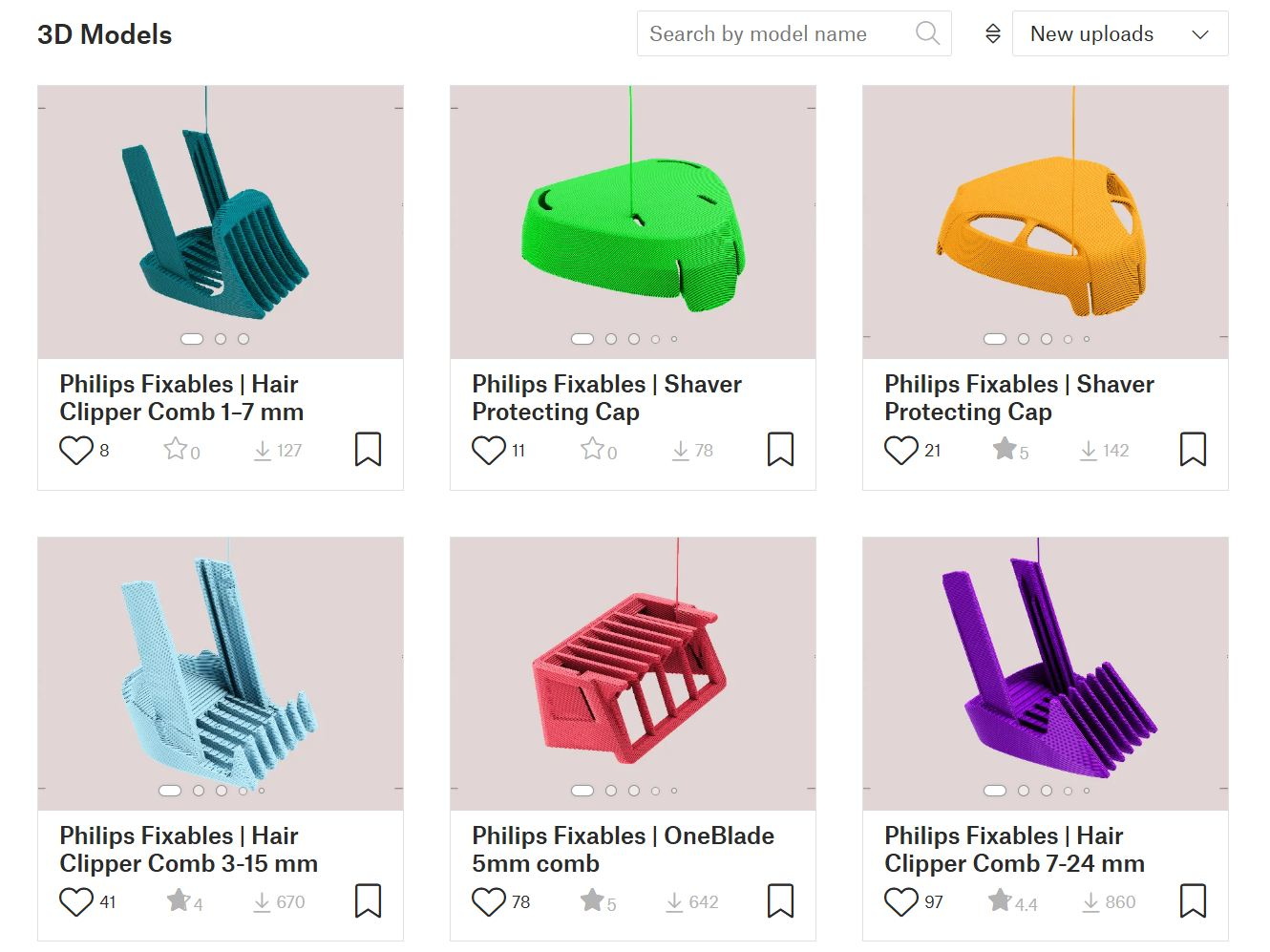
Philips is making it easier to repair small grooming devices by offering free 3D printable replacement parts that users can download and produce themselves. The initiative, known as Philips Fixables, is designed to help extend the lifespan of everyday products such as electric hair clippers, trimmers, and shavers.
The collection is currently being built on Printables.com and is expected to grow over time. At launch, the selection included five printable files, and it has already expanded to seven. Philips plans to continue adding more replacement part designs in the future, making the program more useful for customers who want a simple way to replace small plastic components instead of buying an entirely new device.
The project was created in cooperation with 3D printer manufacturer Prusa Research. Users who own a 3D printer can download the STL files and print the parts at home. Those without a printer still have several options: they can use an online 3D printing service, visit a public library with 3D printing facilities, or contact a local maker space or workshop.
For now, the available Philips 3D printable replacement parts focus mainly on grooming products. The selection includes several comb attachments for Philips hair clippers and shavers, including combs for the Philips OneBlade in sizes such as 1–3 mm and 5 mm. There are also Philips clipper combs in ranges such as 1–7 mm, 3–15 mm, and 7–24 mm. In addition, two protective caps for razors are currently listed.
Philips provides helpful print information with the files, including recommended settings such as layer height and infill. The suggested material is standard PLA, one of the most common and beginner-friendly materials used in consumer 3D printing. PLA is widely available, easy to print, and suitable for many small replacement parts.
However, users should still pay attention to the specific PLA filament they choose. While the base polymers used in PLA are generally not associated with toxic substances such as PFAS, some filament manufacturers may use additives. Anyone printing parts that come into close contact with skin should choose high-quality filament from a trusted manufacturer and check the material details when possible.
The Philips Fixables initiative is a welcome step for product repairability and sustainability. Small plastic accessories such as combs, guards, and caps are easy to lose or break, yet they can make a grooming device difficult or inconvenient to use. By making these parts available as free STL files, Philips gives customers a practical way to keep their devices working for longer.
Another interesting aspect is the role of the community. The Philips account indicates that user participation may help shape the collection, and some files appear to be inspired by community-created designs. This could make the platform more flexible over time, especially if popular replacement requests influence which parts are added next.
For consumers, the benefit is clear: free downloadable replacement parts can save money, reduce waste, and make repairs more accessible. For Philips, the move supports a growing demand for longer-lasting products and more repair-friendly design. As 3D printing becomes more common in homes, libraries, and local workshops, initiatives like this could become an important part of the future of consumer electronics maintenance.