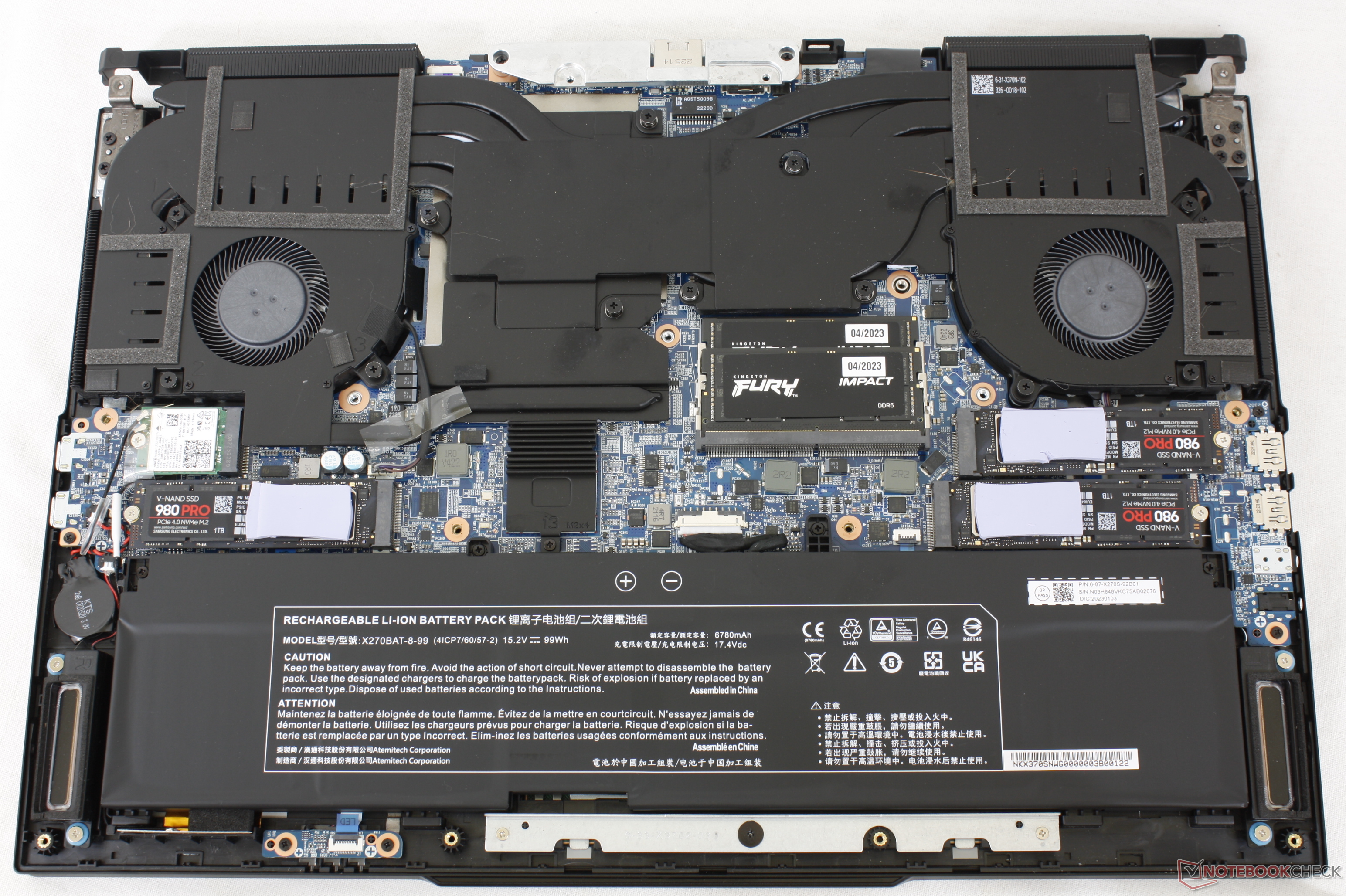
The Samsung SSD 980 PRO 1TB RAID 0 configuration involves three MZ-V8P1T0BW drives combined to form a high-performance, 3TB storage solution. This setup offers enhanced speed compared to a single drive, but with increased risk of data loss, as data is distributed across the three SSDs. Additionally, expect the power consumption to be triple that of a single drive.
Specifications
– Type: SSD
– Form Factor: M.2 2280
– Total Capacity: 3,068 GB (3 x 1TB in RAID 0)
– Interface: NVMe
– Controller: Samsung Elpis S4LV003
– Initial Announcement Date: August 30, 2020
Performance Benchmarks
The 3x Samsung SSD 980 PRO in RAID 0 exhibits impressive benchmark scores, outperforming many of its competitors. Key performance metrics are highlighted below:
– Sequential Read Speed: The drive hits remarkable speeds well above average, showcasing one of the fastest data transfer rates in its class.
– Sequential Write Speed: With an exceptional median write speed, it offers rapid data recording, ideal for high-resolution video editing and large file handling.
– 4K Read and Write Speeds: The SSD delivers strong performance in 4K read and write tests, a critical indicator of its ability to handle small file operations efficiently.
– Access Times: Near-instantaneous access times demonstrate the SSD’s swift response when accessing data, which is especially beneficial for operating systems and applications.
The RAID 0 array truly leverages the combined power of the Samsung SSD 980 PRO drives, yielding speeds that cater to the needs of professionals and enthusiasts who require top-tier performance and storage capacity. However, while the speeds achieved in RAID 0 are definitely enticing, users should be aware of the heightened risk associated with this type of configuration—namely, the potential for data loss if one drive fails.
In various benchmark tests, including AS SSD, CrystalDiskMark, and DiskSpd, the RAID 0 array consistently outperformed other storage configurations, making it a formidable choice for users who prioritize speed and performance in their workflow.
Final Thoughts
The triple Samsung SSD 980 PRO RAID 0 configuration stands out as an ultra-fast storage solution, setting high standards in the SSD market. For gamers, creative professionals, and tech enthusiasts who need the fastest data storage and retrieval speeds available and can manage the potential risks of RAID 0, this SSD combination can be an excellent choice.
When considering this storage solution, one should balance the need for speed with the necessity for reliable data security, possibly including this RAID 0 setup as part of a larger system where essential data is backed up elsewhere. The system’s power consumption should also be taken into account, particularly for those with energy-efficient builds.Anomalies in benchmark performance have been observed where recorded values are showing inconsistencies, specifically with cache warnings indicating corruption or updates in progress. The irregularities in the data suggest real-time modifications to the benchmarks as figures exceed the predefined parameters. For example, certain benchmarks were noted to have higher values than permissible, such as 16089 over 13588, and 16305 over 13136, in designated settings.
While analyzing these disparities, it was determined that no user identifiers were found in the URL, which is an essential component for precise data retrieval. Additionally, the absence of redirection to an Ajax server further complicates the process.
Despite the recent creation of cache files, less than five days old, it seems that continuity issues have arisen in the process of obtaining average benchmarks for devices. This has led to attempts to acquire uncached values directly. Several attempts appear to have been made to extract these uncached benchmark values spanning various intervals.
Subsequently, statistical calculations were performed to determine the minimum, maximum, average, and median values of the collected data; however, the benchmarks’ integrity remains questionable due to the initial warnings of cache corruption or updates.
Overall, the recorded activities underline the importance of maintaining updated and accurate benchmark databases to ensure the reliability and credibility of performance assessments. Accurate benchmarks are crucial for analyzing the performance of devices and for guiding consumers in making informed decisions.
The study of these anomalies and the effort to access uncached benchmark values, despite challenges, underline an ongoing commitment to providing current and precise data for assessments.