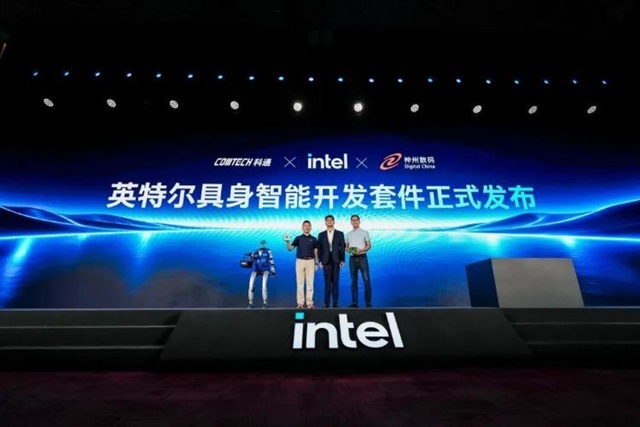
Chinese economist Justin Lin, dean of Peking University’s Institute of New Structural Economics, made an uncommon appearance at a major technology industry event on September 22, drawing attention to the growing connection between economic strategy, artificial intelligence, and edge computing.
Speaking at the 2026 Intel Technology Innovation and Industry Ecosystem Conference, Lin highlighted the importance of “AI plus edge” as a key direction for future industrial development. His presence at the event stood out because he is best known for his work in macroeconomics and development strategy rather than frequent participation in semiconductor or computing industry gatherings.
Lin’s appearance reflects a broader trend in China’s technology landscape: artificial intelligence is no longer seen only as a software revolution or a data-center story. Increasingly, AI is being pushed closer to where data is created and used, including factories, smart devices, vehicles, healthcare systems, retail operations, and industrial equipment. This shift is often described as edge AI, where computing happens locally instead of relying entirely on remote cloud infrastructure.
The “AI plus edge” concept is gaining momentum because it can help businesses process data faster, reduce latency, improve privacy, and support real-time decision-making. For industries such as manufacturing, logistics, energy, and transportation, these advantages could become crucial as companies look for more efficient and intelligent ways to operate.
By addressing an audience focused on technology innovation and ecosystem development, Lin connected economic transformation with the next wave of computing. His message suggested that AI adoption will not be limited to large platforms or cloud services. Instead, the real impact may come when artificial intelligence is embedded across everyday industrial systems and physical infrastructure.
The conference also underscored the role of partnerships in building an AI-driven economy. Advancing edge computing requires coordination among chipmakers, software developers, device manufacturers, enterprise users, research institutions, and policymakers. As AI moves from centralized servers into real-world environments, the ecosystem surrounding it becomes just as important as the technology itself.
Lin’s remarks come at a time when China continues to emphasize digital transformation, industrial upgrading, and technological self-reliance. Edge AI fits closely with these priorities because it supports smarter production, more responsive services, and better integration between digital tools and traditional industries.
His rare participation in a technology-focused event signals that AI and edge computing are increasingly being viewed through an economic development lens. Rather than being treated only as emerging technologies, they are becoming part of a wider discussion about productivity, competitiveness, and the future structure of industry.
As artificial intelligence continues to evolve, the combination of AI with edge computing could become one of the most important drivers of the next stage of digital growth. Lin’s appearance at the Intel conference added weight to that conversation, highlighting how closely the future of economic development may be tied to intelligent computing at the edge.