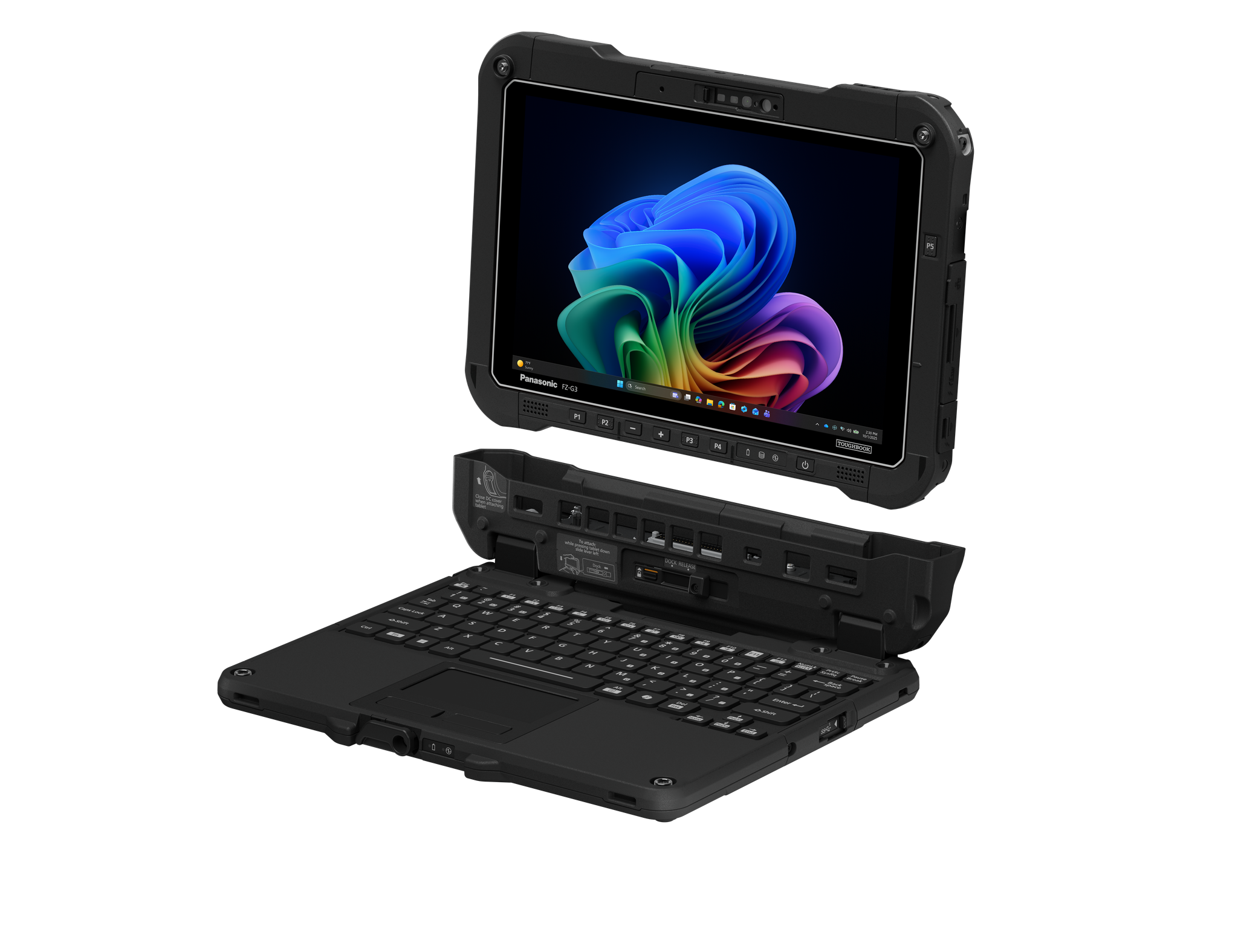
Panasonic Toughbook G3 and FZ-34 Debut With Intel Panther Lake, Core Ultra X7, and Rugged AI-Ready Performance
Panasonic is marking the 30th anniversary of its Toughbook lineup with two major new additions: the Panasonic Toughbook G3 and Panasonic Toughbook FZ-34. Built for demanding work environments, these rugged tablet-laptop hybrids bring a significant performance upgrade with Intel’s latest Panther Lake platform, optional Core Ultra X7 processors, and Intel ARC graphics.
The new Toughbook models are designed primarily as tablets, but both can be paired with optional detachable keyboards to function like laptops. The Toughbook G3 features a compact 10.1-inch display, while the Toughbook FZ-34 offers a larger 12.4-inch screen with a 3:2 aspect ratio, giving users more vertical space for documents, maps, forms, field applications, and multitasking.
Unlike standard consumer laptops, Panasonic Toughbook devices are built for industries where durability, reliability, and customization matter most. These machines are aimed at business, enterprise, field service, logistics, emergency response, public sector, defense, and industrial users who need devices that can survive tough conditions while staying productive.
The biggest upgrade is inside. Panasonic is moving both rugged devices to Intel’s new Panther Lake platform. The Toughbook G3 replaces its previous Meteor Lake-based generation, while the FZ-34 moves on from older Raptor Lake hardware. Buyers will be able to configure the devices with Intel Core Ultra 5 335 or the more powerful Intel Core Ultra X7 368H.
The Core Ultra X7 option is especially notable because it includes Intel ARC B390 graphics, giving these rugged tablets far more graphics and compute power than typical field-ready devices. Combined with active cooling, this should allow the new Toughbooks to handle more demanding workloads, including advanced business software, data-heavy field applications, visual workloads, and lighter local AI tasks.
Panasonic is also positioning these as its first truly AI-ready Toughbook tablets. While they are not gaming machines or creative workstations, the jump to Core Ultra X7 hardware and integrated ARC graphics makes them much better suited for modern enterprise workloads that rely on AI-assisted tools, real-time data processing, image recognition, and edge computing.
Memory and storage options are equally strong for rugged tablets. Both models start with 16GB of RAM, but configurations can go up to 64GB. Storage can reach up to a 2TB SSD, giving businesses room for large databases, offline files, maps, inspection records, diagnostic software, and secure field applications.
Battery life is another major focus. The smaller Panasonic Toughbook G3 can be configured with a battery of up to 99Wh, allowing for a claimed maximum runtime of up to 24 hours. That makes it suitable for long shifts where charging may not be practical.
The Panasonic Toughbook FZ-34 uses a dual-battery setup, with two 40Wh batteries available. Panasonic claims this configuration can deliver up to 18 hours of use. For mobile teams working in transportation, utilities, public safety, or remote locations, the ability to run through a full workday is a key advantage.
Both devices include bright IPS displays with brightness levels of up to 1,000 nits. That level of brightness is important for outdoor visibility, especially for workers using the tablets in direct sunlight, vehicles, warehouses, construction sites, or emergency response situations.
Connectivity is also built for mobile work. The new Toughbook G3 and Toughbook FZ-34 support 5G, helping teams stay connected while operating away from offices or fixed networks. For organizations that depend on real-time reporting, cloud access, GPS-driven workflows, remote support, or live communication, 5G support adds another layer of usefulness.
As expected from the Toughbook family, rugged construction remains central to the design. Both models use thick magnesium shells and are engineered to handle harsh environments. They also include modular components, allowing organizations to customize the devices for specific workflows.
Depending on business needs, the new Toughbooks can be equipped with specialized modules such as barcode scanners, making them useful for warehousing, logistics, retail operations, inventory management, and manufacturing. This modular approach is one of the reasons Toughbook devices remain popular in enterprise and government deployments.
Panasonic has also made sure the updated models do not break compatibility with existing accessories. The company has kept the overall design close enough to previous versions so businesses can continue using many older accessories, docks, mounts, keyboards, and workflow tools. For companies managing large device fleets, that can help reduce upgrade costs and simplify deployment.
The Panasonic Toughbook G3 is scheduled to become available in October. The Panasonic Toughbook FZ-34 is launching earlier and is expected to be available immediately depending on region and configuration.
With Intel Panther Lake processors, optional Core Ultra X7 performance, ARC graphics, long battery life, 5G connectivity, bright outdoor-ready displays, and rugged modular designs, the new Panasonic Toughbook G3 and Toughbook FZ-34 represent a major upgrade for professional users who need power and durability in the field.