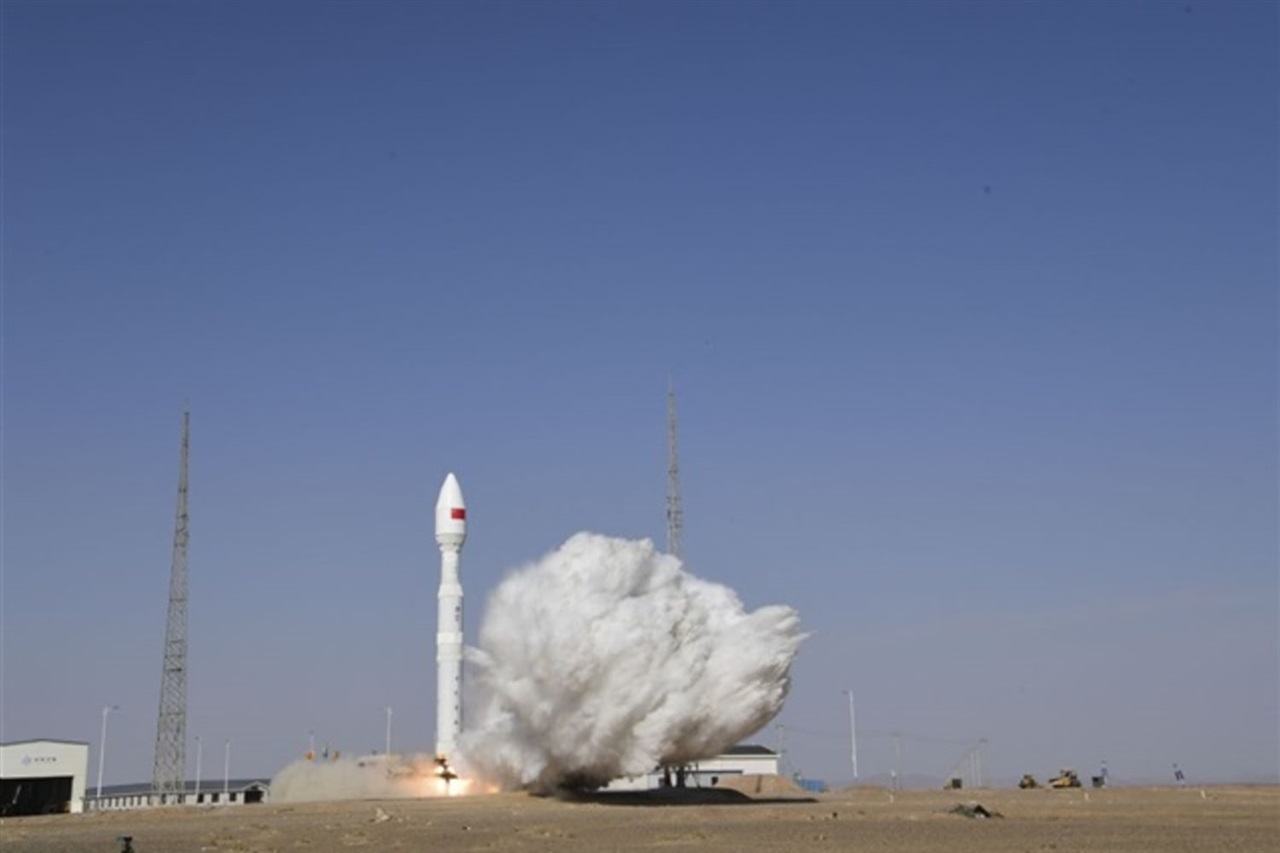
China has notched another successful mission with its Kinetica-1 rocket, placing two Zhongke satellites and Pakistan’s PRSC-HS1 remote-sensing satellite into orbit. It’s the third Pakistani satellite China has helped deploy since 2025, signaling both a deeper China–Pakistan partnership in space and Beijing’s determination to win more business in the global commercial launch market.
The flight highlights how fast China’s commercial launch ecosystem is maturing. Kinetica-1 is designed to offer reliable, cost-conscious access to orbit for small and medium payloads—exactly what Earth observation startups, research institutes, and emerging space programs need. By bundling multiple payloads on a single mission, providers can deliver faster timelines and more attractive price points, a combination that’s increasingly competitive on the world stage.
For Pakistan, PRSC-HS1 is about far more than national pride. Modern remote-sensing satellites are crucial tools for:
– Monitoring crops and water resources to boost agricultural efficiency
– Tracking floods, landslides, and other disasters to improve response times
– Mapping urban growth and infrastructure to guide planning
– Observing environmental change, from deforestation to coastal erosion
– Enhancing border awareness and national security planning
The addition of PRSC-HS1 expands Pakistan’s access to timely Earth observation data, the kind of insight that supports day-to-day decision-making across government, industry, and academia. In parallel, frequent rideshare opportunities and technical collaboration help develop local expertise and accelerate the country’s broader space ambitions.
For China, the message is equally clear: the Kinetica-1 program is building a track record, demonstrating cadence and reliability while courting international customers. As more nations and commercial operators seek sovereign Earth observation capabilities and diversified launch options, competitive smallsat launchers with flexible schedules stand to capture growing demand across Asia, the Middle East, and Africa.
Why this matters now:
– It underscores an expanding space partnership between China and Pakistan centered on practical, high-impact Earth observation.
– It shows how commercial launch providers are reshaping access to orbit with rideshare missions and rapid turnaround.
– It points to intensifying competition for international launch contracts as new market entrants offer lower costs and more frequent flights.
What to watch next
– Follow-on launches serving Earth observation constellations and scientific payloads
– Data-sharing initiatives that turn satellite imagery into actionable insights for agriculture, disaster management, and climate resilience
– Additional joint missions that deepen technical collaboration and broaden access to space for emerging programs
With this latest flight, Kinetica-1 strengthens its standing in the commercial launch arena while Pakistan gains a powerful new eye on Earth—an alignment of interests that’s likely to continue shaping regional space activity in the months ahead.