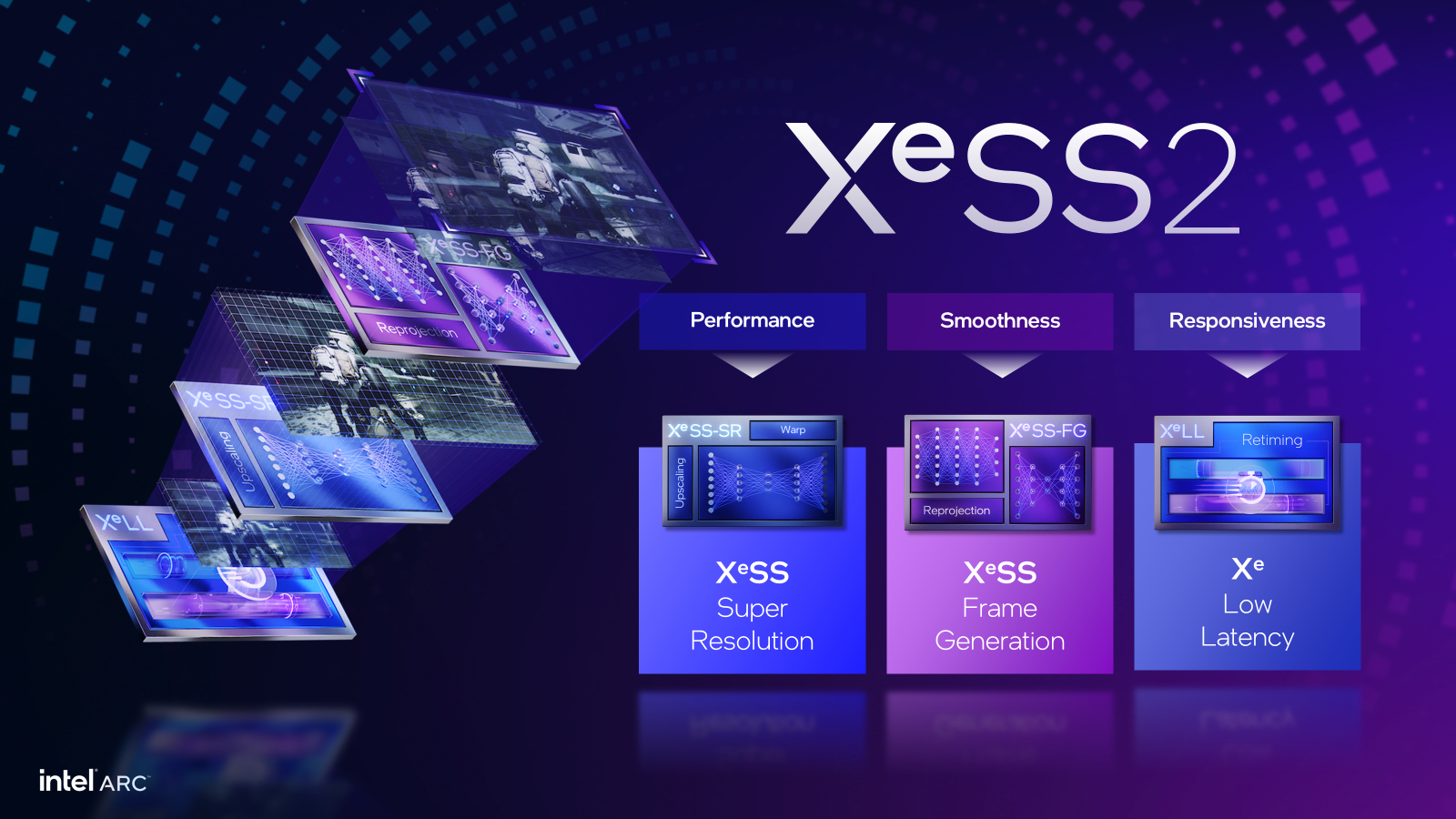
Intel is making strides with its XeSS 2 technology, now reaching over 200 games with more support on the way. Among the latest updates, Assassin’s Creed: Shadows is set to receive XeSS 2 support, alongside other advancements.
XeSS, Intel’s upscaling technology, was introduced three years ago and has been gaining ground with its latest iteration, XeSS 2. Although not yet matching the offerings of NVIDIA and AMD, Intel is committed to enhancing its capabilities. Since its debut in March, XeSS 2 has begun to make significant inroads, recently supporting 13 games. Intel shows a keen interest in integrating this technology into upcoming Triple-A titles.
Excitingly, Assassin’s Creed: Shadows, set to launch on May 19th, will not only support XeSS 2 but also NVIDIA’s DLSS 4.0 for those with RTX 50 series GPUs. While support for AMD’s FSR 4.0 remains unconfirmed, owners of Intel Arc GPUs, particularly those based on Xe1 or Xe2, will benefit from the advanced features of XeSS 2.
In a demonstration, Intel highlighted how Assassin’s Creed: Shadows could achieve over twice the performance with XeSS 2 compared to native resolution gameplay without upscaling. The game reportedly runs at 30-40 FPS with the Arc B580 but surpasses 80 FPS with XeSS 2, enhancing both the visual quality and gaming experience.
Nicolas Lopez, Rendering Technical Architect at Anvil Engine, praised XeSS 2 for its impressive visual enhancements, noting its sharp image quality and smooth performance that rivals native resolution. XeSS 2’s AI-based upscaling and temporal reconstruction are positioning it as a formidable player in the market for both PC and handheld gaming.
Additionally, Intel’s XeLL (Xe Low Latency) technology promises to cut display latency by half in titles like Marvel Rivals, Assassin’s Creed: Shadows, and F1 24, providing a more seamless gaming environment. Users with the latest Intel Xe2-based APUs, such as the Intel Core Ultra 9 285H, will see substantial performance improvements, achieving 60+ FPS at 1080p on the Arc 140T, which was previously unachievable at native resolution.
Intel plans to continue expanding XeSS 2 support across more titles, further bolstering its gaming technology offerings.