OrcSDR Turns a Budget RTL-SDR Dongle Into a Portable Radio Scanner Without a Laptop
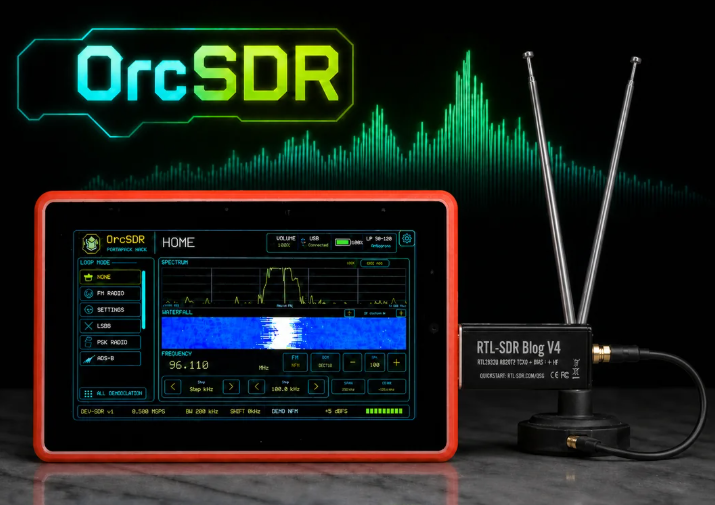
Software-defined radio is one of the most affordable ways to explore the radio spectrum, but there has always been one major drawback: even a cheap RTL-SDR dongle usually needs a laptop, power, cables, and software to become useful in the field. OrcSDR aims to change that by turning a compact development tablet into a self-contained handheld SDR scanner.
The open-source OrcSDR project is built around the M5Stack Tab5, a battery-powered portable tablet featuring a dual-core RISC-V ESP32-P4 processor. Instead of relying on a full computer, users can plug an RTL-SDR USB tuner directly into the tablet’s USB host port. From there, the device processes the radio signal, demodulates audio, and displays a real-time spectrum and waterfall view on its 5-inch color touchscreen.
That setup makes OrcSDR especially appealing for anyone who wants a portable RF monitoring tool without investing in expensive dedicated scanning hardware. Traditional commercial digital scanners can cost hundreds of dollars, while RTL-SDR dongles remain inexpensive and widely available. OrcSDR sits in the middle by giving users a practical handheld experience using off-the-shelf parts.
For radio hobbyists, field technicians, emergency communications volunteers, and search-and-rescue teams, the potential uses are broad. The device can be used for quick radio site surveys, checking local signal activity, monitoring certain unencrypted radio transmissions, and analyzing nearby RF conditions. It can also support tasks such as tracking aircraft signals through ADS-B decoding, checking Meshtastic and LoRa packet coverage in remote areas, and examining congestion around the 2.4 GHz wireless band.
One of OrcSDR’s biggest strengths is convenience. Instead of requiring users to compile software or configure a complicated Linux-based SDR setup, the project is distributed as a pre-built flash image through the browser-based M5Burner tool. That means users can install the firmware quickly and get started within minutes, making it much more approachable for beginners while still remaining useful for experienced SDR users.
The project highlights how far low-cost radio hardware and compact processors have come. A setup that once required a laptop, SDR software, external power, and multiple accessories can now fit into a small handheld package. By combining an affordable USB tuner with a modern portable development tablet, OrcSDR shows that pocket-sized RF analysis and scanning no longer need to depend on expensive commercial equipment.
For anyone interested in software-defined radio, portable scanning, ADS-B monitoring, LoRa testing, or general spectrum exploration, OrcSDR offers an exciting and budget-friendly path into handheld radio experimentation.