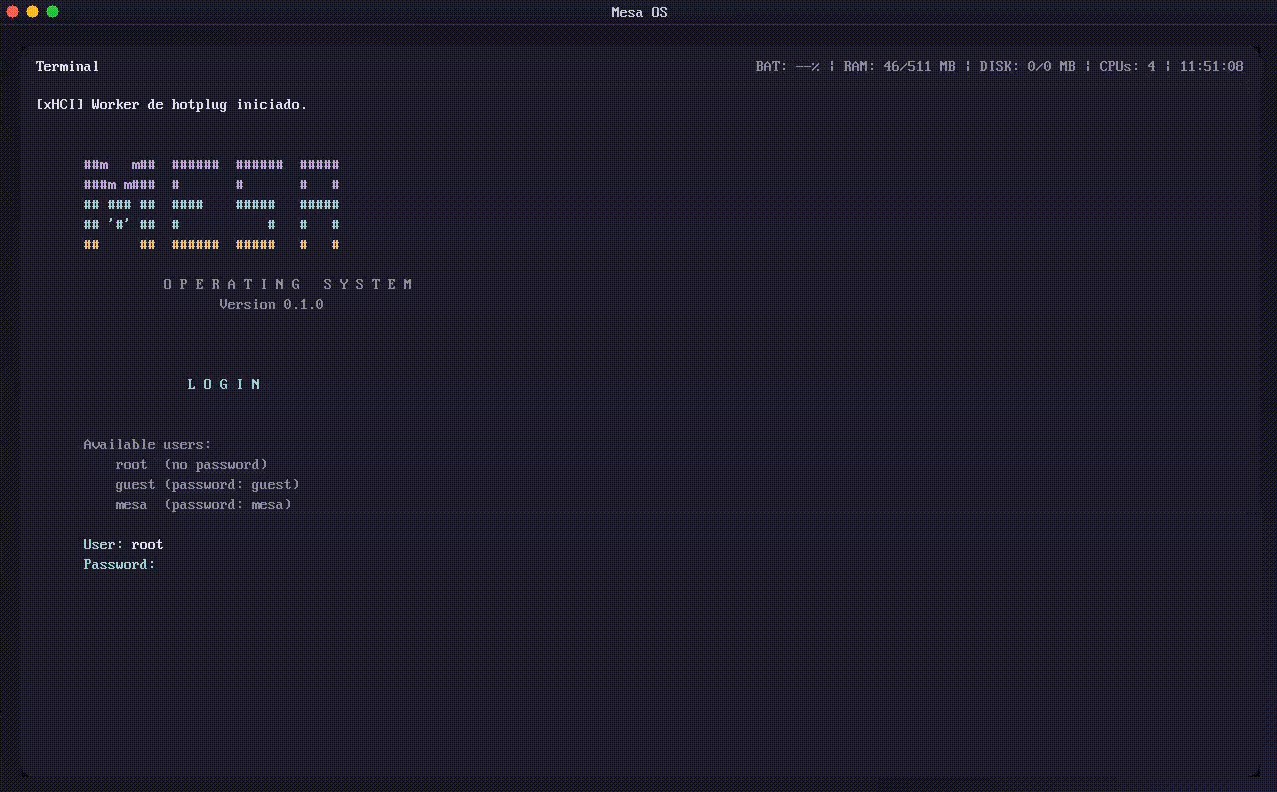
MesaOS boots a from-scratch Rust kernel on a real laptop, marking a major operating system milestone
Building an operating system from nothing is one of the toughest challenges in software development. Many hobby OS projects spend years running only inside virtual machines, where hardware is predictable and easier to control. MesaOS has now taken a major step beyond that stage by successfully cold-booting a fully independent Rust-based operating system on a retail laptop.
MesaOS is written entirely in Rust and targets modern 64-bit PCs. Unlike operating systems that reuse Linux, BSD, or other existing kernel code, MesaOS is being built from the ground up. That makes the achievement especially impressive, because every low-level feature must be created, tested, and refined independently.
The project uses Rust’s memory safety features to manage some of the most sensitive parts of an operating system. This includes physical RAM allocation, PCI hardware discovery, and direct network packet handling. These are areas where traditional low-level programming languages can easily introduce serious bugs, crashes, or security vulnerabilities if memory is handled incorrectly.
The latest milestone shows MesaOS booting natively on an HP 15s consumer laptop. That means the operating system is no longer just a virtual-machine experiment. It can start directly on real consumer hardware, initialize essential system components, and provide a working environment.
MesaOS already includes a functional command-line shell, a basic text editor, and early support for USB storage. While these features may sound simple compared with a full desktop operating system, they represent important foundational progress. A shell allows users and developers to interact with the system, a text editor makes on-device development more practical, and USB storage support opens the door to file transfers and broader hardware interaction.
The difficulty of this work should not be underestimated. Creating an operating system that can reliably run on real hardware often takes many years. Even long-running independent OS projects with active open-source communities still face major obstacles when it comes to device drivers, graphics support, power management, and hardware compatibility.
For MesaOS, one of the next major challenges is wireless networking. Developer Crackanimad0r is currently working on support for an onboard Realtek Wi-Fi chip, a task that often requires deep reverse engineering and careful driver development. Wireless drivers are notoriously difficult because manufacturers do not always provide complete documentation, leaving developers to figure out how the hardware behaves through testing and analysis.
Despite the progress, MesaOS is still far from becoming a daily-use operating system. It lacks several features users expect from a modern PC platform, including hardware-accelerated graphics, Bluetooth, advanced sleep and power management, and broad Wi-Fi device support. These areas are essential for laptops and desktops used in everyday life, and they can take years to implement properly.
Still, the successful boot on a real laptop is a meaningful moment for the project and for Rust-based systems programming. It proves that memory-safe languages can be used for extremely low-level hardware control, not just application development or server software. MesaOS shows that Rust can handle the demanding work of kernel development while offering stronger protections against common memory-related errors.
For now, MesaOS is best viewed as an ambitious experimental operating system with a promising technical foundation. It may not be ready to replace mainstream desktop platforms anytime soon, but its progress highlights a growing shift in operating system development: safer code, modern language design, and renewed interest in building systems from first principles.
If the project continues to advance, MesaOS could become an important example of how future operating systems might be designed: lean, memory-safe, independent, and built specifically for modern 64-bit hardware.