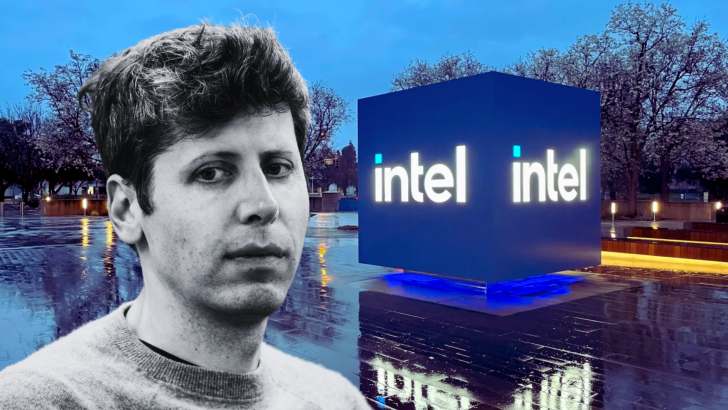
OpenAI’s chief has weighed in on the industry’s biggest foundry question, and his answer is clear for now: keep leaning on TSMC, and urge the company to add more capacity. While the door isn’t closed on alternatives like Intel Foundry Services, the near‑term preference remains with the Taiwan-based leader.
The debate over diversifying beyond TSMC has intensified as demand for AI accelerators surges and US policy pushes for more domestic manufacturing. Executives across the chip ecosystem—frequently asked whether Intel can stand alongside TSMC—have mostly answered cautiously. In a recent interview, Sam Altman was more direct: rather than advocating a dual-sourcing strategy today, he emphasized the need for TSMC to invest and scale faster.
That stance aligns with OpenAI’s reported plan to develop a custom AI chip built on TSMC’s advanced 3nm process. It underscores a broader reality: when it comes to leading-edge nodes, consistent execution, yield, and supply reliability often outweigh the theoretical benefits of splitting orders across multiple foundries.
Still, the long game points toward diversification. Even AMD’s leadership has signaled uncertainty about immediately shifting meaningful volume to a second foundry, yet the strategic case for more US-based production remains strong. TSMC’s expansion into the United States will take time, and to ease supply constraints, a credible secondary partner—whether Intel or Samsung—will be crucial.
All eyes are on Intel’s 18A node. Its real-world efficiency, performance, yields, and production volumes will determine whether Intel Foundry can become a true alternative for cutting-edge AI and data center silicon. If 18A delivers at scale, it could accelerate a more balanced, resilient supply chain anchored in both Asia and the United States.
Bottom line: in the short term, expect major AI players to press TSMC for more capacity and stick with what’s proven. Over the medium term, the industry will rigorously evaluate Intel’s 18A and other advanced nodes. In the long run, the push for diversification and stronger US manufacturing is inevitable—once the technology and volume are ready to match TSMC’s bar.