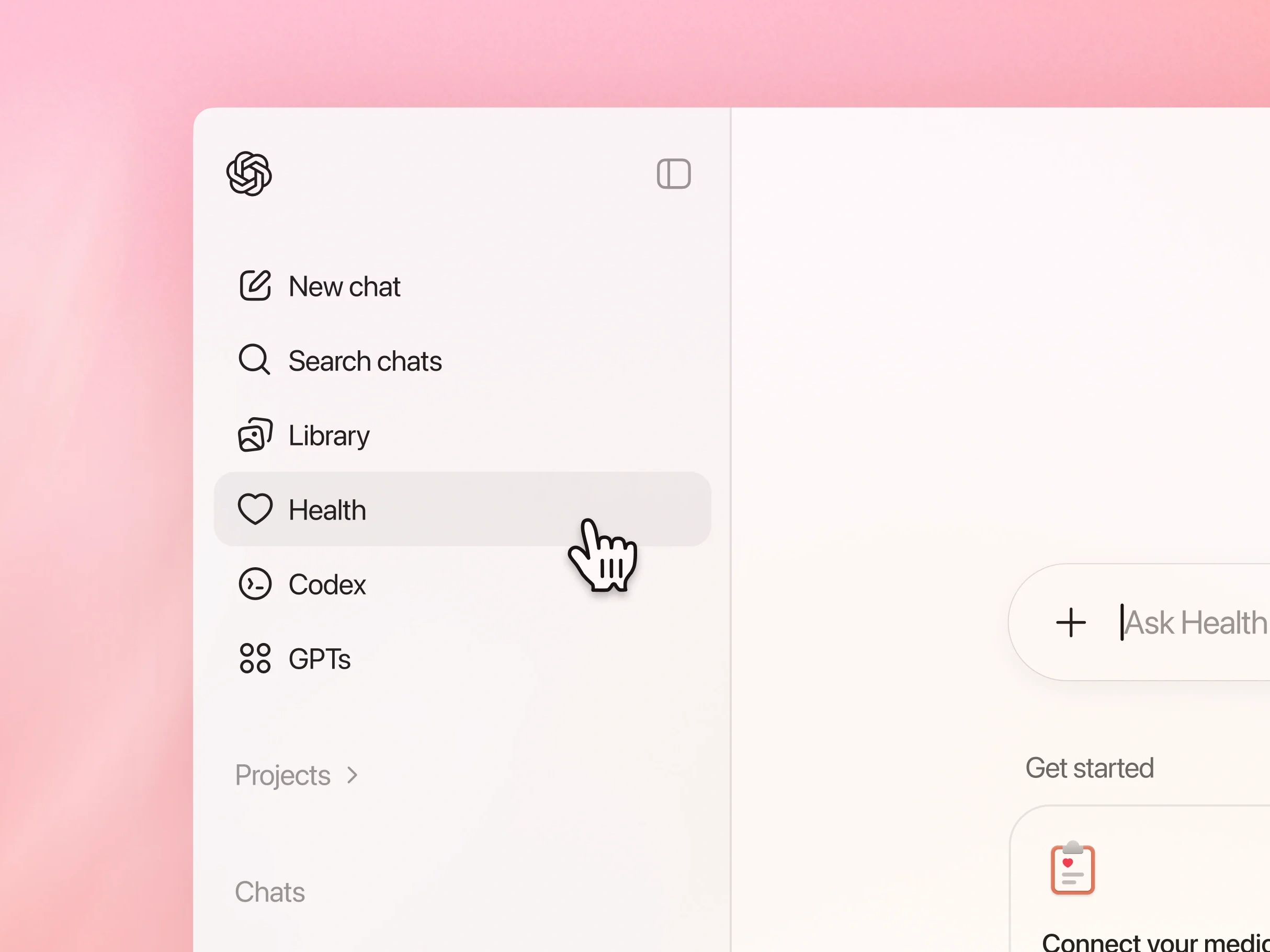
OpenAI has launched ChatGPT Health, a new feature inside the ChatGPT app designed to help users make sense of health and wellness information using their own connected data. The company is clear about what this is and isn’t: ChatGPT Health is not intended for diagnosis or treatment, and it should not replace professional medical care.
With ChatGPT Health, users can securely connect external services to get more personalized insights. Supported connections include Apple Health along with popular wellness and lifestyle platforms such as MyFitnessPal, Function, Weight Watchers, AllTrails, Instacart, and Peloton. OpenAI says the feature was developed in close collaboration with physicians with the goal of helping people take a more active role in understanding and managing their health and wellness.
The timing makes sense. OpenAI says more than 230 million people around the world already turn to ChatGPT with health and wellness questions. ChatGPT Health is positioned as a safer, more structured experience for those conversations, especially when personal data is involved.
Because health information is sensitive, OpenAI is emphasizing privacy and security. The company says ChatGPT Health uses purpose-built encryption and isolation so these conversations stay protected and compartmentalized. Just as importantly for many users, OpenAI states that chats within ChatGPT Health will not be used to train its foundation models. For anyone who wants an extra layer of protection on their account, OpenAI also recommends enabling multi-factor authentication.
For people who want to connect actual medical records, OpenAI is partnering with b.well, which it describes as a large, secure network for connected health data in the United States that follows high standards for data security and privacy. This partnership is meant to support medical record access while keeping privacy safeguards in place.
So what can ChatGPT Health do in practice? OpenAI says it can translate complicated lab results into more understandable language, analyze wearable data, summarize care instructions, and even help users draft questions to bring to an upcoming doctor’s visit. The idea is to reduce confusion and make it easier to prepare for real medical conversations, not to replace them.
Access is simple: users can select ChatGPT Health from the sidebar within the main ChatGPT interface. However, availability is currently limited. OpenAI says ChatGPT Health is only rolling out to a small group of early users for now, and it isn’t available in the UK, Switzerland, or the European Economic Area. Deeper medical-record integrations are currently limited to the US, although broader wellness features may expand over time.
As AI health tools gain attention, ChatGPT Health appears aimed at one core promise: providing personalized, privacy-focused health and wellness guidance based on connected data, while keeping clear boundaries around diagnosis and treatment.