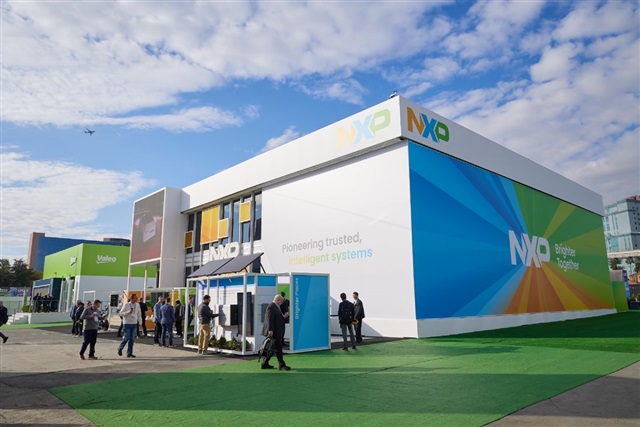
At CES 2026 in the United States, NXP made a strong statement about the future of in-vehicle technology, unveiling a large showcase at the LVCC Central Plaza focused on next-generation automotive computing. The display spotlighted NXP’s newest automotive processors, including the recently launched S32N7, along with a range of module-based solutions designed to help automakers and suppliers bring advanced features to market faster.
A key theme of NXP’s CES 2026 presence was “dual-track” automotive computing—an approach that supports both high-performance centralized computing for modern software-defined vehicles and the reliable, safety-focused control systems vehicles still depend on. By demonstrating processors and ready-to-integrate modules side by side, NXP emphasized how carmakers can scale from today’s architectures to tomorrow’s centralized platforms without sacrificing stability, safety, or development timelines.
The newly introduced S32N7 drew particular attention as part of NXP’s push to power more capable vehicle “brains.” Built for demanding automotive workloads, the processor is positioned to support complex, data-heavy applications such as advanced driver assistance, domain control, and the growing number of software features that are updated and expanded over a vehicle’s lifetime. For manufacturers, that translates into more flexibility to add services, improve performance, and enhance user experiences through software.
NXP also highlighted multiple module solutions—hardware building blocks intended to shorten design cycles and simplify integration for automotive partners. Instead of starting from scratch, developers can adopt modules that package key computing capabilities in a form that’s easier to validate and deploy, which can be especially important as vehicles incorporate more sensors, more connectivity, and more compute-intensive functions.
With its CES 2026 showcase, NXP reinforced an industry-wide shift: automotive computing is no longer just about individual chips, but about complete, scalable platforms. By combining the S32N7 processor with practical module options and partner-driven ecosystem support, NXP is aiming to help the automotive industry accelerate the move toward software-defined vehicles—while keeping safety, reliability, and production readiness at the center of the roadmap.