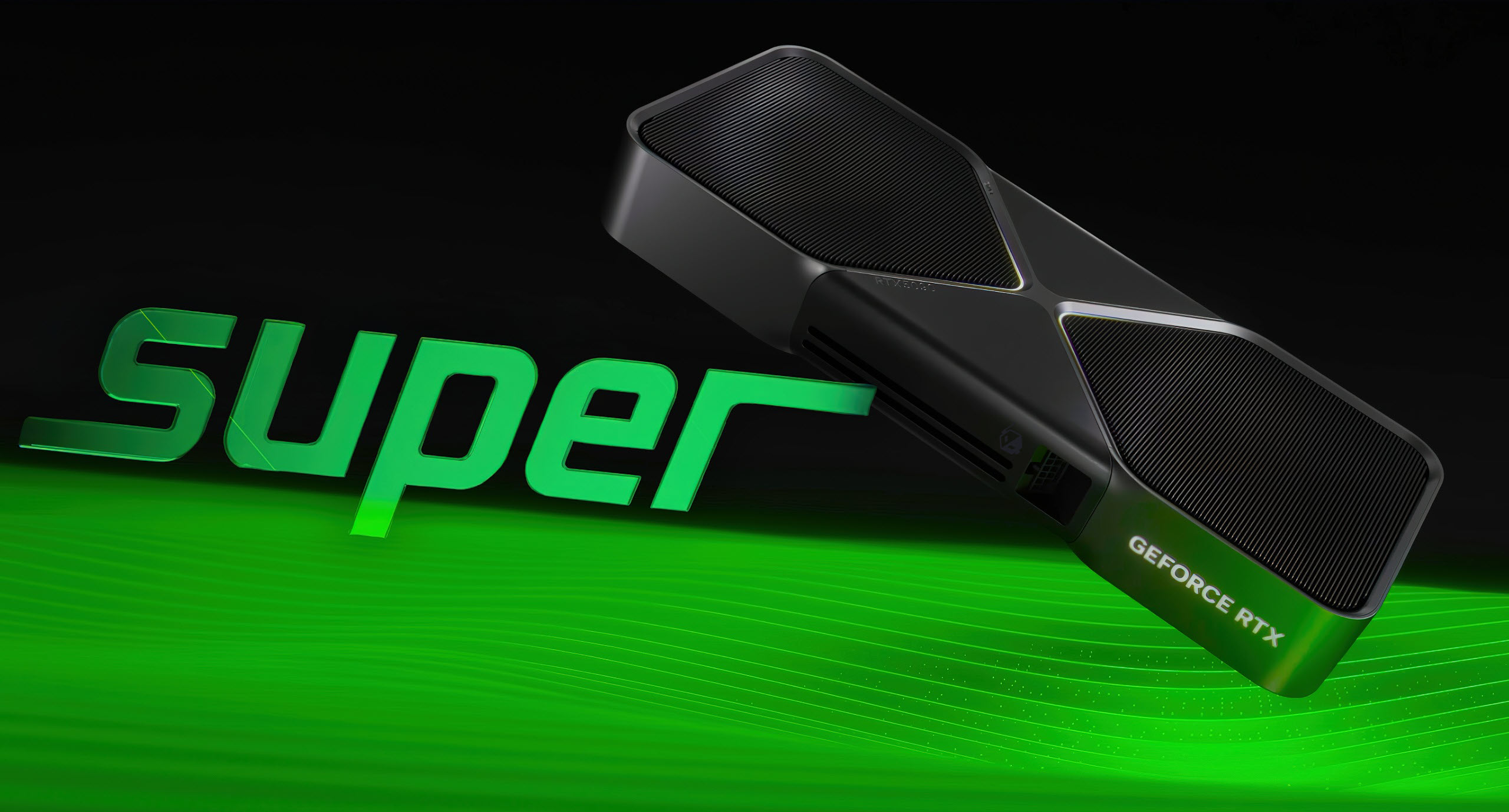
NVIDIA’s GeForce RTX 50 “SUPER” graphics cards may not be arriving anytime soon. New chatter from industry sources suggests the entire RTX 50 SUPER refresh has been delayed indefinitely, even though early planning once pointed to a launch window in the first half of 2026.
Earlier expectations were fairly straightforward: board partners reportedly received initial RTX 50 SUPER specifications in the second half of 2025, and the rollout looked like it would land smoothly in early 2026. Since then, the market has shifted dramatically—mostly because of the explosive growth in AI hardware demand—and that has reshaped priorities across the GPU supply chain.
Why RTX 50 SUPER is reportedly on ice: three key factors
1) AI GPUs are taking priority on production lines
The biggest reason comes down to manufacturing allocation. Supply that could have supported additional consumer refresh models is increasingly being directed toward data center AI accelerators instead. NVIDIA has been ramping its next-generation Rubin platform aggressively, with production reportedly moving faster than earlier timelines that aimed for mid-to-late 2026. When AI hardware is selling in massive volumes at premium margins, it’s not hard to see why factories and components get steered in that direction.
There’s even speculation NVIDIA could lean on older GPU products in some capacity to help manage supply constraints and component availability, though nothing is officially confirmed on that front.
2) Memory shortages and rising costs are squeezing consumer GPUs
The second issue is DRAM—specifically the GDDR6 and GDDR7 memory used in discrete gaming graphics cards. With demand rising and supply tight, memory pricing has increased, and availability has become a real bottleneck.
Even if a company is willing to pay more, paying more doesn’t magically create supply. The core problem is that there may not be enough DRAM production capacity right now to comfortably satisfy both booming AI demand and the consumer graphics card market at the same time. And from a business standpoint, the AI side is currently far more lucrative.
That matters because one of the major expectations around an RTX 50 SUPER lineup was upgraded VRAM configurations—something many gamers have been asking for as modern PC games consume more memory at higher settings and resolutions. If memory supply is constrained, a VRAM-focused refresh becomes much harder to execute at scale.
3) Weak competitive pressure reduces the need for a mid-cycle refresh
The third factor is competitive timing. Reports suggest AMD has also pushed its next wave of GPUs further out, pointing to 2027 for next-generation gaming products. If there’s no immediate rival launching a major threat in the same timeframe, NVIDIA has less incentive to rush out a SUPER refresh.
That said, there’s still internal pressure: NVIDIA doesn’t only compete with other brands—it also competes with expectations set by its own product stack. With ongoing criticism around VRAM in particular, a SUPER refresh could have been an easy way to address complaints. Unfortunately, the same memory market conditions that make higher VRAM desirable also make it difficult to deliver.
What this could mean for GPU launches through 2026 and beyond
If the RTX 50 SUPER plans remain paused, the near-term outlook for new high-profile gaming GPU releases could look quieter than many enthusiasts hoped. At the same time, there are also reports that NVIDIA’s GeForce RTX 60-series “Rubin” gaming GPUs may not arrive until the second half of 2027. When you combine that with talk of AMD’s next-gen products also targeting 2027, it raises the possibility of a longer stretch with fewer major generational leaps in the consumer GPU space.
Some were looking to Intel to inject more competition with a higher-tier Arc Battlemage desktop card, but it wasn’t announced at CES, leaving its timing uncertain. Intel did introduce the Arc B390 as an integrated solution, and it’s being described as a strong performer for its class, but it doesn’t replace the role of a full discrete GPU refresh in the mainstream and high-end gaming market.
For now, the RTX 50 SUPER situation appears to be a waiting game. If manufacturing capacity loosens up, memory supply stabilizes, or competitive pressure increases, the decision could shift. Until then, AI demand and component constraints seem to be calling the shots—and gamers hoping for a VRAM-boosted “SUPER” refresh may have to wait longer than expected.