NVIDIA Vera Rubin NVL72 Cost Breakdown Shows Why AI Servers Are Driving the DRAM Crunch
NVIDIA’s upcoming Vera Rubin NVL72 rack is shaping up to be one of the most powerful and expensive AI server platforms yet, and a new bill-of-materials estimate highlights exactly where much of that cost is going: memory.
While next-generation AI systems are expected to carry premium pricing, the scale of the memory investment in Vera Rubin is striking. According to the reported breakdown, memory accounts for about 62% of the platform’s Superchip cost. That is a noticeable jump from Grace Blackwell systems, where memory made up roughly 53% of the cost.
The result is a platform designed for massive AI workloads, cloud computing, enterprise acceleration, and high-performance computing, but also one that puts even more pressure on the already tight global DRAM supply chain.
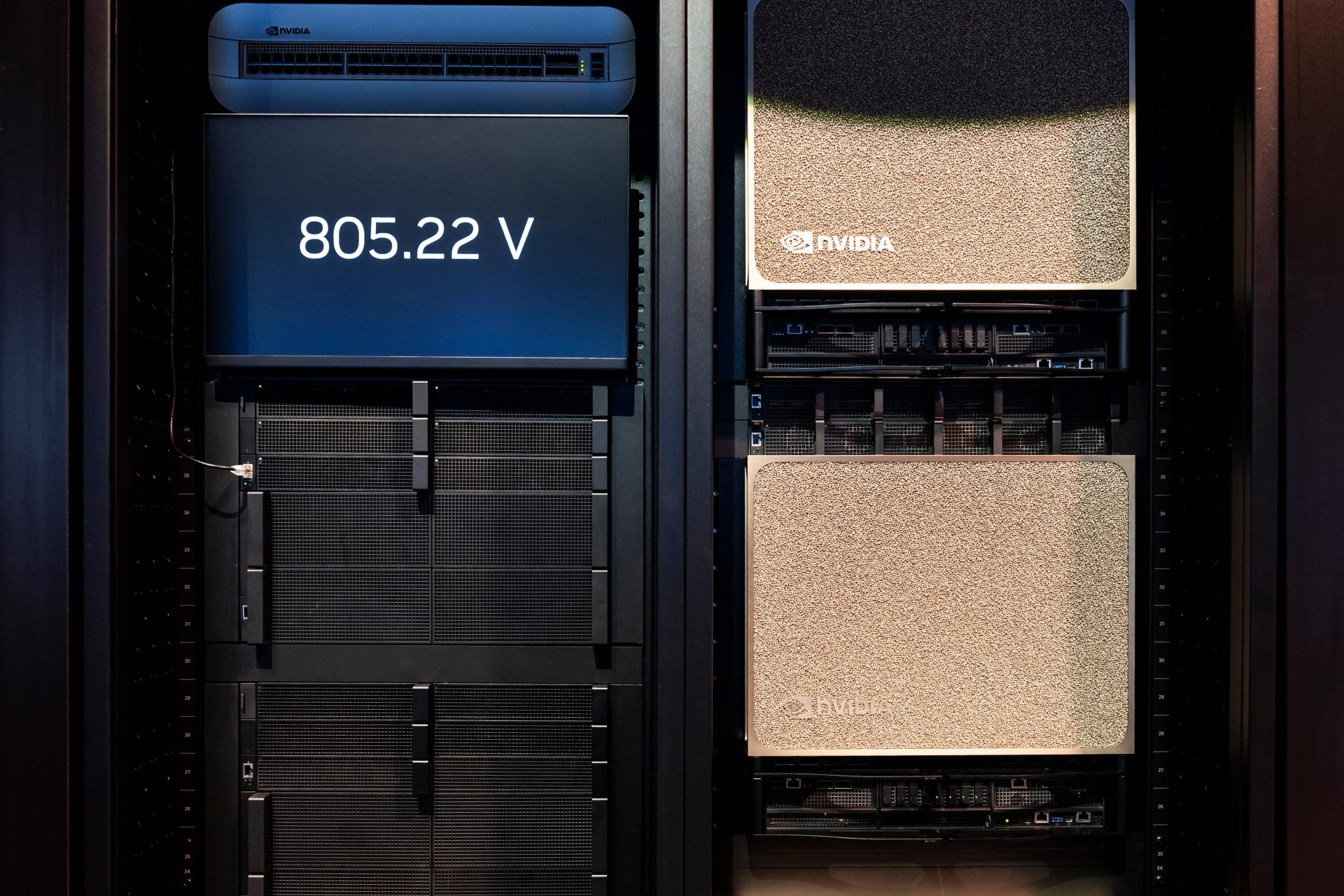
The NVIDIA Vera Rubin NVL72 rack, also known by the codename Oberon, is built around 72 Rubin GPUs and 36 Vera CPUs. Each Vera Rubin tray contains four Rubin GPUs and two Vera CPUs, while a Superchip configuration pairs two GPUs with one CPU. Across a full NVL72 rack, that adds up to 36 Superchips, 72 GPUs, and 36 CPUs.
The memory configuration is where the numbers become especially eye-catching. Each Rubin GPU is equipped with 288 GB of HBM4 memory, delivering up to 22 TB/s of bandwidth. Each Vera CPU is paired with up to 1.5 TB of SOCAMM2 LPDDR5X memory.
Across a full NVL72 rack, that means roughly 20.7 TB of HBM4 memory and 54 TB of LPDDR5X memory, for a combined memory pool of about 74.7 TB. That is an enormous amount of DRAM for a single AI rack and shows why memory has become one of the most important components in modern accelerator systems.
The reported bill-of-materials estimate places the cost of each NVIDIA Vera Rubin Superchip at around $38,902. Out of that figure, approximately $24,297 is attributed to memory alone, including HBM4 and SOCAMM2 LPDDR5X.
The Rubin GPU portion is estimated at around $9,247, including the GPU, HBM4, advanced packaging, interposer, and peripheral components. The HBM4 memory itself is estimated at about $4,943, representing more than half of the Rubin GPU package cost.
The Vera CPU side is even more heavily dominated by memory. The Vera portion is estimated at around $20,059, including the CPU, SOCAMM2 LPDDR5X memory, and additional board components. Of that, SOCAMM2 memory alone is estimated at roughly $19,355. In other words, the CPU silicon itself represents only a small fraction of the total Vera-side cost, while the attached memory carries nearly the entire expense.
This is the key reason Vera Rubin racks are expected to be so expensive. The compute hardware is powerful, but the memory required to feed that compute engine is becoming the real cost driver.
Compared with Grace Blackwell servers, Vera Rubin marks a major escalation. Grace Blackwell platforms used Grace CPUs with 480 GB of memory and Blackwell GPUs with 192 GB to 288 GB of HBM3E, depending on configuration. Vera Rubin moves to HBM4 on the GPU side and significantly expands LPDDR5X capacity on the CPU side.
The total system cost is reportedly more than twice that of the previous generation, while memory costs alone have risen by around 2.5 times. That increase reflects the growing demand for high-bandwidth memory and dense system memory in AI training, inference, and large-scale data center deployments.
The 74.7 TB of DRAM in a single Vera Rubin NVL72 rack is roughly comparable to the combined memory capacity of thousands of smartphones. Now multiply that by thousands of racks expected to ship to AI data centers, cloud service providers, enterprise customers, and HPC facilities, and the scale of demand becomes clear.
This also helps explain why DRAM shortages are expected to remain a major industry issue. AI hardware makers are consuming enormous quantities of advanced memory, especially HBM and LPDDR-class solutions. Long-term supply agreements are giving major AI customers priority, which can tighten availability for other markets.
NVIDIA is not alone in pushing memory demand higher. Competing AI platforms are also moving toward larger HBM capacities per GPU and large pools of system memory for next-generation accelerated servers. As AI workloads become more complex, memory capacity and bandwidth are becoming just as important as raw compute performance.
The bigger picture is simple: NVIDIA Vera Rubin is not just a faster AI platform. It represents a shift in how next-generation AI infrastructure is built, where memory is now one of the most valuable and constrained resources in the entire server.
With HBM4, SOCAMM2 LPDDR5X, and nearly 75 TB of DRAM per rack, Vera Rubin shows why the AI boom is reshaping the memory market. For data centers, it promises extraordinary performance. For the broader semiconductor industry, it signals that the battle for advanced memory supply is only getting more intense.