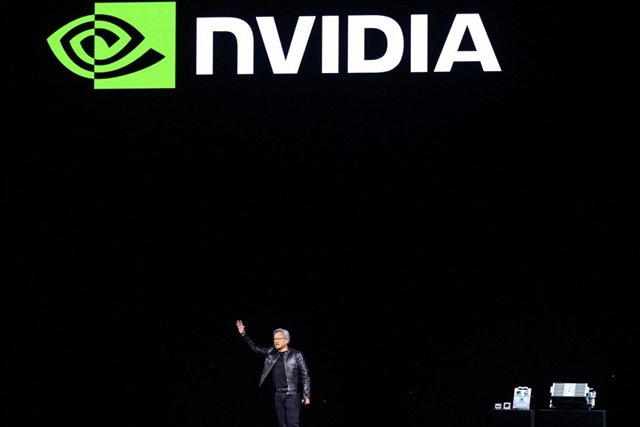
Nvidia has unveiled the Rubin CPX GPU, a new accelerator built for the era of large-scale AI inference. Positioned squarely at high-throughput, latency-sensitive workloads, Rubin CPX targets the growing demand to serve massive models efficiently across cloud and enterprise environments. Research firm SemiAnalysis characterizes the launch as a clear shift in GPU design philosophy, highlighting an emphasis on decoupling and collaborative approaches to push performance, efficiency, and scalability further than traditional, monolithic designs.
What makes Rubin CPX noteworthy is the direction it signals. As AI inference becomes the dominant operational phase for many organizations—spanning large language models, recommendation engines, real-time analytics, and generative applications—the ability to scale intelligently matters as much as raw horsepower. Decoupling in this context generally points to modularity: allowing different parts of the system to scale independently, improve utilization, and match the diverse needs of modern inference. Collaboration suggests GPUs working in concert, sharing resources more fluidly and coordinating across nodes to keep throughput high and latency low.
Why this matters now
– Inference has outgrown one-size-fits-all hardware. Serving multi-billion-parameter models and handling spiky traffic requires flexible infrastructure that can adapt without wasting power or capacity.
– Efficiency is king. Better performance per watt, smarter resource sharing, and lower total cost of ownership are now must-haves, not nice-to-haves, for AI at scale.
– Latency is a competitive edge. Real-time responses for chat, search, personalization, and copilots depend on fast inference paths and optimized memory behavior.
How decoupling and collaboration could help
– Right-sized scaling: Decoupling can let organizations scale compute, memory, and bandwidth more independently, aligning resources to each model or service.
– Higher utilization: Collaborative operation makes it easier to keep accelerators busy, reduce idle time, and improve return on investment across fleets.
– Smoother multi-tenant serving: When multiple models and workloads share infrastructure, cooperative scheduling and data movement can reduce contention and boost predictability.
– Better memory handling: Disentangling how data is staged, cached, and moved can lower bottlenecks that typically hurt inference throughput and latency.
Who benefits most
– Cloud platforms operating large fleets that need to serve many models concurrently without overprovisioning.
– Enterprises deploying generative AI and retrieval-augmented workflows that require consistent low-latency responses.
– AI-native startups optimizing cost per query and performance per watt as usage scales.
– Research teams experimenting with larger or more specialized models that need flexible resource allocation.
What to watch next
While the debut frames Rubin CPX as a forward-looking inference platform, the details will define its real-world impact. Key areas to track include:
– Software and developer tooling: Support in common frameworks, orchestration layers, and serving stacks will determine ease of adoption.
– Memory strategy: How data is staged, shared, and moved during inference is central to the promised gains.
– Interconnect and scalability: The efficiency of multi-GPU and multi-node collaboration will directly affect performance and cost at scale.
– Availability and ecosystem: Broad integration across servers, clouds, and partners will accelerate deployment.
The bottom line
Rubin CPX signals a new chapter for data center GPUs in the inference-first era. By embracing design principles that prioritize modularity and coordinated operation, Nvidia is targeting the core pain points of modern AI serving: unpredictable workloads, tight latency budgets, and the relentless need to do more with less power. For teams building and scaling AI products, the direction behind Rubin CPX is as important as the silicon itself, pointing toward infrastructure that’s more adaptable, more efficient, and better aligned with the realities of large-scale inference.
Quick FAQ
– What is Nvidia Rubin CPX? A new GPU platform focused on high-scale AI inference, designed to improve efficiency, throughput, and responsiveness for serving large models.
– Why is it different? Research commentary highlights a pivot toward decoupled, collaborative design principles intended to enhance scalability and resource utilization.
– Who should care? Cloud providers, enterprises, and AI teams running production inference workloads where latency, cost, and reliability are critical.