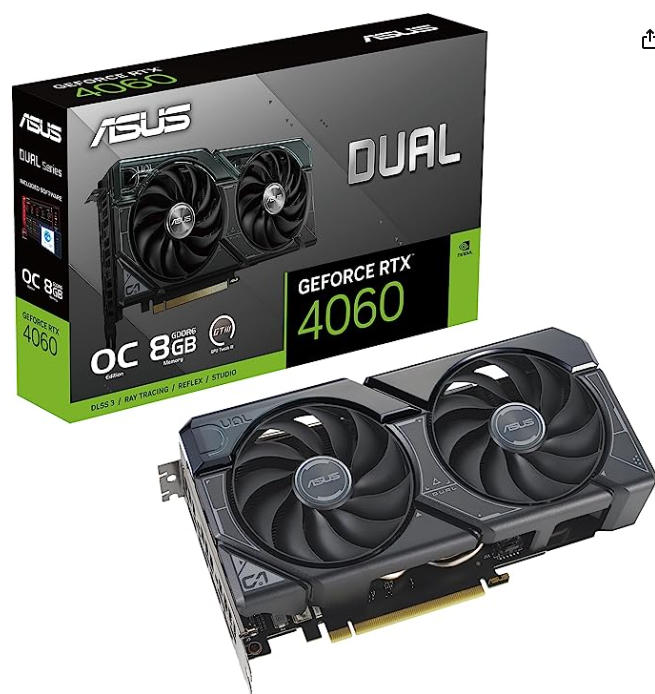
With the rising cost of living challenging many budgets, a significant portion of PC gaming enthusiasts find the investment in high-end graphics cards to be beyond their financial reach. The prospect of spending over $500 on a graphics card, which is somewhere in the ballpark of an entire gaming console like the PlayStation 5, simply doesn’t make financial sense for many.
Critical reception of Nvidia’s RTX 4060 and 4060 Ti has been less than favorable. Industry reviews have been particularly harsh on the 4060 Ti, with criticisms centered on its 8 GB of VRAM and limited 128 bit bus width, both seen as regressions from previous generations of Nvidia cards. Even the notion of “future-proofing” falls flat, as these cards seem to lack the capability to handle present-day gaming demands when juxtaposed with their 30-series counterparts.
The 4070 model, priced slightly over $500, has been referred to as the entry point for Nvidia’s graphics cards that maintain a reasonable balance of cost and performance. However, this pricing strategy seemingly alienates those who cannot or choose not to allocate such an amount to a single component in their gaming setup.
The dissatisfaction grows as we examine the starting price of the 4060 series at $300, which is seen as exorbitant for what some equate to an “RTX 4050” caliber card. The inclusion of technologies like DLSS 3 does not mask the core performance issues, coming across as an artificial way to inflate the cards’ capabilities.
Given the limitations of the 4060 and 4060 Ti, even at so-called reasonable prices, their appeal is questionable, especially in terms of longevity for gaming at higher resolutions or more demanding settings. They do not offer genuine advancements in performance and instead appear to exploit branding tactics to justify price hikes.
So, what path can a budget gamer take? The ideal one would be to steer clear of latest Nvidia offerings until the company reconsiders its pricing strategy. Alternatives might include purchasing a second-hand 30 series card or opting for AMD’s offerings in hopes of future improvements in their ray-tracing capabilities.
One must also ponder if spending $500 for a value proposition is justifiable, particularly when other PC components’ cumulative costs can match or surpass this figure. The Steam Deck’s success has highlighted that one can enjoy PC gaming without a hefty investment in a dedicated GPU, which challenges the conventional thinking about the need for expensive hardware to enjoy gaming.
In conclusion, navigating the current landscape of graphics cards requires a careful assessment of value, performance, and future-proofing, with a strong consideration for the broader financial implications on gamers’ budgets.