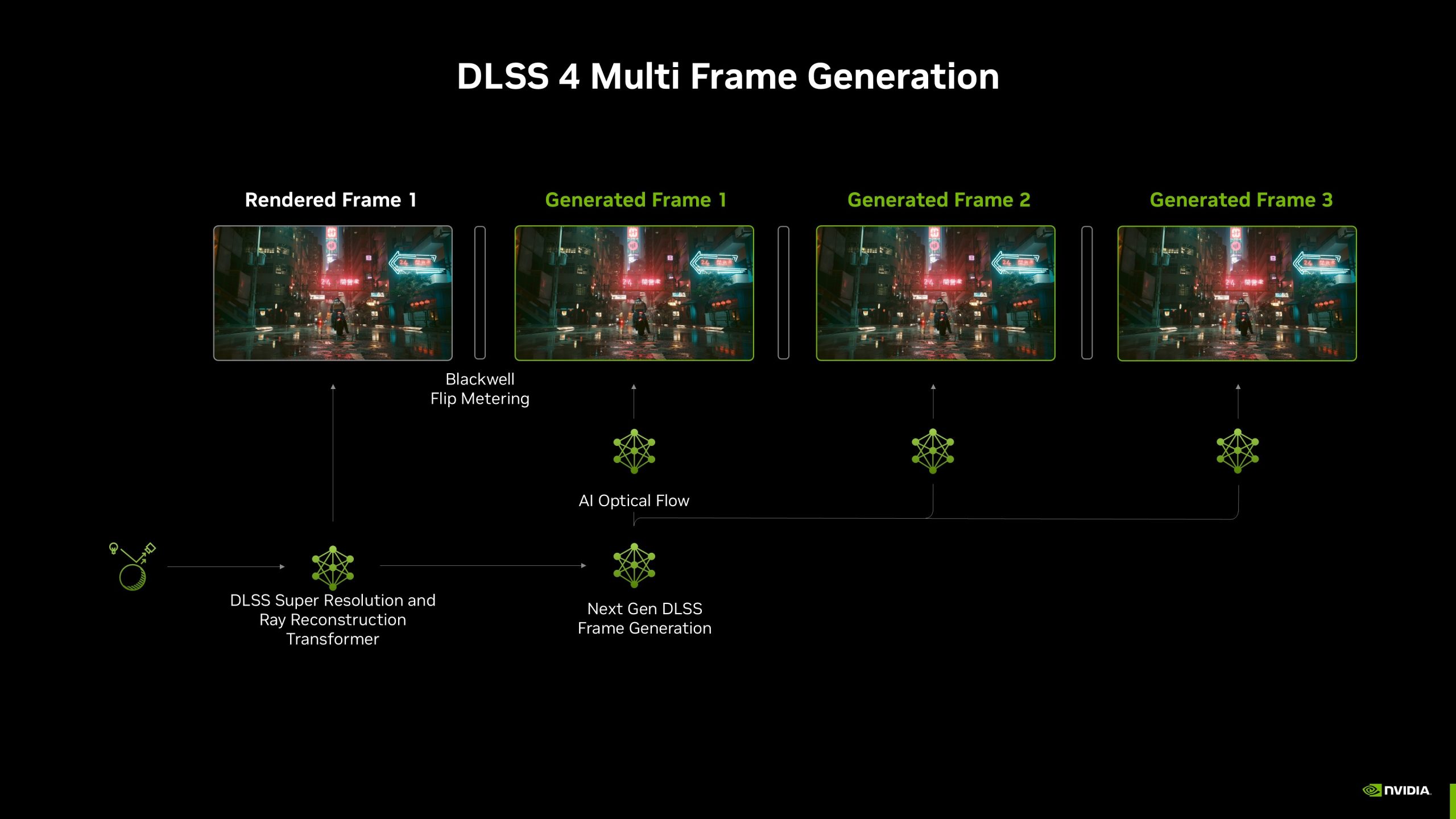
NVIDIA is continuously pushing the boundaries of gaming performance with its innovative DLSS technology. With the introduction of the RTX 50 series graphics cards, they have unveiled the advanced DLSS 4, equipped with Multi-Frame Generation (MFG) that takes gaming experience to new heights by significantly boosting frames per second (FPS).
The evolution from the frame generation in DLSS 3 to this cutting-edge MFG marks a major leap. The RTX 50 GPUs now offer gamers a smoother and more fluid visual experience. Although the current multi-frame generation delivers impressive results, NVIDIA is contemplating even more ambitious enhancements for future DLSS versions.
In recent discussions, NVIDIA expressed its vision of potentially multiplying FPS several times beyond what is currently achievable. They conveyed that while they could push MFG to generate up to 16 frames per second in future iterations, the necessity and practicality of such an upgrade would depend on its tangible benefits to gamers. At present, they aim to settle at generating three additional frames per second, a substantial feat already by their standards.
The DLSS 4 MFG technology is designed with the goal of supporting 4K at 240Hz. While the technical limitations and potential advancements remain to be seen, NVIDIA is focused on finding a balance that enhances the gaming experience without compromising quality. Past improvements in AI models since the launch of the original DLSS have been astounding, leading to speculation about how much further they can advance AI technology to support this vision.
The Multi-Frame Generation technique harnesses the power of the latest AI models, which meticulously analyze gameplay scenes to insert ‘fake’ frames that bridge original ones, thereby enhancing smoothness. This advanced capability allows the DLSS 4 technology to outshine its predecessors, boosting FPS up to eightfold in certain scenarios, creating a noticeable performance difference.
However, caution is essential. Inserting too many fake frames might lead to undesirable visual artifacts or distortions. Despite the impressive augmentation in FPS, artificial frames still cannot match the quality of original frames. For now, adding three extra frames seems optimal, though the true course of DLSS and MFG advancements will rest on NVIDIA’s insights into gamers’ needs.
The future of gaming is undoubtedly exciting, and with NVIDIA at the forefront of these technological advancements, players can anticipate an ever-evolving landscape of immersive and remarkable gaming experiences.