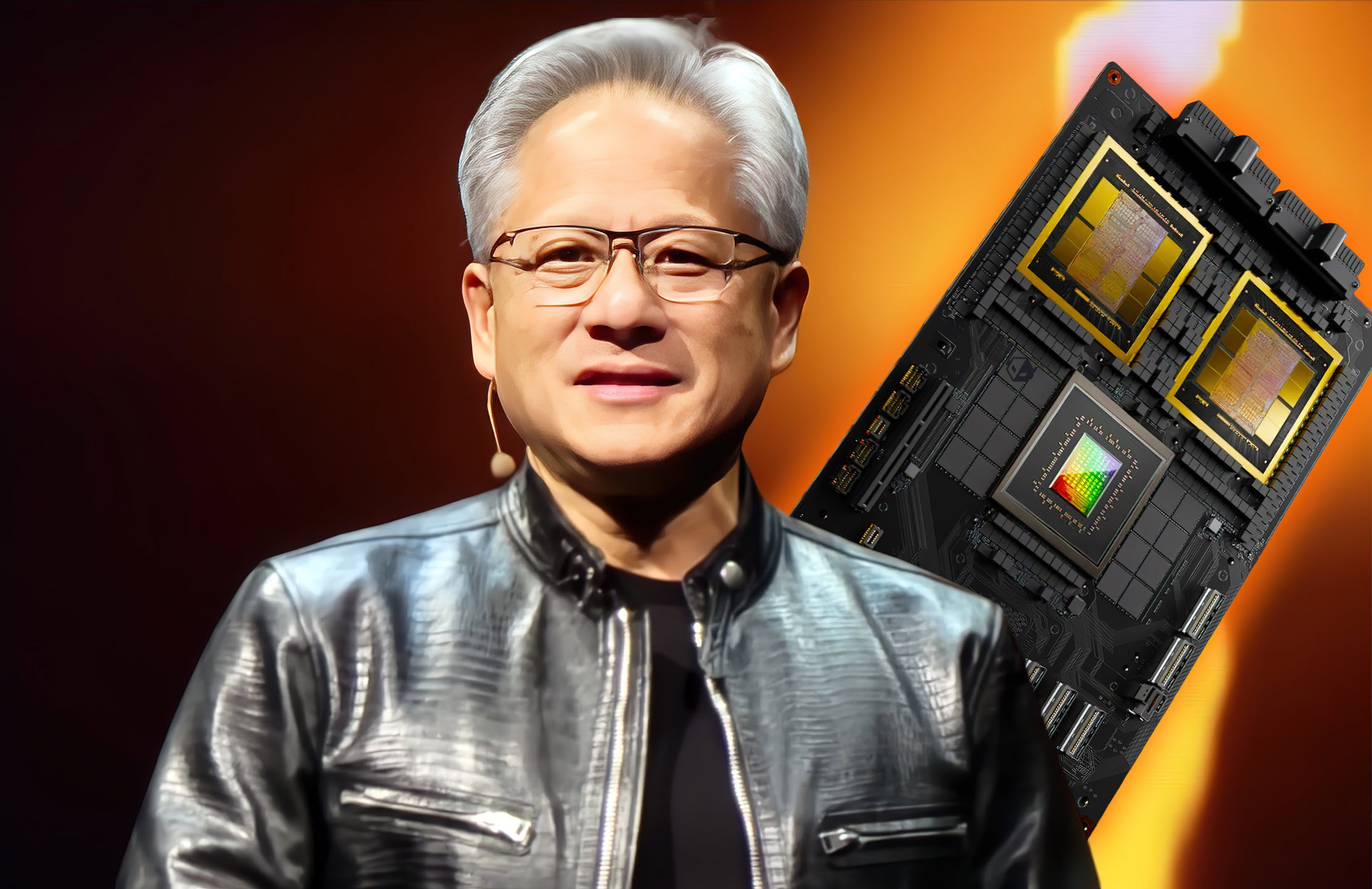
NVIDIA is gearing up for an exciting future in AI technology with the anticipated launch of its next-generation architectures, Blackwell Ultra and Vera Rubin. These lineups promise to be even more game-changing than their predecessors, signaling NVIDIA’s relentless push towards innovation and cutting-edge advancements.
According to NVIDIA’s CEO Jensen Huang, both Blackwell Ultra and Vera Rubin are on schedule. Despite encountering some yield rate issues with the earlier GB200 models, NVIDIA has swiftly overcome these hurdles without derailing its annual product release schedule.
Huang emphasized that Blackwell Ultra, set to debut in the latter half of the year, has ramped up production smoothly, thanks to the extraordinary efforts of both the NVIDIA team and supply chain partners. This lineup will introduce new networking capabilities, advanced memory modules, and enhanced processors, aiming to elevate the AI experience to unprecedented levels.
The forthcoming Blackwell Ultra “B300” series is sparking interest across the tech world with its rumored specifications. Expected to hit a power rating of up to 1400W of TDP, it marks a significant leap from its predecessor, the GB200, which stood at 1000W. Architectural enhancements are anticipated to boost FP4 performance by 1.4 times and increase memory capacity utilizing the state-of-the-art 12-Hi stacks of HBM3E technology, enhancing from 192 GB to a robust 288 GB.
Blackwell Ultra is designed to be a pivotal transition between the original Blackwell series and the groundbreaking Vera Rubin lineup. This transitional move aims to deliver abundant choices to mainstream consumers and solidify NVIDIA’s powerhouse status in AI technology.
The Vera Rubin architecture is shrouded in mystery, but what we do know is its introduction of HBM4 memory technology, touted to reshape the computational landscape. Industry insiders are eagerly awaiting the joint unveiling of Blackwell Ultra and Vera Rubin at the GTC 2025 in March, with the launch aligning closely afterward as the tech industry gears up for this revolutionary change.
In summary, NVIDIA’s next-gen architectures promise to usher in a new era of AI innovation and power, leaving tech enthusiasts and industry stakeholders on the edge of their seats for what lies ahead. As the AI train accelerates, NVIDIA is poised to lead the charge with unprecedented enhancements and performance leaps.