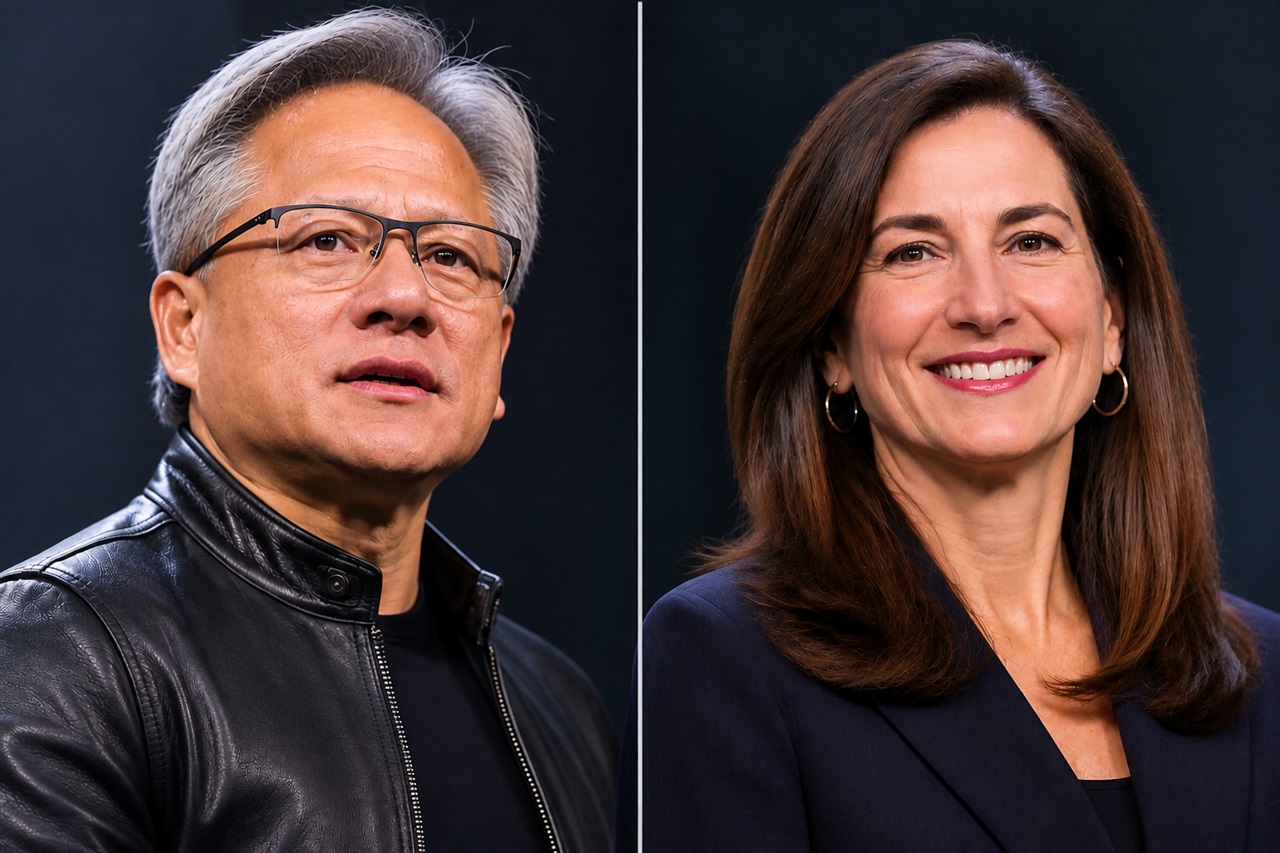
Nvidia Faces Major Leadership Change as Jensen Huang Steps Down After 33 Years
Nvidia has entered a new chapter after co-founder Jensen Huang resigned from his roles as president, chief executive officer, and board member on November 12. According to the company’s board, the decision took effect immediately, marking the end of one of the most influential leadership runs in the technology industry.
Huang had been at the center of Nvidia since its founding 33 years ago, helping guide the company from its early days as a graphics chip maker into one of the most powerful names in artificial intelligence, gaming, data centers, and high-performance computing. Under his leadership, Nvidia became closely associated with the rise of GPUs, AI acceleration, and the growing demand for advanced computing hardware.
The resignation is a significant moment for Nvidia, a company that has played a major role in shaping modern technology trends. Huang’s long tenure made him one of the most recognizable executives in the semiconductor industry, and his departure is expected to draw close attention from investors, partners, and customers around the world.
Chief Financial Officer Colette Kress has been named to take on the top leadership role, according to the information tied to the announcement. Her appointment places a longtime Nvidia executive at the helm during a critical period for the company, as demand for AI chips and data center technology continues to surge.
Kress has been a key figure in Nvidia’s financial strategy and has worked closely with the company’s leadership through years of rapid growth. Her experience may help provide stability as Nvidia moves forward without the executive who defined much of its identity for more than three decades.
Huang’s exit represents more than a routine executive change. It signals the close of an era for one of the most valuable and closely watched technology companies in the world. With Nvidia deeply involved in artificial intelligence, cloud computing, gaming graphics, autonomous systems, and enterprise technology, the transition in leadership will likely remain a major topic across the tech and financial sectors.
The company now faces the challenge of maintaining momentum while navigating one of the most competitive and fast-moving markets in the global semiconductor industry. For Nvidia, the next phase will be about proving that its strategy, innovation pipeline, and market dominance can continue beyond the leadership of its iconic co-founder.