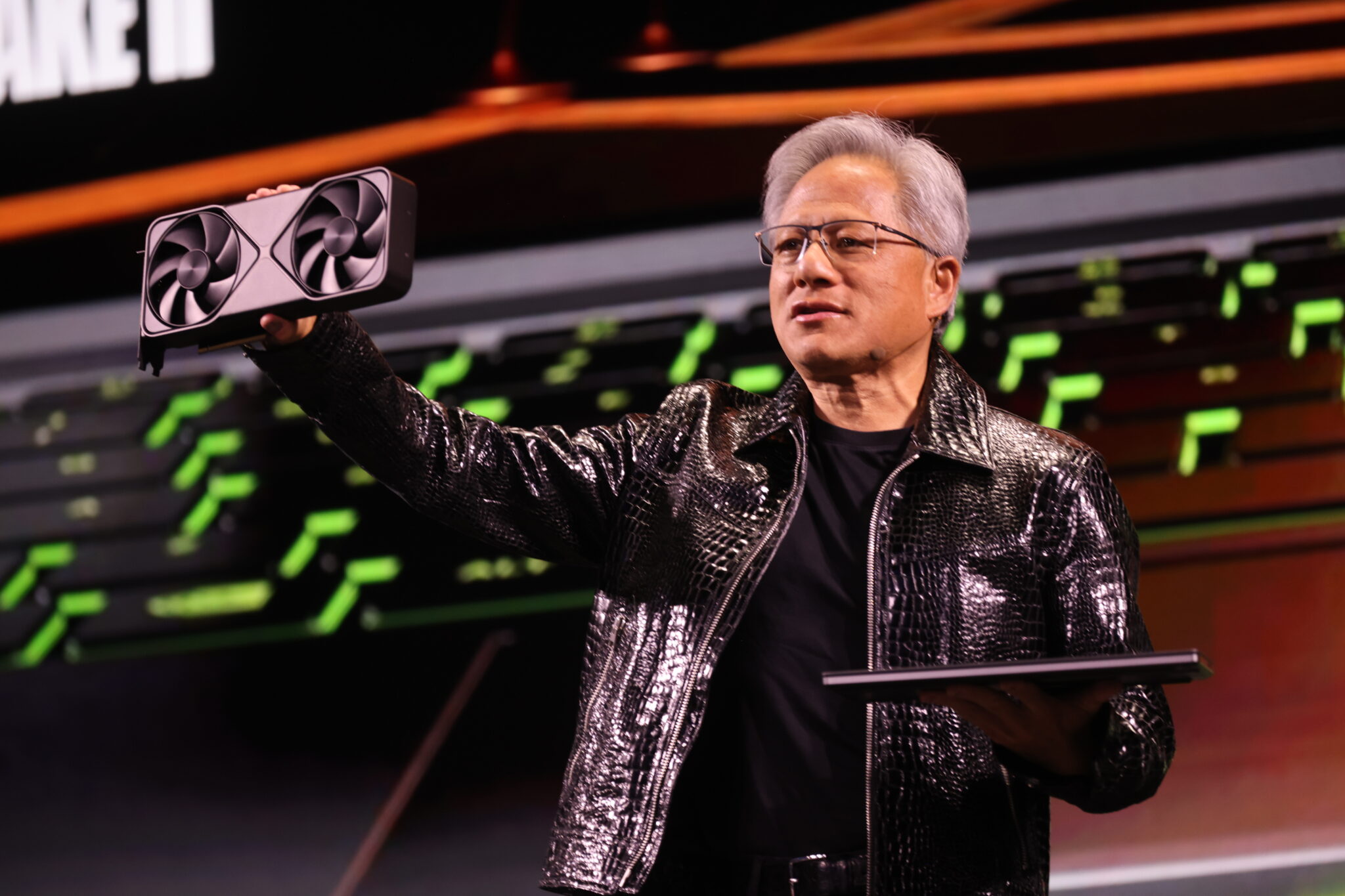
Jensen Huang Steps Down as Nvidia CEO After 33 Years, Colette Kress Named Interim Leader
Jensen Huang has resigned as Nvidia’s president and chief executive officer after more than three decades at the helm of the chip giant he helped build from the ground up. Nvidia confirmed the leadership change on November 12, marking one of the most significant executive transitions in the technology industry in recent years.
The company has appointed Colette Kress, Nvidia’s executive vice president and chief financial officer, as interim CEO while the board begins the search for a permanent successor. Kress will continue to oversee Nvidia’s finance operations while temporarily leading the company through the transition.
Huang has also stepped down from Nvidia’s board of directors, effective immediately.
Kress brings deep experience to the role. She joined Nvidia in September 2013 and has led the company’s financial organization for more than 13 years. Before joining Nvidia, she spent nearly 25 years in senior finance positions at major technology companies, including Cisco and Microsoft. Her long history in enterprise technology and financial leadership makes her a familiar figure to investors, customers, and Nvidia’s internal teams.
Nvidia’s board said it will evaluate both internal and external candidates as it searches for the company’s next permanent CEO.
Alongside the CEO change, Nvidia has appointed Harvey C. Jones as its first-ever chair of the board. Jones has more than 30 years of experience in technology leadership, venture investing, and company management. He previously served as CEO and executive chairman of Synopsys, giving him extensive experience in the semiconductor and software industries.
Nvidia stated that its business operations, customer commitments, and product launch schedules are expected to continue without interruption. The company emphasized that its strategy in artificial intelligence, accelerated computing, data centers, gaming, and advanced chip development remains unchanged.
Jones expressed confidence in Kress and Nvidia’s current leadership team, saying the company is well positioned to maintain momentum during the transition. Kress also reaffirmed Nvidia’s commitment to its long-term strategy, particularly in AI and high-performance computing, two markets where the company has become a dominant force.
Huang co-founded Nvidia in 1993 and led the company for 33 years. Under his leadership, Nvidia grew from a graphics chip startup into one of the most influential technology companies in the world. The company became a major player in gaming GPUs before expanding aggressively into artificial intelligence, cloud computing, autonomous systems, data centers, and professional visualization.
Nvidia’s rise has been closely tied to the global AI boom, with its graphics processors becoming essential hardware for training and running advanced AI models. Huang became one of the most recognizable figures in the tech industry, known for his long-term vision, product-focused leadership, and role in pushing GPU computing into mainstream enterprise use.
The board thanked Huang for his decades of service and his impact on both Nvidia and the broader technology sector.
The resignation comes amid recent media reports regarding Huang’s personal life and questions about potential foreign intelligence concerns. Earlier this month, Huang acknowledged an extramarital relationship with Alice Huang, a former executive at Singapore-based data-center company Megaspeed. Some reports have claimed that U.S. intelligence officials raised concerns about possible links between Alice Huang and China’s Ministry of State Security. Nvidia’s board reportedly opened an independent review into whether Jensen Huang may have been targeted by a foreign intelligence operation.
Separately, another report published on November 11 alleged that Huang had a relationship with Kimberly Powell, Nvidia’s vice president of healthcare, citing former employees. Nvidia has not publicly stated that these matters were the reason for Huang’s departure, and the company has not directly linked the leadership change to any of the reported controversies.
For now, Nvidia is presenting the move as a leadership transition while maintaining continuity across its business. The company remains scheduled to release its third-quarter fiscal 2027 financial results on November 17, as previously planned.
The departure of Jensen Huang marks the end of an era for Nvidia. Few technology executives have remained so closely associated with a company for as long, and even fewer have overseen such a dramatic transformation. As Colette Kress steps into the interim CEO role, investors and industry watchers will be looking closely at how Nvidia manages its next chapter in the fast-moving artificial intelligence and semiconductor markets.


