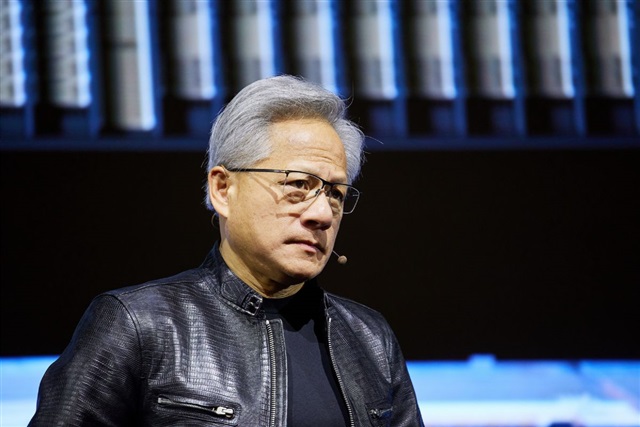
Nvidia Leadership Change Raises Questions for Taiwan Server Suppliers
Jensen Huang’s reported resignation is expected to create some short-term disruption for Taiwan’s server supply chain, particularly among manufacturers involved in Nvidia’s next-generation AI server platforms. These suppliers are currently working on key projects tied to Nvidia’s upcoming Vera Rubin and Feynman architectures, both of which are expected to play an important role in the company’s future data center and artificial intelligence roadmap.
For now, Taiwan-based server partners appear confident that ongoing development and production plans will continue without major delays. The companies involved in Nvidia’s supply chain have spent years building deep technical cooperation with the chip giant, especially as demand for AI servers, data center hardware, and advanced GPU platforms continues to grow worldwide.
However, the leadership transition is creating uncertainty about Nvidia’s long-term strategy. While current projects such as Vera Rubin and Feynman are already in motion, suppliers are now watching closely to see how Nvidia’s next leader will shape the company’s product roadmap beyond these platforms.
One of the biggest questions is whether Nvidia’s future leadership will maintain the same strong relationship with Taiwan’s local supply chain. Under Huang, Nvidia developed close ties with Taiwanese manufacturers, which became essential partners in building high-performance AI servers, GPU systems, and advanced computing infrastructure.
Taiwan’s role in Nvidia’s ecosystem has become increasingly important as global demand for artificial intelligence hardware accelerates. Server suppliers, component makers, and manufacturing partners in the region have benefited from Nvidia’s rapid growth in AI computing. Any shift in strategy could influence future orders, platform development, and the broader direction of the AI server market.
In the near term, suppliers believe the impact will be limited. Development work on Vera Rubin and Feynman is expected to continue, and existing production schedules are unlikely to face immediate disruption. Still, the bigger concern is what comes next.
If Nvidia’s successor continues Huang’s approach, Taiwan’s server industry could remain a central part of the company’s global AI hardware strategy. But if the new leadership decides to diversify suppliers, adjust platform development, or change long-term priorities, Taiwan’s manufacturers may face a more uncertain future.
The situation highlights how closely Nvidia’s growth is tied to its supply chain partners. As AI computing expands across cloud services, enterprise systems, and high-performance data centers, Nvidia’s decisions will continue to influence not only the semiconductor industry but also the global server market.
For Taiwan’s suppliers, the message is clear: short-term confidence remains strong, but long-term visibility depends heavily on Nvidia’s next phase of leadership and product planning.