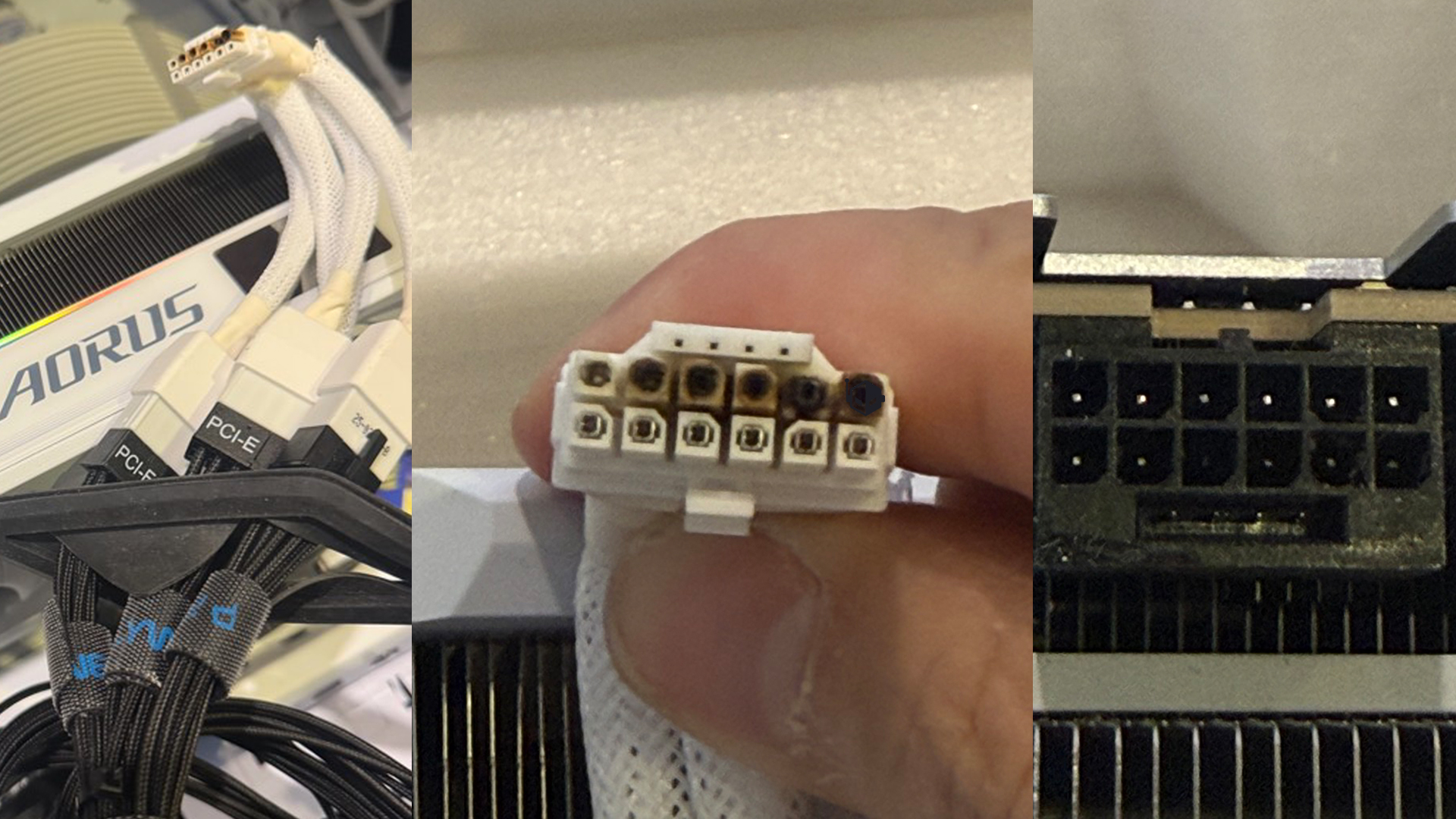
NVIDIA’s GPU warranty bill has exploded over the last few years, and a growing number of signs point to one standout culprit: ongoing problems tied to the company’s newer 16-pin power connector graphics cards. New industry data tracking warranty spending shows a dramatic shift in how much major GPU makers are paying out, with NVIDIA’s costs rising at a pace that’s hard to ignore.
A recent warranty industry report highlights a steep jump in NVIDIA’s warranty expenses across the 2024–2025 period. While AMD also saw warranty metrics climb, NVIDIA’s increase was on another level. The key takeaway is simple: NVIDIA’s warranty claims surged roughly ninefold, and its warranty-related spending climbed to levels far above what it historically reported.
For context, NVIDIA’s warranty claims sat around the $100 million range from 2022 through 2024, including about $81 million in 2024. Then 2025 hit—and NVIDIA paid about $894 million in warranty expenses. That’s roughly a 1000% spike year over year, a massive jump for any hardware company, especially one that controls over 90% of the discrete GPU market.
Looking at how that spending unfolded through 2025 makes the surge even more striking. NVIDIA paid $147 million in warranty expenses in Q1, $80 million in Q2, $156 million in Q3, and then an enormous $511 million in Q4 alone. Considering most graphics cards ship with a baseline 1–3 year warranty (often extended through board partners), a sudden end-of-year ballooning like this raises obvious questions about what changed—and why.
Several cost pressures likely contributed. Tariff uncertainty was at a peak around the same time, and memory prices moved sharply upward. DRAM costs reportedly surged and have since multiplied, affecting both PC and GPU supply chains. With AI-driven demand squeezing component availability, sourcing DRAM for repairs and replacements can become significantly more expensive. Add in a broader rise in graphics card production costs—and even routine warranty processing becomes pricier than it was just a year earlier.
But cost inflation alone doesn’t fully explain the attention this story is getting. The more uncomfortable possibility is that product-related issues are driving a meaningful share of these warranty claims, and the 16-pin power connector continues to attract scrutiny.
Reports of heat damage and connector failures tied to 16-pin designs began surfacing prominently with the RTX 40 series, particularly around the RTX 4090 after its 2022 launch. That timing also lines up with when NVIDIA’s warranty expenses began trending upward. In 2025, NVIDIA rolled out the RTX 50 series, and new reports of 16-pin-related damage have continued, including claims involving flagship models like the RTX 5090 and RTX 5080. If those incidents are occurring at scale—even at a small percentage rate—they can become very expensive very quickly when the installed base is huge and replacement parts are costly.
AMD’s numbers also moved up, though not as dramatically. AMD’s warranty expenses rose from $110 million in 2024 to $238 million in 2025, and its warranty claim rate increased to 0.69% in 2025 from 0.43% the year before. NVIDIA’s data shows an especially sharp swing late in the year, with a reported 0.90% claim rate in Q4 2025, compared to 0.17% in Q1 2025.
The financial buffers for future claims grew too. AMD increased warranty accruals from $126 million in 2023 to $213 million in 2024, then up again to $358 million in 2025. NVIDIA’s reserves expanded far more aggressively: $109 million set aside in 2023, about $948 million in 2024, and then a much larger $2.59 billion accrued in 2025. Quarterly accruals for NVIDIA in 2025 were substantial throughout the year, capped by $1.07 billion set aside in Q4.
The broader message is that multiple forces are colliding in the GPU market: rising component costs, pricing pressures, supply constraints, and the real-world reliability challenges that come with higher power targets and new connector standards. If parts remain expensive and failure reports continue—especially around high-end 16-pin connector GPUs—warranty expenses for NVIDIA, AMD, and their board partners may keep heading upward.